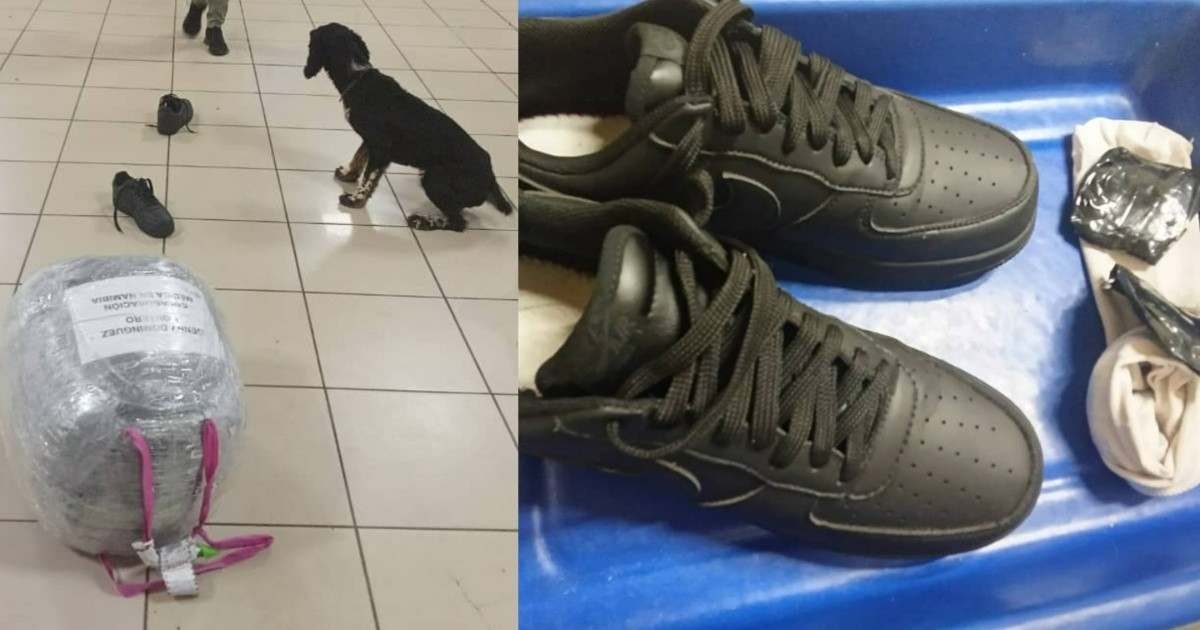
The Cuban Customs seized cocaine concealed in the soles of the feet and inside a pair of sneakers from a passenger who arrived at the José Martí International Airport in Havana, as reported by the First Deputy Chief of the institution, Wiliam Pérez González, through his official account on social media X.
The official published four photographs of the seizure showing black Nike Air Force-style sneakers with the insoles removed, two packages wrapped in black tape, and hands with green surgical gloves handling the evidence. In one of the images, a dog from the anti-drug canine unit is seen in an alert position next to the confiscated luggage.
"Cocaine hidden in the sole of a foot and the interior of a sneaker of a passenger arriving at Havana Airport was detected. The drug was discovered through the effective use of technical means, canine assistance, professionalism, and the joint efforts of #AduanadeCuba and the drug control agency," wrote Pérez González.
One of the images also reveals a label with the name Jenny Domínguez Romero and the reference "Doctor in Namibia / Embassy in Namibia," although the official publication does not provide further details about the identity of the detained passenger or their origin.
The discovery was made just four days after another significant seizure at the same airport: on July 14, Customs seized over 10 kilograms of liquid cocaine hidden in containers of shampoo, keratin, and conditioner from the brands "Blow & Bliss" and "Coco," an operation that was also announced by Pérez González on social media.
The concealment of drugs in footwear is an internationally documented technique that involves transforming the substance into either a rigid or liquid resin integrated into the shoe's structure, making it difficult to detect by conventional scanners.
So far in 2026, Cuban Customs has thwarted operations using increasingly varied methods: cocaine capsules ingested within the bodies of passengers, drugs hidden in cereal boxes, methamphetamine in electric coffee makers and baseballs, and narcotics concealed in speakers and personal hygiene products.
The José Martí Airport accounts for 77% of the drug trafficking cases detected at the country's main borders, and in 2024, the Cuban Customs seized a total of 1,051 kilograms of drugs nationwide.
In April 2026, new customs decrees came into effect, tightening penalties for drug imports as part of an official zero-tolerance policy against drug trafficking.
Related videos:
Filed under: