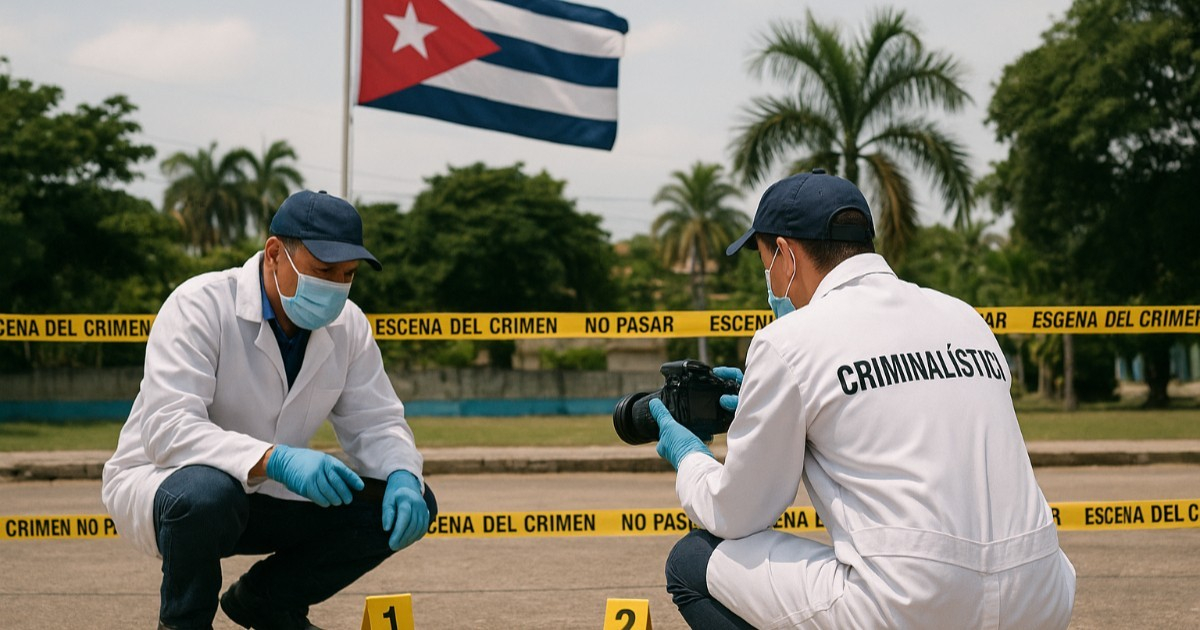
The Gender Observatory of Alas Tensas (OGAT) confirmed on Monday two new femicides in Cuba, as reported by the organization on its social media, raising the total number of cases recorded this year to 44 and accounting for seven crimes noted in July alone.
The first victim is Kirenia López Mendoza, 43 years old, found dead on Saturday, July 18, showing signs of extreme cruelty in her home in the Pueblo Nuevo neighborhood of Nueva Gerona, in the special municipality of Isle of Youth.
The other is Merlin Noay, 17 years old, who passed away after several days in the hospital due to an attack she suffered at the beginning of the month in Yerba de Guinea, Songo La Maya municipality, in Santiago de Cuba.
The case of Kirenia reveals a serious flaw in the protection system: the woman was suffering abuse from her partner and had reported the situation to the police before being murdered, yet that report did not provide her with any real protection.
Sources close to the case confirmed to Alas Tensas that the crime "may have been committed by several men, including her partner," so more information is expected to determine the exact type of femicide. Kirenia leaves behind a teenage son, her mother, and her sister.
In the case of Merlin Noay, the attacker—a 64-year-old man who had been her stepfather for years—attacked her with a knife in early July. The OGAT indicates that both "had another relationship in recent times, for which more information is needed," and classifies the crime as familial and child femicide.
The platform also warned about "a strong trend on social media to harshly judge victims and their families, which undermines reporting and the necessary online debate to raise awareness and prevent violence against women and girls."
The alleged assailants linked to both cases are now in the hands of justice.
The figure of 44 feminicides in just seven months represents an increase of approximately 112% compared to the 18 cases recorded in the same period of 2025. A total of 48 crimes were documented throughout that year; in 2024, there were 56; and in 2023, the historic peak reached 90.
From 2019 to June 2026, independent institutions report 350 documented femicides in Cuba, a figure they themselves characterize as an underreporting due to the state's lack of transparency.
The Cuban regime does not publish official statistics on feminicides, does not acknowledge the magnitude of the crisis, and has not classified feminicide as an autonomous crime in the 2022 Penal Code, where it is only listed as an aggravating factor of homicide.
The National Assembly rejected an amendment to include him as an independent figure, and the specific regulation is not listed in the legislative schedule until 2028.
Cuba lacks a comprehensive law against gender violence, institutional shelters, and effective protection protocols for women at risk.
The Foreign Ministry stated in April that "there is no and there will be no impunity for acts of gender-based violence," but this statement contrasts sharply with the total absence of preventive policies and with the documented increase in crimes month after month by the OGAT.
The organization is also investigating 12 potential feminicides and four alerted attempts in 2026 that have not yet been confirmed, and demands access to the investigation report of the case of Anais Tamayo Puente, which is still pending. Their message is clear: "They are killing us."
Related videos:
Filed under: