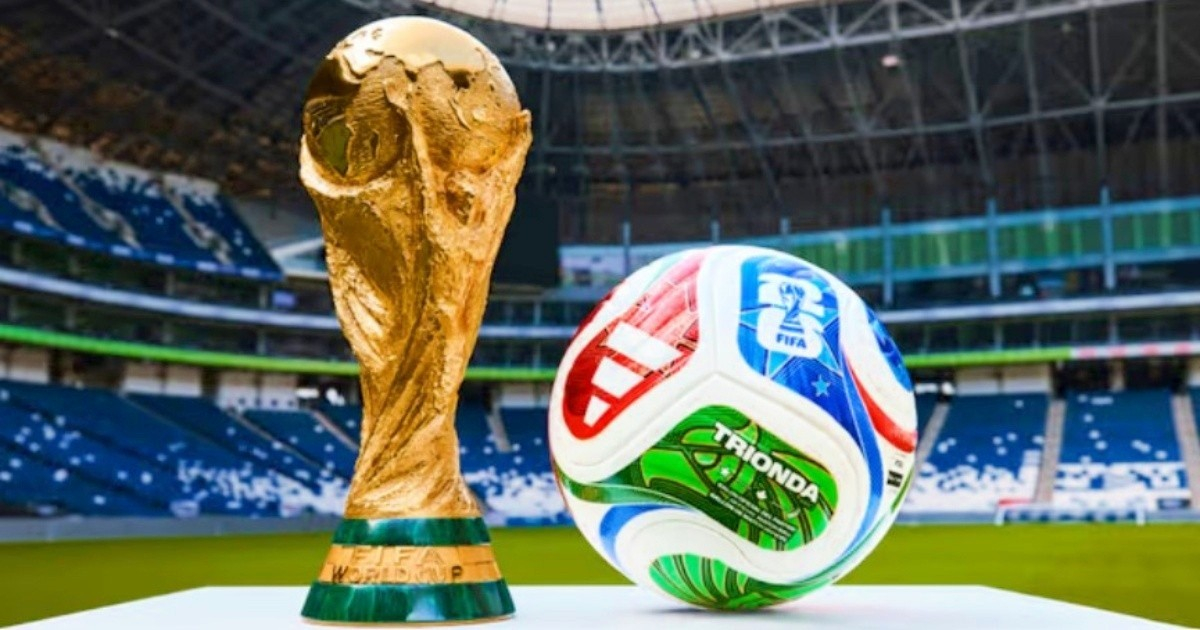
The FIFA publicly released this Wednesday its Dream XI for the 2026 World Cup, the ideal eleven chosen by fans from around the world through the FIFA+ Play Zone platform, in collaboration with Aramco.
The team, arranged in a 4-3-3 formation, has Spain and France as the most represented selections, with three players each, even though the tournament champion was La Roja.
Spain secured its second World Cup on July 19 by defeating Argentina 1-0 in the final at MetLife Stadium in New Jersey, with a goal from Ferrán Torres in the 106th minute of extra time.
However, the popular vote only honored three of its players: Pedro Porro, Marc Cucurella, and Rodri Hernández, MVP of the tournament and winner of the Ballon d'Or.
The big surprise: Vozinha above the Golden Glove
The name that has generated the most debate is that of the Cape Verdean goalkeeper Vozinha (Josimar Dias, 40 years old), who surpassed the official winner of the Golden Glove, Unai Simón, with nearly 40% of the votes.
Vozinha made 18 saves in four matches and kept two clean sheets during the tournament, emerging as one of the standout players of the group stage.
Unai Simón, on the other hand, finished the World Cup with seven clean sheets in eight matches, conceding only one goal and setting the record for invincibility in World Cup history, with 650 minutes without conceding a goal, but fans preferred the veteran African goalkeeper.
The full eleven and their numbers
The defensive line is completed by Lisandro Martínez (Argentina) and Dayot Upamecano (France) as center-backs, alongside the Spanish full-backs Porro and Cucurella.
"Cucu" played every possible minute for Spain and provided two assists, while Porro scored two goals throughout the tournament.
In the midfield, Rodri leads the trio alongside Jude Bellingham (England) and Michael Olise (France).
Bellingham finished the tournament with seven goals and one assist, and Olise became the all-time top assist provider in World Cups with seven assists.
Rodri, for his part, completed 799 passes with a 93% success rate in the eight matches he played.
The attacking trio consists of the three top scorers of the tournament: Kylian Mbappé (France), Lionel Messi (Argentina) and Erling Haaland (Norway).
Mbappé won the Golden Boot by scoring 10 goals in eight matches, becoming the all-time top scorer in World Cup history with a total of 22 goals.
Messi scored eight goals and provided four assists, while Haaland netted seven in his first World Cup appearance.
The absences that generate controversy
The ideal eleven can also be explained by what is not there.
According to Marca and Mundo Deportivo, Pau Cubarsí and Aymeric Laporte were not even listed among the eligible candidates that FIFA offered to voters for central positions.
Cubarsí was chosen by FIFA itself as the Best Young Player of the tournament and finished the World Cup with a 98.3% passing accuracy, being the only player under 20 to play every minute of the championship.
Her absence from the ideal eleven, therefore, does not reflect the fans' opinion, but rather a prior decision by the organization.
Harry Kane, Lamine Yamal, and Laporte himself were also excluded. It is striking that Spain, despite declaring itself champion, has the same number of representatives as France, which was eliminated in the semifinals.
In 2010, five Spaniards - Ramos, Puyol, Capdevila, Busquets, and Villa - were selected for the World Cup All-Star Team in South Africa.
In 2026, with Spain once again crowned champion, only three managed to make it onto the list that honors, according to FIFA itself, "the most outstanding players of the tournament."
Related videos:
Filed under: