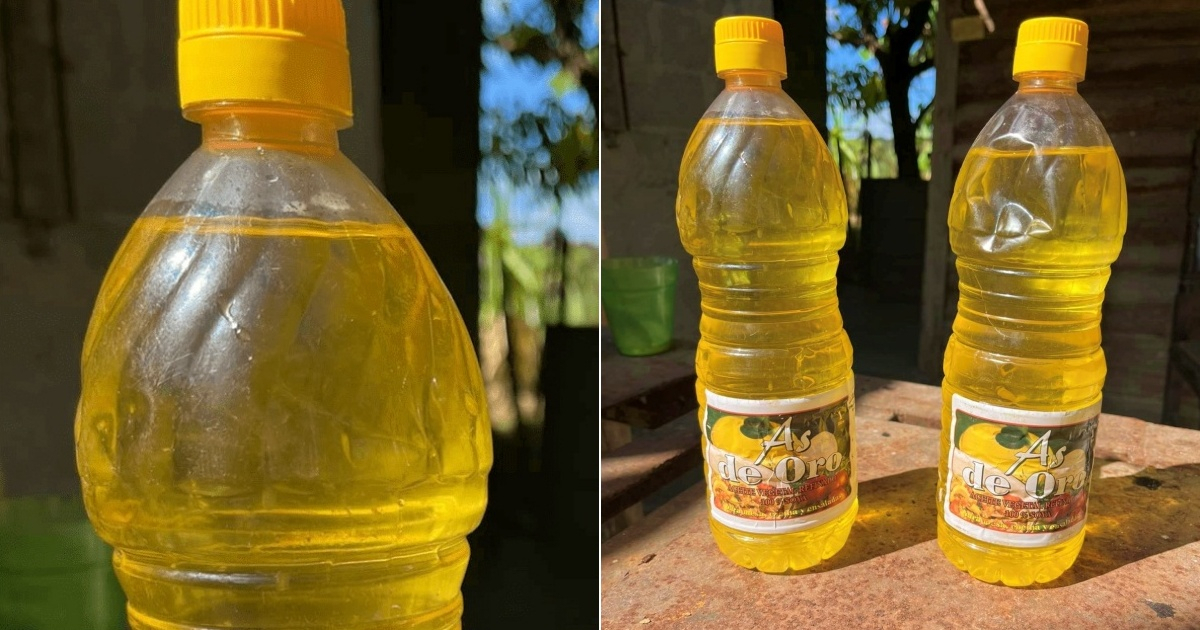
The liter of sunflower oil reached 2,500 Cuban pesos in Havana, setting a new record for 2026 so far, according to testimonies from Cubans shared on social media, although the price is not stopping and already exceeds 3,000 pesos in other provinces of the country.
The increase is staggering compared to previous months: in April, the price per liter was around 1,500 pesos, and by June it ranged between 1,800 and 2,000 pesos in different areas. In just six weeks, the price nearly doubled in informal markets.
This is how the Cuban activist Yamilka Lafita, known as Lara Crofs, showed it on social media, and the comments on her post confirmed the price increase.
The testimonies collected in their Facebook post outline a map of disparate prices across the Island.
In Sancti Spíritus, the situation is the most critical: "It has already surpassed 3,000 pesos. I don't know what the price will be over in the East," wrote Elisa Hung.
At the same time, in Isla de la Juventud, prices are reported at 2,800 pesos; in Trinidad, 2,650; in San Luis (Santiago de Cuba) and Holguín, 2,350; and in Marianao, within the capital itself, the price drops to 2,050 pesos, "for now," as Guillermo Daniel Garriga warned.
Despair is evident in the comments. "Everything is a utopia. If we take two steps forward, the price of oil goes up 500 pesos and cash moves ten steps away on the horizon," summarized Yunior González, mocking one of the most recent "nonsense" from Cuban leader Miguel Díaz-Canel.
Lisset Pino Pupo was more straightforward: "That price for oil and other products is outrageous in the midst of such scarcity and misery."
Behind the escalation, there are two structural factors. The first is the complete absence of the product in the standardized basket. In June, the Minister of Food Industry, Alberto López Díaz, admitted that during 2026, oil, chicken, and yogurt had not been distributed through the rationing booklet.
The second factor is the removal of price caps for imported oils through Resolution 150/2026, signed on June 21, which freed the informal market from any restrictions.
The oil crisis reached a symbolic peak last May, when cases were documented of Cubans using sunflower oil as a substitute for diesel in tractors and buses due to the fuel shortage.
Related videos:
Filed under: