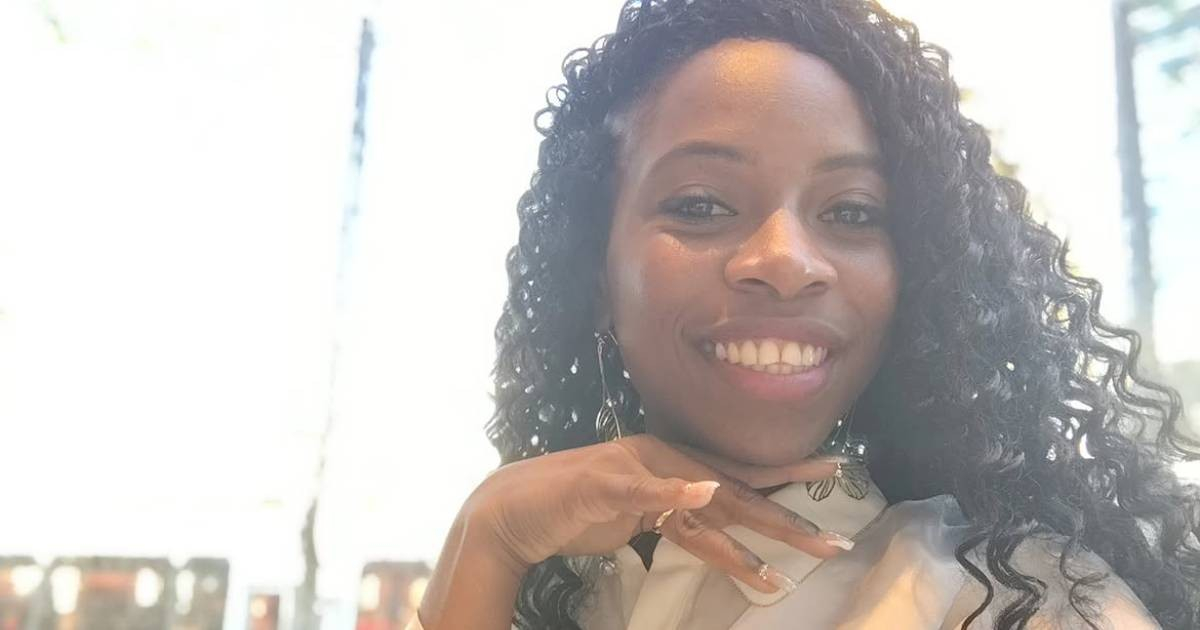
What for many companies were tons of scraps destined for the trash became an opportunity for the Cuban Yuniet Morrel Quintero to create jobs, support entrepreneurs, and reduce environmental impact. Three years after emigrating to Uruguay, she founded the country's first Textile Surplus Bank, an initiative that connects businesses with cooperatives, designers, and social organizations to reuse materials that were previously discarded.
The story of Morrel was featured in the Sunday supplement of the newspaper El País Uruguay, highlighting how an experience learned in Cuba ultimately evolved into a pioneering project in circular economy.
Yuniet arrived in Montevideo in 2023 with her husband and their son, who was just over a year old at the time. The family chose Uruguay after considering various destinations in Latin America and ruled out Brazil due to the language barrier. However, the adjustment was not easy.
"The most difficult part was being seven thousand kilometers away from family, without grandparents or friends who could help us with the child," he recalled.
Shortly after, she began working in a sewing workshop, where she discovered a shocking reality: each day ended with piles of scraps, trimmings, and high-quality fabrics that were simply thrown away.
When she had to leave that job to take care of her son, she used her severance pay to buy a second-hand industrial sewing machine and started making cushions, aprons, and other household items using the fabric scraps that her former employer still kept for her.
In reality, that way of making the most of every piece of fabric was not new to her.
In Cuba, she had learned to sew since she was a teenager, in a family where resources were scarce and nothing went to waste. The scraps were used to make quilts and other household items, a practice she now recognizes as circular economy, even though she didn't know that concept back then.
The project took an unexpected turn when she was invited, at the last minute, to participate in the Expo Uruguay Sostenible following the withdrawal of other exhibitors.
"Since I didn't have many items, I spent three days almost without sleeping, drinking coffee and sewing," she recalled.
She sold everything she took and discovered a community interested in responsible consumption and the use of materials, which led her to develop a much more ambitious idea.
Thus was born the Banco de Excedentes Textiles, which operates under the brand Looper Life.
The system connects companies that generate surplus fabric with cooperatives, entrepreneurs, and social organizations capable of reusing it. Before delivering the fabric, logos and identifiers are removed as stipulated by agreements with the companies.
"You can go to an organization like UruVene, which supports migrants arriving with many needs, or it can also be allocated to entrepreneurs so they can reuse it," she explained.
To persuade companies to join the project, Morrel uses a simple argument: the money they currently spend to send those materials to a landfill can be invested in creating new opportunities for other people.
"More than selling surplus textiles, what I sell is awareness about a reality that we are facing," he stated.
The initiative has received the Uruguay Natural seal, recognizing it as an ambassador of the country brand, and was supported by the We Are Rabbit incubator to digitalize the registration and management of the recovered materials.
Additionally, Morrel was one of the driving forces behind Montevideo Sustainable Fashion Week, the first edition of which took place in June 2026 at the Montevideo City Hall and was declared of national interest.
His story also reflects the increasing prominence of Cubans in Uruguay, one of the destinations that has attracted the most emigrants from the Island in recent years. According to official figures, more than 22,000 Cubans entered the country in 2025, driven by institutional stability and the facilities to regularize their immigration status.
For Yuniet, the philosophy that guides her project has roots much older than her entrepreneurial venture.
"The economy can no longer be linear: it has to be circular," he summarizes. An idea that he acknowledges began to be implemented long before he emigrated from Cuba, when he learned at home that no piece of fabric should go to waste.
Related videos:
Filed under: