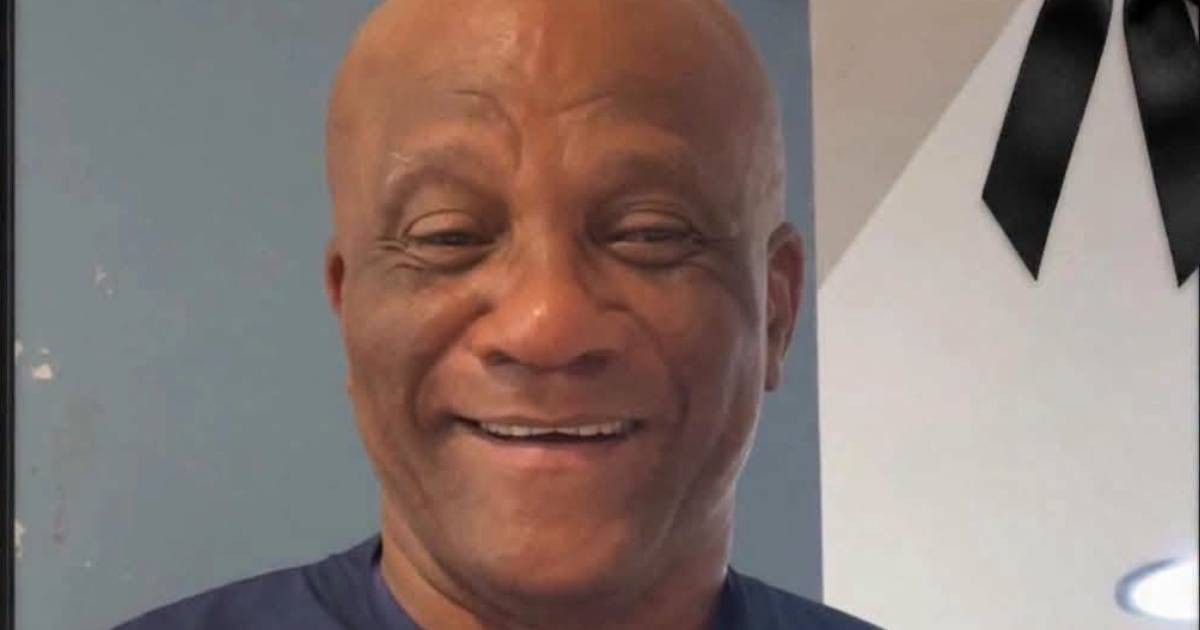
The Cuban doctor Eduardo Chacón Bayard, a specialist in Internal Medicine, was found dead this Tuesday in the hotel room where he was staying in Ometepec, Guerrero, local media reported.
Chacón Bayard provided services at the IMSS-Bienestar General Hospital in Ometepec, where he had been attending to patients from the Costa Chica region for over two years.
So far, the authorities have not officially announced the cause of death. However, early reports suggest it was due to natural causes, according to revelations by Diario Alternativo and Despierta Ayutla.
The media Reporte C reported that, based on the evidence gathered, the specialist may have suffered a heart attack, although this version has not yet been confirmed by the authorities.
People close to the doctor noted that in the days leading up to the incident, he had experienced dizziness and signs of weakness, although it has not been reported whether he suffered from any diagnosed illness.
A farewell marked by the recognition of colleagues and patients
The IMSS-Bienestar General Hospital of Ometepec publicly mourned the passing of the doctor through a Facebook post.
“With deep sorrow, we regret the passing of Dr. Eduardo Chacón Bayard, a specialist in Internal Medicine,” the institution stated in a notice, in which they also extended condolences to “his family, friends, and colleagues from the Cuban Medical Brigade.”
That message was joined by numerous expressions of affection on social media. One of the most touching was posted by the user Luchya Cabrera, who described the doctor as a professional who left a deep mark on the community.
"Today, the IMSS-Bienestar Hospital in Ometepec loses more than just an internist. We lose a colleague, a friend, a human being who, through his simplicity, humanity, and dedication to service, earned the respect, affection, and admiration of patients and staff," he wrote.
The publication emphasizes that her dedication to medicine "transcended scientific knowledge" and that with each patient, she left "a gesture of hope, a word of encouragement, and the commitment to always provide the best care."
The message also underscores the impact his unexpected death had on those who worked with him. "It is hard to understand that someone who dedicated their life to caring for the health of others has departed so suddenly, away from the land that saw him grow and from the arms of his family," the text states.
Colleagues also mourned his departure. Manuel Chacón emphasized that the specialist "performed with great humanity in this city" and assured that his work was widely recognized both by the hospital staff and the community.
Expressions of grief were not limited to the hospital staff. Dozens of patients and residents of Ometepec flooded social media with farewell messages, remembering the Cuban doctor for his approachable manner, his dedication to service, and the time he devoted to each patient.
Rosario Cardona Vélez recounted that she traveled from Acapulco so that the specialist could attend to her son, after being advised to seek out the "Cuban doctor."
"We arrived almost at five in the afternoon, just when it was time for him to leave, but that didn't stop him from attending to my son immediately. We will always remember him in our hearts," he wrote.
Other patients lamented that they will no longer be able to see him in consultation. "I can't believe it; my appointment with him was coming up soon," commented Rosita Oliva, while Conchis Maldonado expressed with sadness, "There won't be a next appointment."
Several testimonies emphasized not only his professional capabilities but also his human warmth. "He was an excellent doctor," "very kind to patients," "a great human being," and "he always had a word of encouragement" were some of the most commonly expressed sentiments among those who knew him.
He arrived in Mexico as part of the medical cooperation program
According to Diario Alternativo, Chacón Bayard arrived in Ometepec in 2024 as part of the medical cooperation program between Cuba and Mexico, aimed at strengthening health care in communities with a shortage of specialists.
Her death adds to other fatalities reported among Cuban doctors participating in the IMSS-Bienestar program.
In January 2025, Dr. Asiel Pérez Rocillo passed away suddenly while working at the Integral Hospital of Xicotepec, in the state of Puebla. Months later, Dr. Zunilda Torres Rodríguez unexpectedly died in Xalapa, Veracruz; the Embassy of Cuba in Mexico handled the arrangements for the repatriation of her remains.
A program under international scrutiny
The medical cooperation program between Cuba and Mexico has been operating since 2022 under the IMSS-Bienestar framework and has brought hundreds of Cuban specialists to hospitals located in hard-to-reach areas. Guerrero is among the states with the greatest presence of these professionals, and Ometepec is one of the municipalities where health services have been strengthened.
However, the program has faced scrutiny from international organizations. In April, the Inter-American Commission on Human Rights (IACHR) recommended that countries in the region disengage from such agreements, after warning of signs of wage retention, restrictions on freedom of movement, and other conditions that could undermine the labor rights of Cuban doctors.
Related videos:
Filed under: