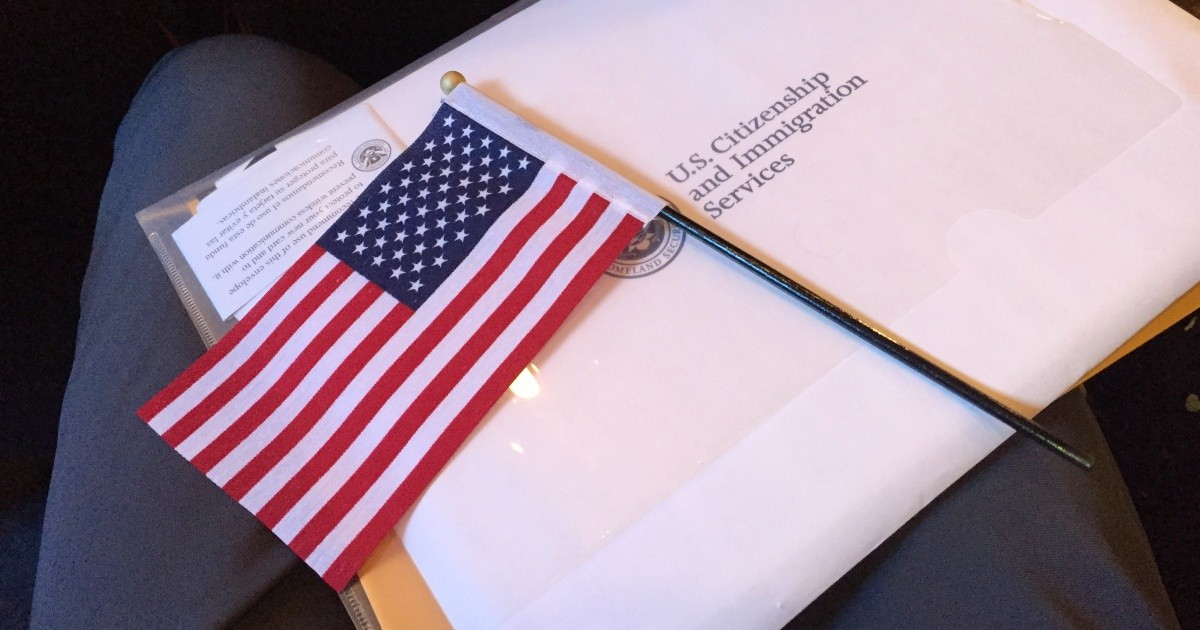
The Department of Justice of the United States filed a civil lawsuit on Monday with four charges to revoke the citizenship of Yosmaikel Rodríguez Pérez, a 45-year-old Cuban-American resident of Miami-Dade County, who was convicted of defrauding Medicare of nearly $900,000.
According to the case report published by the Department of Justice, Rodríguez Pérez obtained permanent residency in 2004 and U.S. citizenship in 2018, but the government alleges that he intentionally concealed his criminal history during both processes.
The accusation charges him with conspiracy to commit health care fraud and electronic fraud: between April 2014 and August 2016, along with two women, he operated a medical center from which they paid bribes to pharmacy owners to refer Medicare beneficiaries, sold unnecessary prescriptions, fabricated false bills, and forged documentation.
Fraudulent claims to the federal health program amounted to $886,694.
Rodríguez Pérez signed a plea agreement, was sentenced to 19 months in prison and three years of supervised release, and was required to pay restitution of $886,649 to the federal government.
The Department of Justice maintains that by applying for naturalization, the defendant lied under oath and concealed material facts that would have prevented his approval.
"The lawsuit alleges that Rodríguez Pérez illegally obtained his citizenship because he lacked the good moral character required for naturalization due to his crime of moral turpitude, illicit acts, and perjury under oath during the naturalization process," states the official DOJ announcement.
The case is assigned to federal district judge K. Michael Moore in the Southern District of Florida.
Rodríguez Pérez is at least the sixth person in Miami facing a denaturalization process so far in 2026, according to case data published by the DOJ.
Among the other cases are Víctor Manuel Rocha, former U.S. ambassador to Bolivia, sentenced to 15 years in prison for acting as a Cuban intelligence agent, and Philippe Bien-Aime, former mayor of North Miami, accused of using false names and documents to obtain citizenship.
In March of last year, a federal court in Miami revoked the citizenship of Mirelys Cabrera Díaz, a resident of Hialeah, who was sentenced in 2019 to 29 months in prison for participating in a Medicare fraud scheme exceeding $6 million.
This offensive is part of an unprecedented campaign by the Trump administration: according to data from researchers at Syracuse University, between January 2008 and April 2026, the federal government pursued only 34 cases of denaturalization in total; between May and July of this year, the administration has already initiated more than 30 new ones.
The DOJ expects to reach a minimum of 250 denaturalization cases before October 2026.
Cuba is also among the 19 countries classified as "high risk" by the U.S. Citizenship and Immigration Services (USCIS) since December 2025, which implies enhanced scrutiny of naturalization applications from individuals originating from the island.
"We refuse to grant impunity to criminals who infiltrated to obtain U.S. citizenship. We have only scratched the surface — many more lawsuits are coming," warned Brett A. Shumate, Assistant Attorney General of the Civil Division of the DOJ.
Related videos:
Filed under: