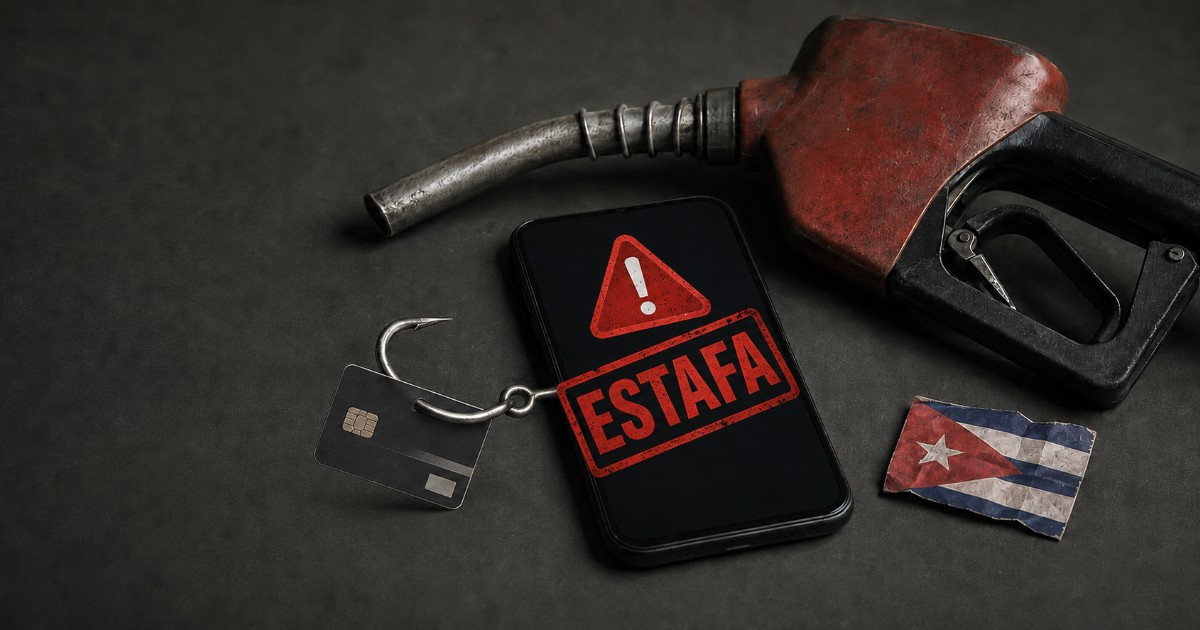
Cuballama issued a public alert to warn about fake accounts impersonating its identity on Facebook, WhatsApp, Telegram, and other digital platforms, offering fuel and gasoline that it clarified are not for sale.
"These individuals are posing as employees of Cuballama and offering products and services that are NOT ours —including fuel and gasoline—. These products have no backing and are only looking to scam those who trust our name," the company stated in its official announcement.
The company, based in Hialeah, Florida, was emphatic: "Cuballama does NOT sell these products and is NOT behind any of those accounts."
One of the most important points of the warning is that no worker from Cuballama will contact customers via WhatsApp, a channel that scammers use specifically to create a sense of closeness and legitimacy.
The company also specified that its commercial promoters can be verified directly on its website, and that anyone presenting themselves as a promoter who does not appear on that list is not legitimate.
Regarding payments, Cuballama clarified that the only valid methods are their website, their official app, or their physical stores, dismissing any transfers requested through alternative channels.
Cuballama concluded its alert with a direct message to its users: "It's a shame that the work of so many years, of so much sacrifice, and the genuine help to families in Cuba is tarnished in this way. Protect yourself. Always verify. Trust only the official channels of Cuballama."
This scam originates in the midst of a severe fuel crisis in Cuba, exacerbated by the interruption of traditional fuels. The only Mexican oil shipment received by Cuba at the beginning of 2026 arrived on January 9 with 84,900 barrels; subsequently, Pemex withdrew another shipment scheduled for that same month.
In April, the informal market registered gasoline prices ranging from 3,000 to 6,000 pesos per liter.
That desperation has created fertile ground for a wave of digital frauds that, since March, follows a consistent pattern: impersonating recognized companies, operating via WhatsApp, and charging in foreign currency through payment platforms that are difficult to reverse.
The case of Cuballama adds to a series of similar alerts issued by other entities. In March, FINCIMEX warned about scammers who were using its name to offer gasoline delivery throughout Cuba at three dollars per liter.
Cimex S.A. warned in May about fake accounts offering wholesale fuel importation and isotanks while impersonating its identity on Facebook, Instagram, and Telegram.
That same month, CUPET reported a fraudulent website called "GasCuba" that was selling liquefied gas while falsely claiming the endorsement of the state company. "That site is fake and constitutes a scam," declared CUPET.
Related videos:
Filed under: