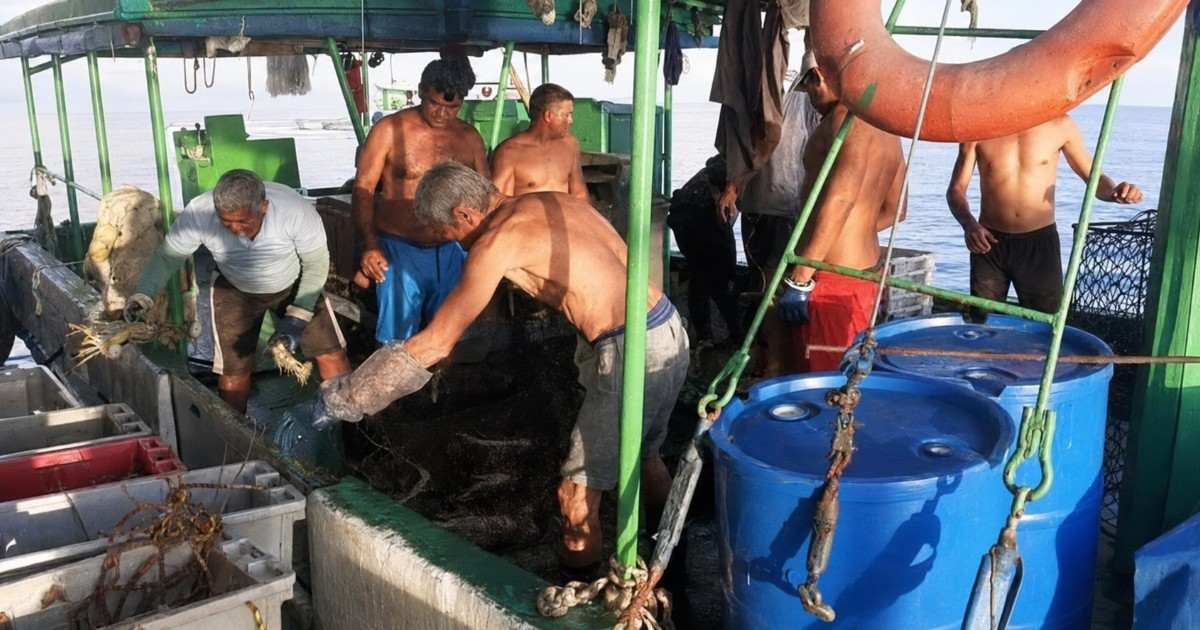
Only four of the six lobster fishing vessels from PESCASILDA have returned to operate in the waters off southern Trinidad after the lifting of the fishing ban, according to reported pro-government journalist Juan Carlos Naranjo in a text that, read between the lines, reveals a struggling fleet and a regime that demands results without providing the necessary resources.
The two vessels anchored in the port of Casilda are not there due to technical reasons, but rather because of the chronic fuel shortage that is halting the Cuban economy.
Their crews were redistributed among the four operational ships as part of what Alexis Albert Puig, the director of the entity, described as a strategy “implemented for the first time” to “intensify efforts to increase collection levels” while also saving fuel.
The euphemism does not disguise the reality: the fleet operates at two-thirds of its capacity because there is not enough fuel to move all six ships.
During the closed season, the lobster boats received only minor repairs. Only the Argus 6 was reengined.
Puig openly acknowledged that "the lack of spare parts and other resources limited the larger-scale work."
It was also not possible to build new fishing frames because the rebar arrived late, although the material is already available in the unit.
Despite all these material limitations, the regime does not lower its demands. According to the official text, July and August are "definitive months for meeting the annual plan," and the fishermen in Trinidad have the goal of "collecting high numbers" of crustaceans during these weeks.
The production pressure remains intact; the resources do not. However, the crisis is widespread across the rest of the province.
In Sancti Spíritus, the provincial fishing company captured only 8 tons per month in July, while the usual amount at that time is between 15 and 18 tons.
Of the 14 active fishing brigades in La Pesca, only five were operational due to a lack of fuel. The provincial aquaculture sector has been facing an accumulated deficit of 1,694 tons since 2022 and has barely achieved 57% of its annual plan.
The energy backdrop is even more serious. In May 2026, the Cuban minister Vicente de la O Levy publicly admitted that Cuba had "absolutely no fuel, no diesel, only associated gas."
That confession contrasts with the triumphalist tone with which the regime presented the opening of the lobster season as a means to "revitalize the national economy."
Related videos:
Filed under: