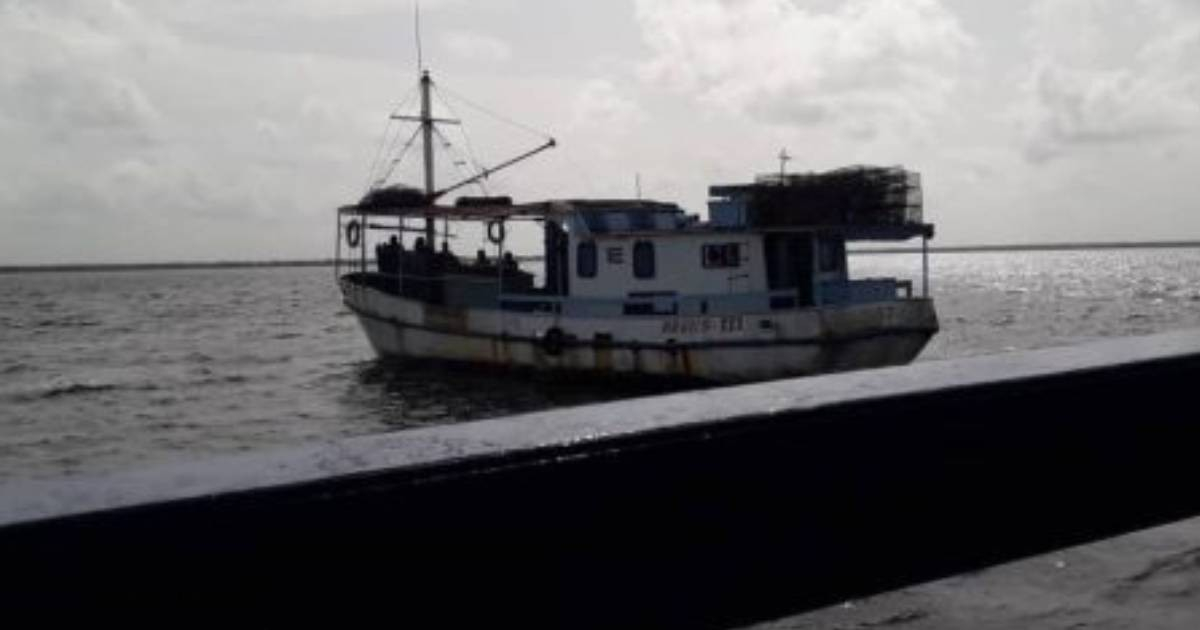
The Cuban regime opened the lobster fishing season this Wednesday with the La Coloma Industrial Fishing Company (EPICOL) as the main player, according to the official media outlet Cubadebate.
The announcement is part of the official narrative to "revitalize the national economy," although almost all of the crustaceans are destined for export, and the Cuban people still lack real access to them, including fish.
The vessel Argus L-9, commanded by Sandy Manduy Hernández, set sail with a crew of six men aiming to catch 100 tons of lobster during the season.
"It will require a lot of effort from everyone. But this team is known for its discipline and commitment," said Manduy Hernández, who leads the vessel with the most extensive history of crustacean capture in the country.
EPICOL accounts for 45% of the national lobster catch and 80% of the bonito, generating nearly 30 million dollars annually in exports, with the main destinations being China and the European Union. Lobster, cobo, and sea cucumber are its primary export products.
One of the innovations for the 2026 season is the incorporation of photovoltaic energy both on the vessels and on land.
The vessels are equipped with solar panels and ecoflow devices to ensure their stay at sea and the cooking of food, due to the lack of liquefied petroleum gas.
The General Director of EPICOL, Yoan Nogueiras Tapia, confirmed that the company is also building a photovoltaic park "80% complete" with one thousand panels and a capacity of 2.3 MW to supply the industrial area and an ice plant.
"It's a challenging time, but the company has not let itself be defeated," stated Nogueiras Tapia, who presented energy conversion as a response to the "blockade imposed on Cuba."
The energy crisis that the island is experiencing —a result of decades of mismanagement by the dictatorship— forces the fishing sector to seek alternatives due to fuel shortages, not the U.S. embargo.
The start of the season is also marked by a serious incident: a fire in October 2025 severely affected the processing plant of EPICOL in La Coloma, forcing part of the lobster to be redirected to facilities in Isla de la Juventud and Batabanó.
The sector is also facing the impact of climate change. The average catch per fishing gear dropped from 19 kg in 2019 to just 5.8 kg in 2024, while the water temperature in fishing areas increased from 27°C to 30°C over four decades, pushing lobsters into deeper waters.
The structural paradox of the sector is that 80% of Cuba's lobster production is exported, according to data from France 24, while the local population has no access to it.
The official argument, repeated for years, is that the foreign currency obtained is used to import basic food items distributed through the ration book, a system that also fails to meet the minimum needs of Cubans.
In April 2025, the regime also announced a project with Vietnam for the commercial cultivation of lobster in Quemado de Güines, aiming to generate more exports and foreign currency, without implying greater availability of the product for the population.
Related videos:
Filed under: