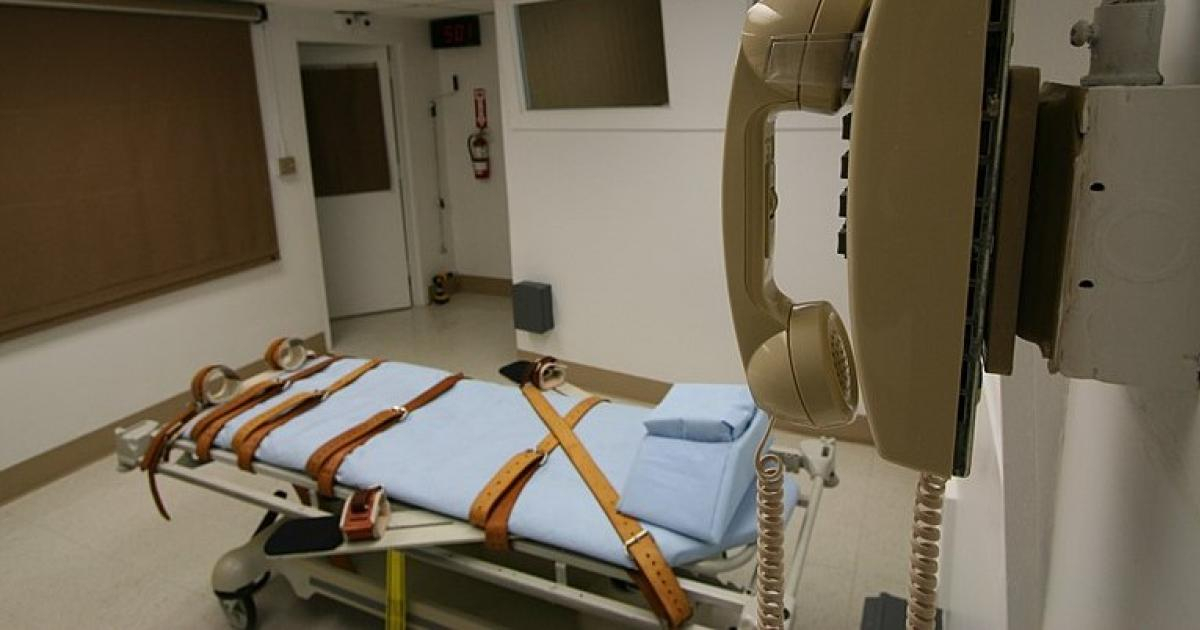
The case of Rafael Andrés, a 61-year-old Cuban American sentenced to death for the second time on Friday by the judge of the Miami-Dade Circuit Court has brought attention to Cubans on death row in the United States.
According to data from the Death Penalty Information Center (DPIC), an organization based in Washington specializing in the analysis of this measure, there are five Cubans facing the death penalty in the United States, all of them in Florida.
In the Sunshine State, there are a total of 12 foreign prisoners sentenced to death.
The five Cubans have been waiting in prison for decades - between 34 and 44 years - without a scheduled execution date.
Cuba is the third nationality with the highest number of death sentence condemnations among foreigners in the country, tied with El Salvador and Honduras.
Only Mexico (44 cases) and Vietnam (six) are ahead.
Omar Blanco: the most veteran
Omar Blanco is the longest-serving Cuban on death row. He arrived in the United States in 1980 during the Mariel exodus.
He committed his crime on January 14, 1982, in Fort Lauderdale, Broward, when he broke into a house and shot a man in front of his 14-year-old niece.
After being sentenced to death, in February 1986, only 14 hours before being taken to the electric chair, a state judge halted the execution to review new legal arguments.
In recent years, their defense has filed several motions citing intellectual disability and flaws in the process, but the Florida Supreme Court has consistently rejected those appeals and upheld the conviction.
Leonardo Franqui and Pablo San Martin: the bank robbery
Leonardo Franqui and Pablo San Martin share a conviction for the same crime: the robbery of the Kislak National Bank in North Miami on January 3, 1992, along with two other individuals.
In fact, police officer Steven Bauer, who worked as a security guard, was killed.
In May 1994, the trial took place. It was proven that the gang had committed another violent, fatal assault in December 1991 against a businessman in Medley, Florida.
Franqui and Pablo San Martin were sentenced to death, although their cases have experienced multiple ups and downs: their lawyers claim mental health issues.
Marbel Mendoza: premeditation in a robbery
Marbel Mendoza was convicted in 1992 for the crime of Conrado Calderon, which occurred on March 17 of that year in Hialeah. The victim, who owned a currency exchange business, was attacked while returning home with the day's earnings.
Mendoza, who was with two other thieves, shot him fatally to take the briefcase.
He was found guilty of first-degree murder, conspiracy to commit robbery, attempted armed robbery, and robbery with assault. In 1994, the Miami-Dade circuit court sentenced him to death.
Since then, his lawyers have appealed on numerous occasions based on the lack of jury unanimity, but the courts have upheld the sentence at all levels
His two accomplices, brothers, received prison sentences.
Manolo Rodríguez: settling of accounts
Manolo Rodríguez: his crime also occurred in 1992, in Miami-Dade County.
His case was linked to a settling of scores: he shot and tried to hide the body of Bárbaro "Bobby" Simón, an acquaintance, after a dispute over debts or personal business.
The current case: a Cuban who killed another Cuban to rob her
On Friday, a judge in Miami-Dade sentenced Rafael Andres, a 61-year-old Cuban, to death for the murder of Ivette Fariñas, a 31-year-old waitress, also Cuban, who worked at the La Carreta restaurant at Miami International Airport, for a crime committed two decades ago.
Rafael Andres arrived from the Island in the 80s with his wife.
According to the report from the portal 14ymedio in April, the convicted individual is not listed as a foreigner in the records of the Death Penalty Information Center, which suggests that at some point he obtained U.S. citizenship.
Other convicts in Florida
A report by 14ymedio recalls that, in December 2024, President Biden commuted the sentences of 37 inmates on federal death row.
Among them was Daniel Troya, a citizen of Cuban and Puerto Rican descent, tried for the murders of four members of a family (a Hispanic couple and their two young children) on the Turnpike in 2006, allegedly over a drug trafficking debt.
Aside from the five Cubans registered by the DPIC, the case of Pablo Ibar—Spanish with a Cuban mother—has also garnered significant attention, as he has consistently maintained his innocence.
Pablo was sentenced to death in 2000 for the murder of a nightclub owner and two models in Miramar, Broward, in 1994.
He received a life sentence in a new trial in 2019, a conviction that was upheld on appeal in April 2023.
Executions in Florida: historic record
Florida set a historic record in 2025 with 19 executions - the highest since the reinstatement of the death penalty in the country - which accounted for approximately 40% of the 47 executions carried out nationwide that year.
So far in 2026, the state has carried out at least three more executions.
Related videos:
Filed under: