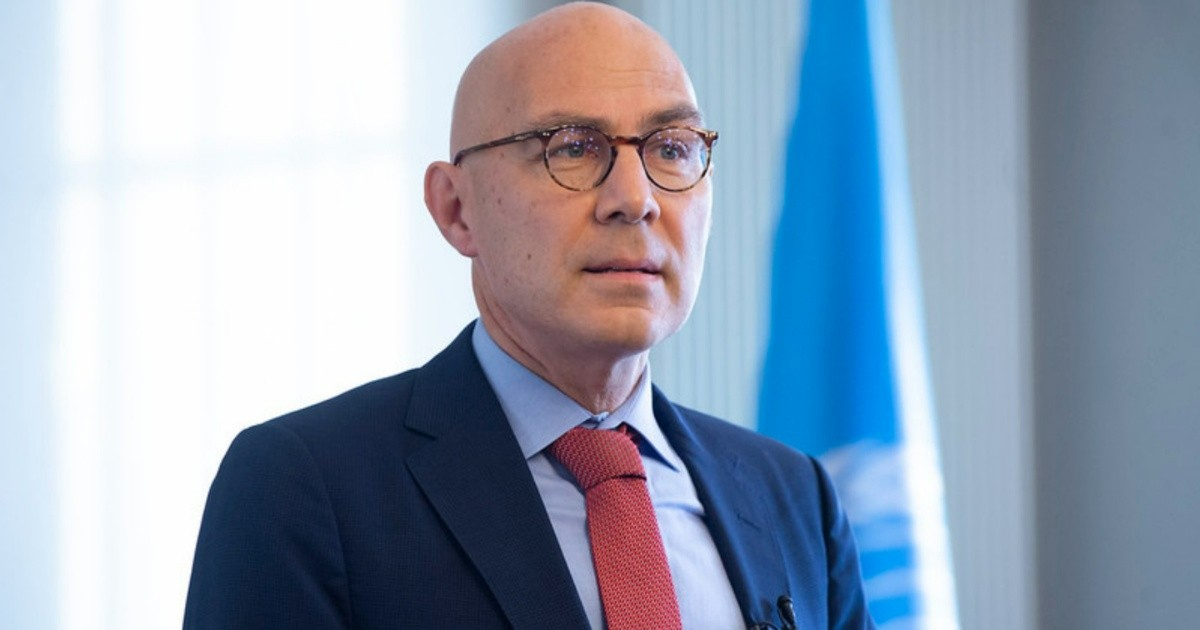
The Republican majority of the House Foreign Affairs Committee seized the opportunity of the renewal of the UN High Commissioner for Human Rights to issue a direct warning: Washington should not continue funding an organization that, in their view, gives a free pass to regimes like Cuba and China while pressuring Western democracies.
The trigger was the vote on July 24 in the UN General Assembly, which approved the renewal of Volker Türk as High Commissioner for a second term, from October 12, 2026, to October 11, 2030, with 144 votes in favor, 10 against, and 13 abstentions. The United States, Israel, and Russia voted against; China voted in favor.
Before the vote, Washington had warned that it would immediately reevaluate its participation, commitment, and funding if the UN proceeded with the appointment. It also unsuccessfully attempted to postpone the vote by a week.
The committee chairman, representative Brian Mast from Florida, had already taken a stand on July 22 by declaring himself "the first chairman of the Foreign Affairs Committee to vote against funding for the UN."
Republican critics are directly targeting Türk's management during his first term. In June 2026, the high commissioner stated that the U.S. embargo against Cuba was "causing widespread harm to the population" and that the country was "suffocating" under the sanctions, without issuing any direct public condemnations against the Cuban regime despite documented human rights violations by independent organizations.
These statements were celebrated by Havana as international endorsement. The Foreign Minister Bruno Rodríguez Parrilla congratulated Türk this Sunday on his renewal and proclaimed that Cuba "reiterates its commitment to the promotion and protection of all human rights," a statement that contrasts with the data on repression on the island.
According to Prisoners Defenders, Cuba recorded 1,281 political prisoners in May 2026, a figure deemed a historic record. The Cuban Observatory of Human Rights counted at least 1,949 repressive actions in the first half of the year, and Cubalex reported 319 repressive events just in June, with 138 incidents that month involving individuals deprived of their liberty.
The confrontation at the UN has recent precedents. On July 7, the U.S. representative displayed photographs of Cuban political prisoners before that forum, which led to Rodríguez attempting to silence him through points of order.
The next day, the Cuban chancellor denied before the UN that there were "images of violent repression" in Cuba, while the U.S. formally demanded the release of more than 775 individuals imprisoned for peaceful activism.
The vote at the UN General Assembly also sparked a diplomatic dispute between Washington and Paris. The French mission to the UN stated that "the U.S. used to be a beacon of human rights. Not anymore. Today it stands alongside North Korea, Nicaragua, Mali, and Russia, isolated."
The U.S. ambassador to the UN, Mike Waltz, responded by describing France's attitude as "disappointing, yet not surprising" for "aligning itself with the worst oppressors in the world" while "lecturing sovereign democracies like the U.S., the United Kingdom, and Israel."
The budget proposal from the Trump administration for the fiscal year 2026 includes the elimination of voluntary contributions from the U.S. to the Office of the United Nations High Commissioner for Human Rights, a measure that falls within a broader trend: in February 2025, Washington had already withdrawn the U.S. from the UN Human Rights Council, arguing that the body allowed countries like China and Cuba to mutually protect each other despite their violations.
Related videos:
Filed under: