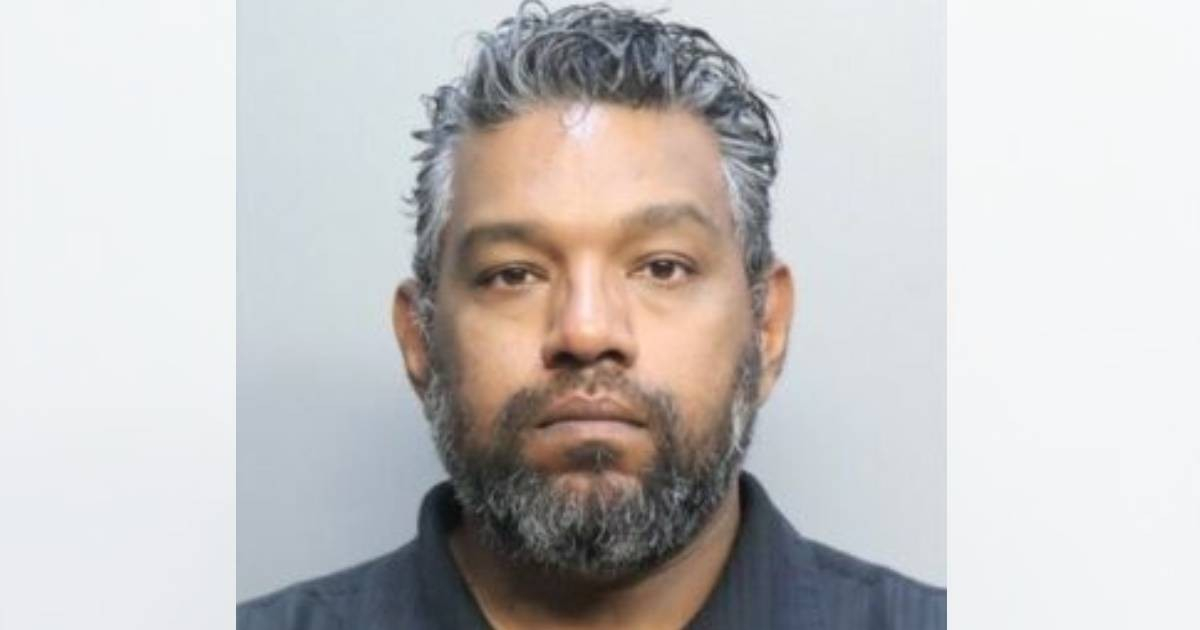
A man residing in Coral Springs, Florida, was sentenced to 20 years in federal prison for laundering hundreds of thousands of dollars obtained fraudulently from COVID-19 relief programs, money that ultimately financed the conspiracy that culminated in the assassination of Haitian President Jovenel Moïse in July 2021.
The United States Department of Justice reported that Keegan Harricharan, 42 years old, was sentenced last Wednesday by federal judge Jacqueline Becerra of the Southern District of Florida after pleading guilty to conspiracy to commit money laundering.
According to the investigation, Harricharan used funds from the Paycheck Protection Program (PPP) and the Economic Injury Disaster Loan (EIDL) program, established under the CARES Act to assist small businesses during the pandemic, to finance part of the plot against the Haitian leader.
The authorities assert that, along with his co-defendant Jacob Israel, he fraudulently obtained approximately $840,827 in loans from the PPP program starting in June 2020. From that scheme, Israel and his associates received approximately $126,124 in bribes.
To move the money, Harricharan used his company TNR Holding Group Inc. Between May 18 and May 28, 2021, he deposited about 175,000 dollars into the company’s account and almost immediately transferred them to Walter Veintemilla, who distributed the funds among other members of the conspiracy. Days later, he sent another 80,000 dollars, including resources from the EIDL program.
The investigation also found that, between April and May 2021, Harricharan took part in several meetings held in South Florida with other individuals involved to plan the overthrow of Moïse, discuss the formation of a new Haitian government, and coordinate the acquisition of weapons, ammunition, personnel, and military equipment.
In announcing the sentence, federal prosecutor Jason A. Reding Quiñones stated that the case went beyond financial fraud.
"This accused did not limit himself to committing fraud. He exploited the pandemic relief programs intended to keep small businesses afloat during a national crisis and laundered those stolen public funds to support a conspiracy that culminated in the assassination of Haitian President Jovenel Moïse," he stated.
A high-profile murder that continues to bring defendants before justice
Jovenel Moïse was murdered in the early hours of July 7, 2021 by a group of Colombian mercenaries who broke into his residence in Port-au-Prince. The president was shot multiple times, while his wife, Martine Moïse, was severely injured. The couple's children managed to survive the attack.
Harricharan's conviction adds to a long list of individuals prosecuted in the United States for their involvement in the conspiracy.
In May, a federal jury in Miami
The sentence for Jacob Israel, expected in December of this year, and the trial of Christian Emmanuel Sanon, the Haitian-American physician and pastor identified by the Prosecutor's Office as the person the conspirators intended to install in the presidency of Haiti after the assassination of Moïse, are still pending.
For prosecutor Reding Quiñones, the case illustrates how a financial fraud can escalate into an internationally significant crime.
"When the profits from fraud are funneled into political violence and bloodshed, the threat extends beyond financial losses and impacts the stability of democratic institutions themselves. We will trace the money and ensure that those who finance violence are held accountable in federal court," he concluded.
Related videos:
Filed under: