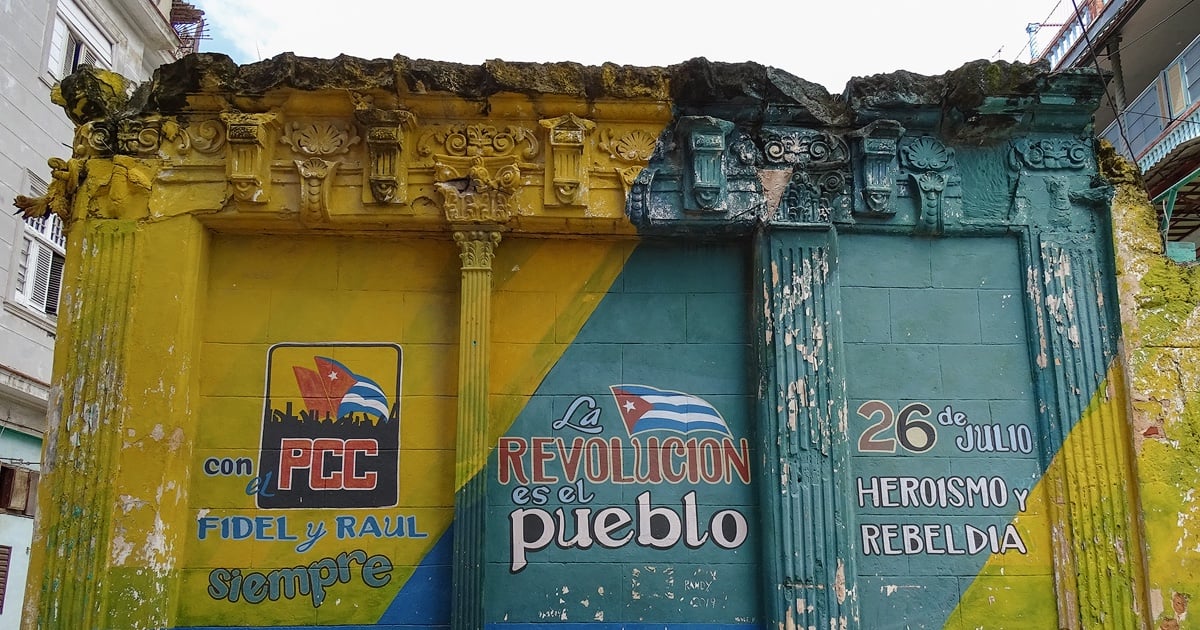
The epic tale of a military disaster transformed into a political victory has obscured, for decades, the understanding of the historical truth about the assault on the Moncada barracks. That July 26, 1953, arose from an urgent need: to deliver a decisive blow to a de facto regime and restore the constitutional thread of the Republic of Cuba. However, that bloodshed ultimately served as the personalist propaganda platform that would enthrone an even more absolute dictator.
The figure of Fidel Castro today evokes revulsion in millions of Cubans and blind adoration in others; it is the inherent pattern of dictators, from Stalin and Mao to Hitler and Mussolini. Both detractors and apologists have forged legends—rosy and dark—that oscillate between adulation and reproach. Here, I impose upon myself the duty to silence passions in order to analyze, with documentary rigor, that carnival Sunday that stained the streets of Santiago de Cuba with blood.
A recurring question is whether Fidel Castro truly "got lost" in the streets of Santiago, absent from the climax of the battle. The Moncada was one of the most central and visible locations in the city; it was impossible to miss. The thesis of geographical disorientation is completely unfounded: the very protagonists of the assault, some of whom later became fierce opponents of Castro (such as Mario Chanes de Armas and Gustavo Arcos Bergnes), corroborate this. Fidel was driving the second car in the vanguard, and Arcos confirms that he was giving orders right out in the street during the gunfire in front of Post 3. The failure was not due to a lack of orientation; it was a failure of tactical planning.
The plan depended on the element of surprise, which crumbled almost immediately. The assailants, dressed as soldiers, attempted to force their way into Post 3 with an authoritative shout: "Open up, the general is coming!" But their civilian footwear, which didn't conform to regulations, gave them away. Losing their stealth, they charged at the barracks believing that a trained garrison would react slowly. Underestimating a regular army in its own stronghold proved to be as reckless as ignoring the bite of a pit bull.
As soon as the heavy machine guns, such as the one operated by Sergeant Virués, began to sweep the entrances, the operation collapsed. Those who managed to enter became trapped; among those who were saved by remaining outside was the instigator of the attack, Dr. Fidel Castro. Just a few minutes of crossfire were enough for him to realize that the incursion was a deadly trap, and he gave the order to withdraw.
Interestingly, Fidel himself took steps to shield himself from any objective evidence regarding his actions during the battle: when the forensic expert came to perform the paraffin test, he flatly refused. "Me? You’re not doing that to me; just say it tests positive because I did shoot," he reportedly said, according to the official book Moncada: Epopeya Heroica (1973). He was the only combatant who was not tested. This refusal is telling: the witnesses who were by his side during the shooting—Arcos, de Armas, Bustillo, Granados—agree that he carried a Luger, but none saw him fire it. Fidel Castro was present at Moncada, that is undeniable; however, the fact that he avoided the only examination capable of resolving doubts about his active participation, and that he ordered a retreat abandoning his men, is certainly open to debate.
Meanwhile, the attackers assigned to the Saturnino Lora Civil Hospital faced a grim fate: that position was a death trap with no escape routes, and they were condemned from the very beginning. Among them was Abel Santamaría, who, along with the majority of the captured insurgents, fell victim to extrajudicial executions.
The core of the regime's propaganda mythology was built upon these crimes: the account of torture, castration, and eye extractions that captivates those who consume the official narrative. The government claims that Haydée Santamaría was shown her brother's bloodied eyes. But the evidence dismantles this story: soldier Ariel Matos testified that he saw Abel Santamaría alive and unblemished around six in the evening, with his eyes intact and only a superficial wound on his chin. We do not know whose eyes were shown to Haydée, but it is clear that they were not Abel's.
The funeral director Manuel Bartolomé and the forensic doctors in Santiago prepared the bodies without reporting signs of enucleation or dismemberment. Bartolomé himself, who personally collected about thirty-four bodies, stated that he did not see "any corpse showing signs of torture." I do not wish to label a woman who cannot defend her testimony today as a liar; it is possible that her captors showed her remains from another source to break her spirit. However, the forensic evidence rules out the possibility that this mutilation was real.
On the other hand, Raúl Castro traveled to Santiago at the invitation of José Luis Tasende without knowing the attack plan, and Fidel Castro was surprised to see him at the Siboney farm just hours before the assault. Raúl's lack of preparation led his brother to place him in a position that would allow for an easy escape: the Palace of Justice. Its geographical location in the city made Raúl and his entourage's getaway relatively straightforward, requiring only to shed their uniforms and blend in with the populace. I have no doubt that in a moment of fraternal instinct, Fidel Castro preferred to position his brother in a tactical place that could save his skin, avoiding complicating him in the suicidal trap represented by Saturnino Lora.
It cannot be denied that the assaulted soldiers took justice into their own hands, fueled by revenge; to these spontaneous excesses was added the order from Colonel del Río Chaviano to execute summarily the prisoners whose paraffin test came back positive—around thirty—and then to disperse the bodies to make it appear that they had fallen in combat.
Fidel, however, escaped that fate as soon as his identity was revealed: he was the husband of Mirta Díaz-Balart, the daughter of a family close to Batista, and his execution would have triggered a social backlash that still remembered the times of Machado. Faced with the pressure, Batista called the colonel: "With your head, you are responsible for the life of Fidel Castro." Therefore, when Castro was surrounded by the forces of Lieutenant Pedro Sarría, he acted as a human shield—on his own initiative, according to those around him—fulfilling that order in spirit.
In hindsight, that failed assault can be likened to Hitler's disastrous march on Munich: both were operational failures that allowed the narrative of a victory to be constructed from defeat. Hitler would capitalize on his trial to dictate "Mein Kampf"; Fidel Castro would follow suit by writing "History Will Absolve Me"—a phrase that actually appears in Hitler's defense before the German courts. It wasn’t even the phrase literally spoken during the trial: according to the presiding judge, Castro said, "History, definitely, will say it all"; the memorable version was crafted later, in prison.
In summary, they were two men who, since that military defeat, managed to create a messianic personal brand that would lead their nations to totalitarian catastrophe. The intentions of many of the young people who sacrificed their lives at Moncada were undoubtedly patriotic and noble. This only compels me to remember the old adage: the road to hell is paved with good intentions.
Related videos:
Filed under:
Opinion article: Las declaraciones y opiniones expresadas en este artículo son de exclusiva responsabilidad de su autor y no representan necesariamente el punto de vista de CiberCuba.