Hermenegildo Altozano, partner at the international firm Pinsent Masons and an expert in investment law in Cuba, predicts that the island has the potential to become the leading hotel market in the Caribbean if there is a political and economic change.
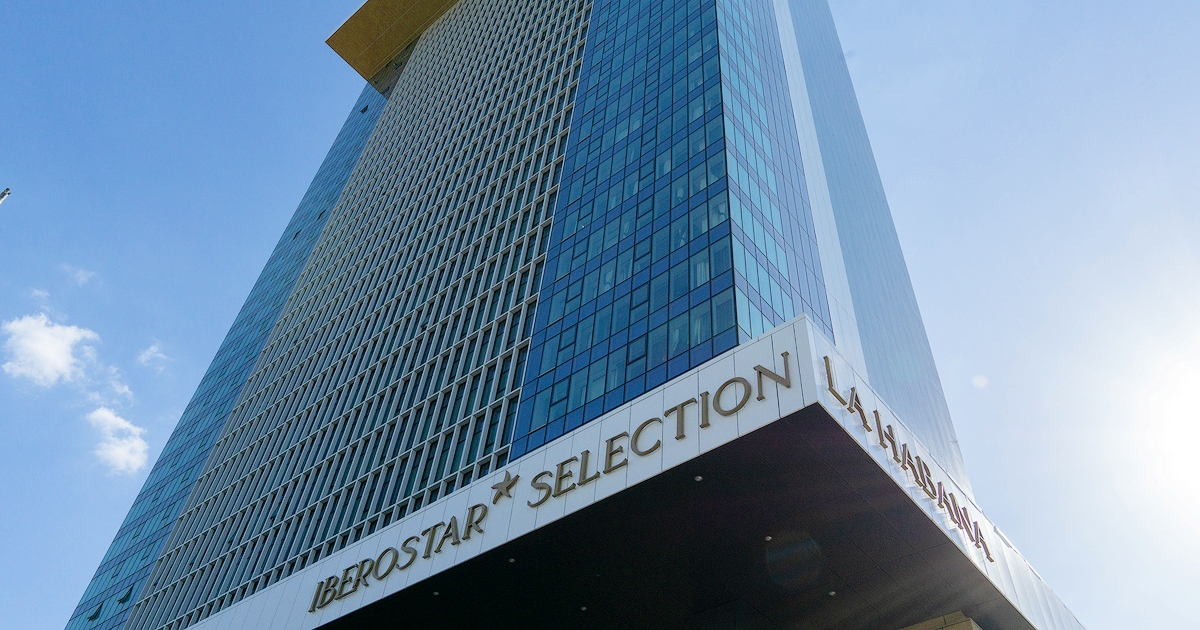
His forecasts, presented in an interview for the "Inversión Hotelera" Podcast, hosted by consultant Ivar Yuste, become particularly significant following the simultaneous departure of Meliá, Iberostar, and Barceló on July 21.
"What needs to be done is to take cover until the hurricane passes."
Altozano distinguishes between the current crisis and the structural value that the island maintains: “Cuba has always been there. It has a fairly decent hotel infrastructure for what it is in the Caribbean, very recoverable at a certain moment.”
To describe the current moment, he uses a graphic image: "I like to use the image of a hurricane: what you need to do is take cover until the hurricane passes."
The numbers underscore the seriousness of the situation.
Cuba went from 4.7 million visitors in 2018 to only 1.81 million in 2025, with a hotel occupancy rate that dropped to 18.9%.
So far in 2026, the decline has exceeded 58% compared to the already disappointing previous year.
The future belongs to the US market
For Altozano, the real debate is not in the present but in what will happen afterwards.
His forecast is clear: “Cuba will be the leading hotel market in the Caribbean; it is only natural that the U.S. should occupy that position.”
The expert explains that Spanish dominance until now -approximately 40% of the market, an exceptional concentration- has responded to a very specific political circumstance: “In Cuba, Spanish hotel chains have developed due to one circumstance: for over sixty years, no American could set foot there.”
That logic, he argues, will be reversed when the conditions change.
The departure of the three major Spanish hotel chains -which controlled over 30,000 of the 86,559 available rooms- opens the door to chains like Marriott, Hilton, Hyatt, or Wyndham.
The Cuban diaspora, the primary natural investor
Another central focus of Altozano's analysis was to position the role of the Cuban community abroad, especially the entrepreneurs based in Miami.
“Cubans living abroad think: this is ours. The Spaniards, French, and Canadians may be here, but we are the ones who have to be here,” explained the lawyer.
That perception, combined with geographic proximity, leads the expert to consider a wave of investment from Florida almost inevitable.
“The entry of real estate promotions in Cuba by developers from Miami seems quite evident. I believe it is natural,” he asserted.
The real estate sector, driving recovery
Beyond hospitality, Altozano identifies the real estate market as the main catalyst for future recovery: "Cuba's solution will be the real estate sector. It is what can immediately attract a lot of investment."
About the 5,911 claims certified by the U.S. Foreign Claims Settlement Commission - valued at 1.851 billion dollars in principal - the expert does not see them as an insurmountable obstacle.
He believes that "a compensatory global agreement will likely be reached," similar to those reached with Spain, France, or the United Kingdom.
Defaults and European passivity
Altozano also highlights the financial situation that the hotel chains were facing before leaving: “There are hotel chains that have not received payments owed to them for a long time.” And he summarizes the paradox: “They have established financial corralitos violating international agreements.”
The lawyer also harshly criticized Brussels' inaction. "The European Commission has done absolutely nothing," he lamented, recalling that the Anti-Blocking Regulation 2271/1996 provided legal tools for reciprocity that were never activated.
Meanwhile, the tourist continues to choose other destinations for very practical reasons. "Why would I go to Cuba when I have blackouts and can't find taxis to get around, when I could go to the Dominican Republic or Cancun?" Altozano rhetorically asked, summarizing in one sentence the plight of a sector that, despite everything, he still sees as having the potential to lead the Caribbean.
Related videos:
Filed under: