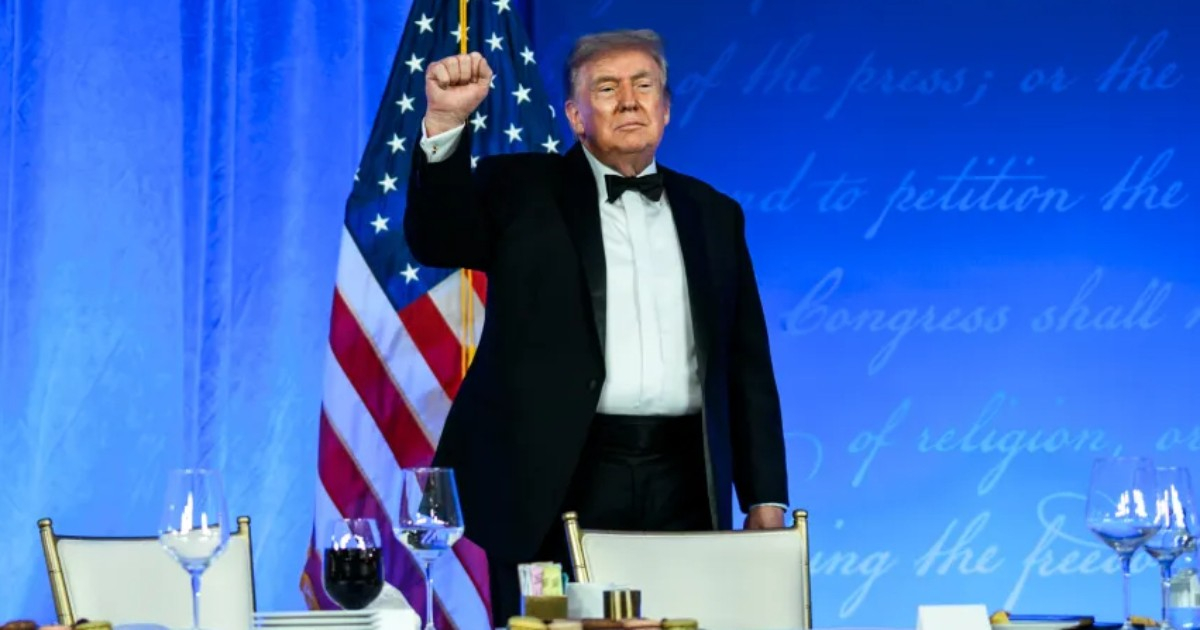
Donald Trump accumulated more wealth since his return to the White House than in his previous six decades as a businessman, according to a recent report from Bloomberg, which was also released in podcast format.
His net worth rose from approximately £1.73 billion in 2024 to £4.81 billion in 2026, an increase of 183% in just two years.
The main source of that wealth is not the real estate sector that made him famous, but cryptocurrencies.
According to the 2025 financial statement submitted to the Office of Government Ethics, Trump reported between 1.2 billion and 1.4 billion dollars in income related to digital assets, in a 927-page document that revealed total income of approximately 2.2 billion dollars.
Two crypto initiatives account for the majority of those gains.
On one hand, World Liberty Financial (WLF), the family's decentralized finance platform, generated nearly 800 million dollars: 520 million in cryptocurrency sales and an additional 250 million in equity sales.
On the other hand, the memecoin $TRUMP, launched just two days before the inauguration on January 20, 2025, generated $635 million in royalties and licensing.
Trump never invested directly in the currency, but he charged a commission of between 1% and 5% on each buying or selling transaction. Although the currency launched on the market with a valuation of 11.26 billion pounds and is now worth barely 339 million—a drop of 97%—Reuters estimates that while buyers lost over 700 million dollars, the Trump family would have gained at least 616 million.
The rest of the fortune comes from more conventional sources: $122 million from his golf club in Doral, $77 million from Mar-a-Lago, and $86.5 million in agreements with media outlets such as Meta, YouTube, ABC, and CBS. Only 26% of his total wealth corresponds to existing real estate and golf.
The family environment amplifies allegations of conflict of interest. His sons Eric Trump and Donald Trump Jr. publicly manage the family business, including the crypto expansion.
His son-in-law Jared Kushner, through his firm Affinity Partners, received a commitment of $2 billion from the Saudi sovereign fund, and his assets grew from $4.8 billion in March 2025 to $6.2 billion by the end of that year, primarily driven by capital from the Persian Gulf. The Senate described that situation as a "blatant and unresolvable conflict of interest."
In parallel, Trump signed a civil nuclear agreement with Saudi Arabia in July 2026 worth tens of billions of dollars and lasting for 30 years, and in May 2025 announced from Riyadh a package of over 600 billion in bilateral investments, foreign policy decisions that directly benefit his family businesses.
The White House rejected any accusation of wrongdoing, stating that all of the president's assets are in "entirely discretionary accounts" managed by "independent" financial institutions. Trump himself told CNBC this month: "There is nothing illegal. There is nothing wrong with it."
The historical comparison is striking. The wealth of George W. Bush grew by 35% during his administration thanks to a stake in the Texas Rangers purchased a decade earlier; Barack Obama's wealth increased by 47% in his first two years due to royalties from books written before he took office; and Joe Biden's wealth barely rose by 5% in the same period.
Steven Ratner, former official of the Obama administration, described the Trump case as "unprecedented in scale and origin" and was direct in his diagnosis: "Most of Trump's new billions come from deals made while in office."
The debate has reached the Senate, where the CLARITY Act is being discussed, a law that would prohibit elected federal officials and their immediate family members from issuing or monetizing personal digital assets during their term. However, critics point out that the legislation has loopholes and does not cover all the conflicts of interest surrounding the Trump family.
Related videos:
Filed under: