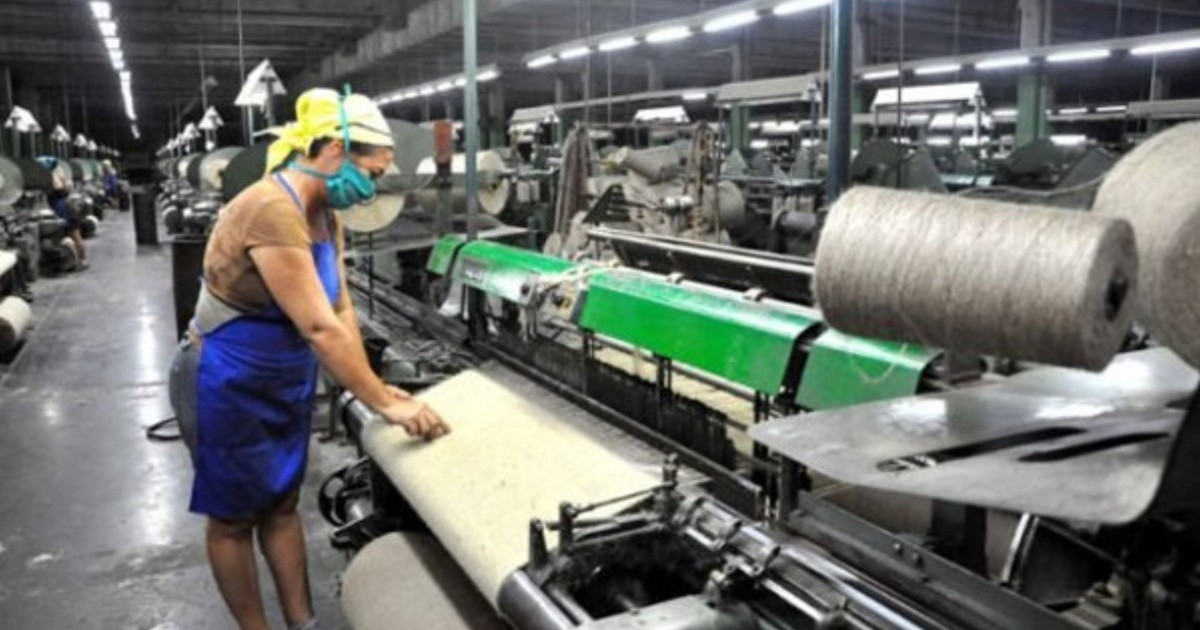
The Ministry of Labor and Social Security (MTSS) of Cuba officially announced a new salary scale for the budgeted sector this Tuesday through the , published in the Official Gazette Special Edition No. 8, which sets the minimum basic salary at 3,210 Cuban pesos per month for a 44-hour work week.
The regulation, signed on July 15, 2026, repeals Resolution 29/2020 of the MTSS and raises the minimum wage from the 2,100 pesos established during the so-called Ordering Task, the monetary reform that came into effect in January 2021.
The increase represents approximately 53% in nominal terms, although the new minimum wage is already in effect since July 1, 2026, and its impact on payments will occur starting in August.
The approved scale is organized into 32 complexity groups. For a 44-hour workweek, salaries range from 3,210 pesos in Group I to 14,535 pesos in Group XXXII. For a 40-hour workweek, the range spans from 2,920 to 13,215 pesos.
According to the resolution, service workers are categorized from groups I to VI; administrative staff from III to VII; operators from II to VIII; technicians from VII to XXV; and management from XVII to XXXII.
Recent graduates in the social service period without an assigned position are classified in Group VII if they have a high school diploma, in Group XII if they are higher-level technicians, and in Group XIII if they hold a higher education degree.
The regulation maintains additional payments for abnormal working conditions, with rates ranging from 0.60 to 2.90 pesos per hour depending on the risk group, and for night shifts: 0.60 pesos per hour between 7:00 PM and 11:00 PM, and 1.15 pesos per hour between 11:00 PM and 7:00 AM.
Academic qualification supplements are also maintained: 440 pesos per month for those holding a Master's degree or an equivalent specialty, and 825 pesos for those with a Doctorate degree, provided they hold positions with higher-level requirements.
The regime presented the measure as part of the "Approved Economic and Social Transformations," which according to the resolution's own text "provides for the implementation of a salary increase in the budgeted sector." The government identifies it as measure 72 of a package of 176 transformations and estimates that it benefits more than a million workers in sectors such as Health, Education, Culture, and Public Administration, with a cost to the state budget of 42.5 billion pesos annually.
However, the real impact of the increase is marginal compared to the economic crisis the island is experiencing. At the informal exchange rate in effect in July 2026, of between 690 and 695 Cuban pesos per dollar, the 3,210 pesos of the new minimum wage equate to just about 4.65 dollars per month.
The gap with the cost of living is immense: economists estimate that a person needs around 96,060 pesos per month to cover their basic needs, of which more than 70,000 are solely for food.
The disparity is illustrated by a concrete fact: a carton of 30 eggs costs between 3,000 and 4,000 pesos in the Cuban market, which accounts for almost the entirety of the newly approved monthly minimum wage.
Official inflation stood at 18.27% year-on-year in June 2026, while unofficial estimates suggest that the actual inflation rate for the basic basket is around 70% year-on-year, making the nominal increase of 53% an inadequate adjustment to recover the purchasing power lost since 2021.
Related videos:
Filed under: