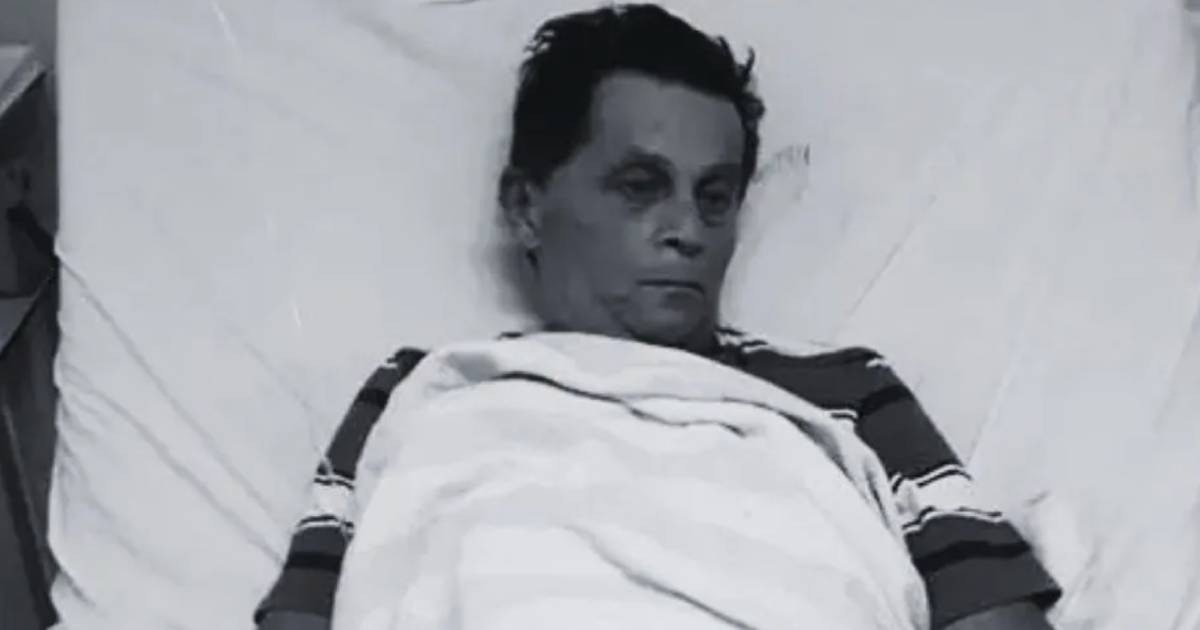
The activist and independent journalist Guillermo del Sol Pérez, a member of Cuba Decide, has been on a hunger strike for 42 days at his home in Santa Clara, according to the independent organization Cubalex this Wednesday.
His health is critical and the doctors attending to him warned that he could collapse at any moment, noted the publication.
The protest, which began on June 19, calls for the release of the political prisoner from 11J Leonel Tristá García and of another 17 political prisoners from Villa Clara.
The Cuban regime has not responded to any of those demands, stated Cubalex.
People close to the activist have reported that Del Sol is experiencing a diabetes and hypertension crisis, significant weight loss, and signs of dehydration.
The doctors who visit him have noted that his physical reserves are nearly depleted, yet he remains steadfast in the protest.
One of the direct triggers of the strike was the revocation of the extrapenal license of Tristá García, who had been released in January 2025 as part of the releases announced by the regime.
In June, the authorities ordered his re-entry to Guamajal prison in Villa Clara, where he will serve the remainder of an eight-year sentence imposed for participating in the protests on July 11, 2021.
The strike was also preceded by the arbitrary detention of Del Sol himself by State Security agents, who accused him of stealing a motorcycle for which the activist has legal documentation.
The 42 days that have passed represent an especially dangerous threshold for Del Sol, who experienced a similar situation in 2019.
That time, after more than 40 days of fasting, he suffered a fainting spell with a blood pressure of 160/100 and was urgently transferred to the Arnaldo Milián Castro Hospital in Santa Clara. Government agents forced him out of the hospital and sent him back home, confiscating the phones from him and his son.
This 2019 strike lasted a total of 55 days —the longest in its history so far— and was initiated to demand the end of the "regulated" policy that prevented his son Adrián del Sol Alfonso from leaving the country. According to Memory of Nations, Del Sol has undertaken 14 hunger strikes throughout his career as an activist.
The current hunger strike is taking place at his home, which, according to Cubalex, provides greater national and international visibility and makes it difficult for the authorities to formally classify it as an act of prison indiscipline.
However, this type of protest often triggers other mechanisms of repression: constant surveillance of the home, internet service cutoffs, and police barriers to prevent visits from family members or journalists.
The context of the strike reflects the general situation of political prisoners in Cuba. In April, Justicia 11J reported 775 political prisoners on the island, 338 of whom are linked to the protests of July 11th.
The mass pardon of that same month, which benefited more than 2,000 inmates, expressly excluded those convicted of "crimes against authority," the category that the regime uses to imprison demonstrators.
In 2019, on the verge of physical collapse, Del Sol declared: "I don't know what plans Raúl Castro has for me, but I accept the challenge, and I will go to the ends of the earth, until there are no more regulated individuals in Cuba, or until I lose my life in the effort."
Seven years later, after 42 days without eating and with the regime remaining unyielding, that determination is once again put to the test.
Related videos:
Filed under: