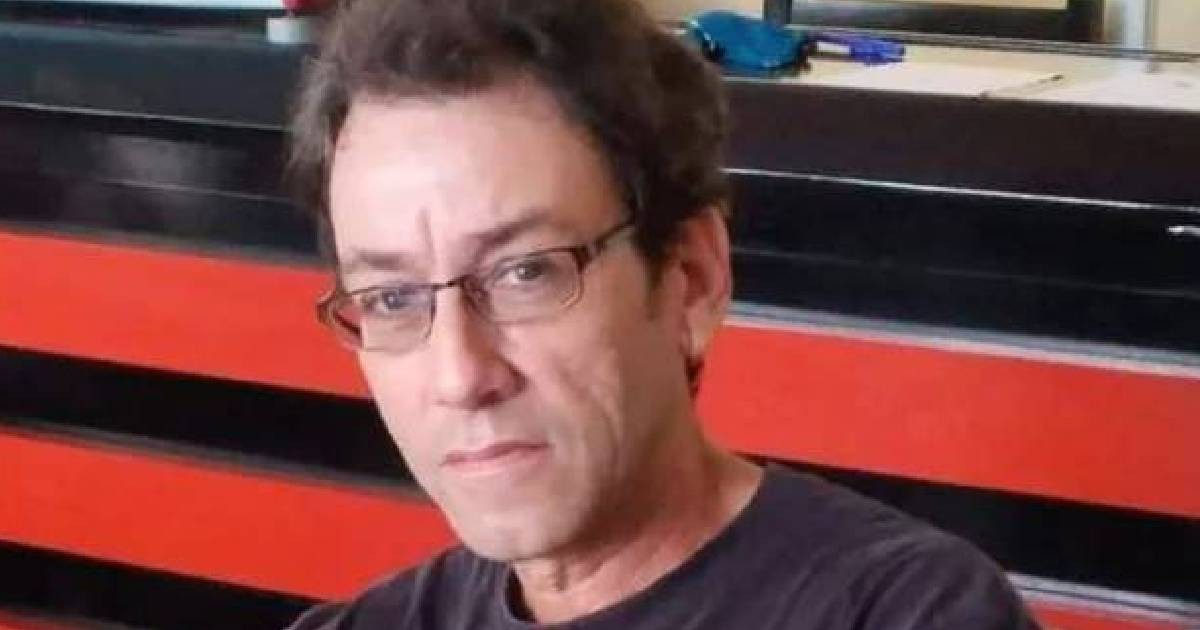
The Supreme People's Court (TSP) of Cuba dismissed the appeal for cassation submitted six months ago on behalf of independent writer and journalist José Gabriel Barrenechea Chávez, as reported by the independent portal Cubanet.
On July 28, the entity issued sentence No. 417-2026-1875-2717, fully supporting the conviction of six years in prison that the Provincial People's Court of Villa Clara imposed in mid-January for the crime of "public disorder" after participating in a peaceful protest in Encrucijada to demand the restoration of electric service.
With this action, Cuban justice closed the last ordinary judicial avenue for Barrenechea Chávez, who was unable to even say goodbye to his mother, who passed away a few months ago while waiting to see her son free.
The highest court argued that the provincial ruling "is based not on isolated or generic assessments, but on a body of evidence comprised of statements from acting agents, eyewitnesses, and the defendants' own declarations."
The processing of the appeal was handled by the Chamber of Crimes Against State Security of the TSP, the same body that addresses political cases in Cuba.
Barrenechea Chávez was arrested on November 8, 2024, a day after residents of Encrucijada took to the streets in front of the municipal headquarters of the Communist Party and the Government following more than 48 hours without electricity.
According to the accusation, the journalist shouted "turn on the power; we want the power" and urged those present not to leave the protest. However, videos circulated on social media show him attempting to calm the crowd to prevent the situation from escalating into violence, in clear contradiction to the official narrative.
The TSP stated that the demonstrations "resulted in an effective disruption of public order due to the impact on the normal flow of people and vehicles in the area and the loud noises made by the accused using metal objects."
The defense argued that there was insufficient evidence of Barrenechea Chávez's involvement beyond his presence at the scene, and that the events did not constitute a crime as they were an exercise of a constitutional right. The TSP rejected both arguments.
Alongside Barrenechea Chávez, five other protesters were sentenced in January 2026, with penalties ranging from three years of corrective labor to eight years in prison, in a process that international organizations such as PEN International and Artists at Risk Connection have characterized as the criminalization of peaceful protest.
The journalist has been held in La Pendiente prison in Santa Clara for a year and eight months, and this Friday he will turn 55 years old.
During his incarceration, he experienced one of the most painful moments of the case: his mother, Zoila Esther Chávez, passed away in May 2025 without him being able to say goodbye to her. The authorities repeatedly denied him humanitarian passes, despite being her sole caregiver, and only allowed him to attend the wake in handcuffs and under surveillance.
From prison, Barrenechea Chávez wrote a letter in which he bitterly accepted what had happened: "The fault is mine. Because, knowing the country I was living in, I committed the grave crime of joining my neighbors in the civic demand for electricity. (...) I couldn't say goodbye to her, I couldn't ask for her forgiveness and receive her blessing."
The dismissal of the appeal solidifies a sentence that, discounting the time already served since November 2024, would keep Barrenechea Chávez incarcerated until approximately 2030.
Related videos:
Filed under: