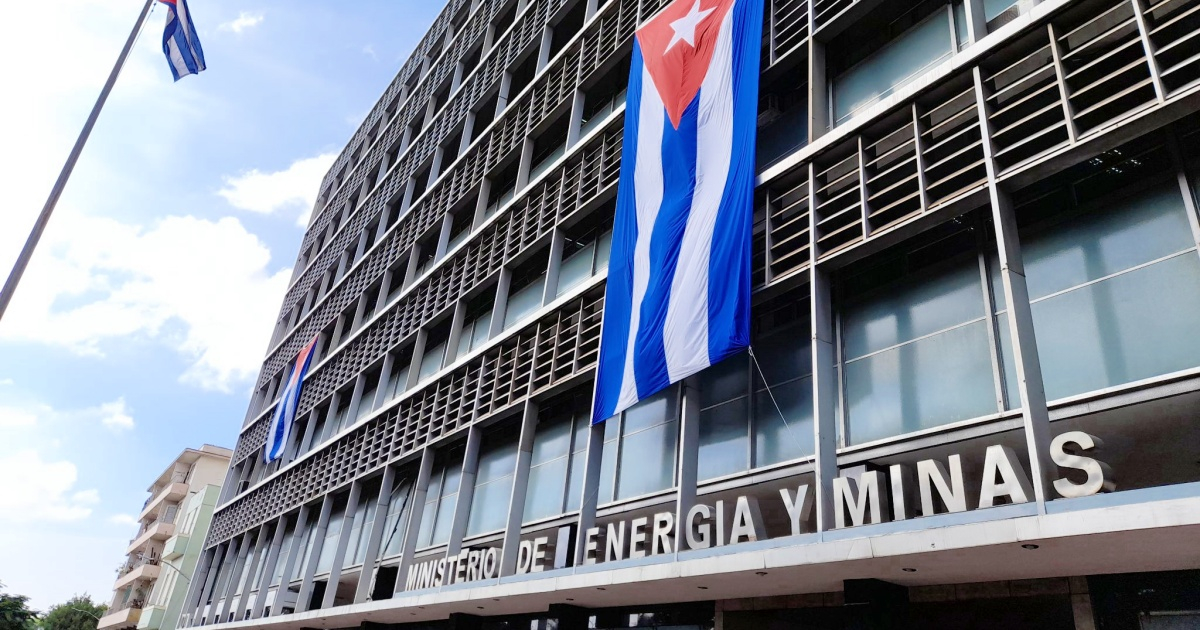
The historic Cuban Electric Company (CEC) filed a lawsuit on July 29 in the Federal Court for the District of Columbia against the Cuban Electric Union (UNE) and Energas S.A., claiming compensation that, with triple damages and interest accrued since 1960, amounts to approximately 802.7 million dollars.
The legal action was filed by the firm Atlas Holdings under Title III of the Helms-Burton Act.
The demand and its figures
The base amount of the claim is $267,568,413.62, a figure certified in 1970 by the U.S. Foreign Claims Settlement Commission (FCSC), plus an annual interest of 6% from August 6, 1960, the date when the Fidel Castro regime confiscated the company.
Given that Title III of the Helms-Burton Act allows for tripling damages in certified claims, the total amount -including fees and court costs- amounts to nearly 802.7 million dollars.
The case was assigned to federal judge John D. Bates and presented by the New York firm Steptoe LLP, the same firm that achieved a historic victory before the Supreme Court on behalf of Exxon Mobil, which established that the Helms-Burton Act displaces the sovereign immunity of Cuban agencies.
Who is suing and why?
Atlas Holdings, based in Greenwich, Connecticut, and owner of the Office Depot chain, acquired the certified claim from the CEC before the FCSC.
The company was founded in 1927 as a subsidiary of the American firm American & Foreign Power and came to control more than 90% of electricity generation in Cuba, as well as the manufactured gas system in Havana.
The text of the lawsuit is compelling:
"In 1960, Fidel Castro's revolutionary regime illegally confiscated this property and numerous other assets—valued in total at over $300 million—from the plaintiff, without just cause or compensation. As a direct consequence of these confiscations, the plaintiff was stripped of their investments, deprived of the use and value of their property, and forced to cease operations in Cuba."
The defendants: UNE and Energas
The lawsuit points to the UNE as "one of the main beneficiaries of the confiscation," which "owns, controls, manages, operates, and profits from numerous confiscated assets, including significant generation facilities built on the plaintiff's properties, such as the Antonio Maceo Thermoelectric Power Plant (Renté) in Santiago de Cuba; the Carlos Manuel de Céspedes Thermoelectric Power Plant in Cienfuegos; the Melones electrical substation and gas complex in the Bay of Havana; and the Guaso Hydroelectric Power Plant."
Regarding Energas, the claim states that this company "profits and trades in the confiscated property of the plaintiff through its involvement in the energy generation and natural gas processing sectors in Cuba."
It also asserts that its operations "depend on -and are physically integrated with- facilities, transmission infrastructure, and gas distribution assets confiscated from the Cuban Electricity Company."
Energas is a joint venture between UNE, the state oil company CUPET, and the Canadian mining company Sherritt International Corporation, which suspended its direct operations in Cuba last May following the expansion of U.S. sanctions.
Although Sherritt is not listed as a direct defendant, the claim affects it indirectly.
The legal context and strategy
Since the reactivation of Title III of the Helms-Burton Act in May 2019, at least 47 lawsuits have been filed in U.S. courts, and the Cuban regime has only responded with legal representation in the case of Exxon Mobil.
John Kavulich, president of the Cuba-U.S. Economic and Trade Council, explained to Café Fuerte the reasoning behind the chosen timing.
"The Cuban government has limited options to mount a defense and is more likely to seek an out-of-court settlement, especially given the risk that the lawsuit could negatively impact the purchase offer from Sherritt International Corporation, recently submitted by a Texas-based company," he detailed to the mentioned outlet.
Kavulich added that Steptoe LLP has "an additional reason to leverage its representation of both clients in order to reach an agreement."
The FCSC has certified a total of 5,913 claims from American citizens and companies against Cuba, valued at approximately 7 billion dollars, suggesting that this lawsuit could be just one of many expected to reach federal courts.
Related videos:
Filed under: