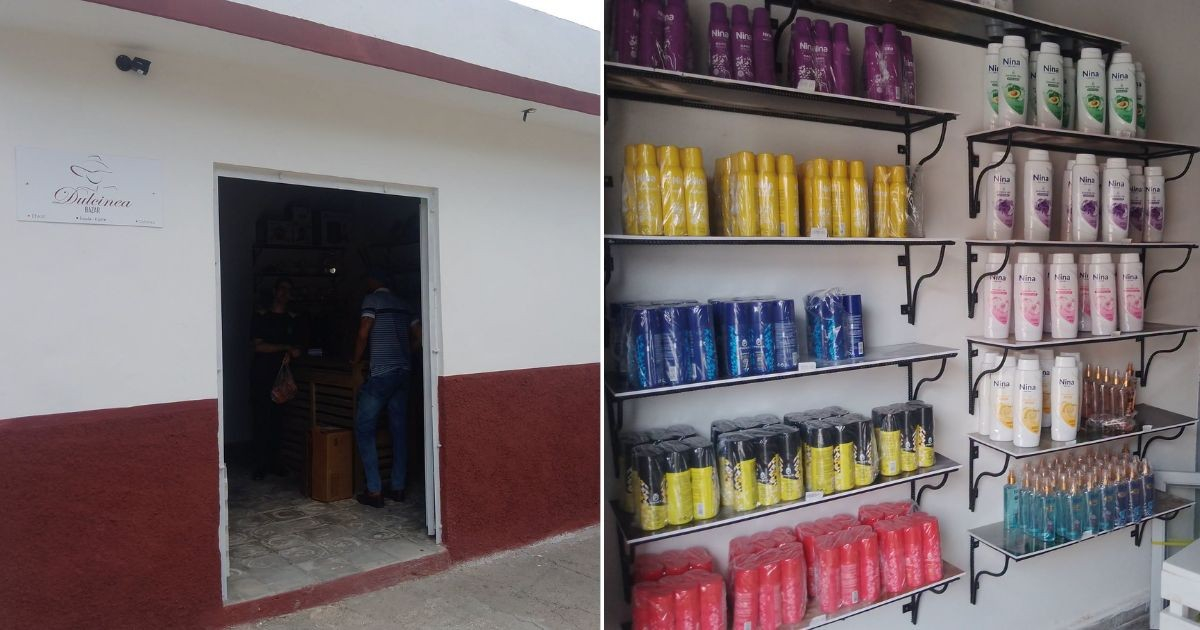
The state broadcaster Radio Ciudad Monumento presented this Saturday as an achievement for Bayamo the opening of the private bazaar Dulcinea, where all products can be paid for via bank transfers, without the need for cash.
The paradox is that the regime showcases a private sector initiative as a city development when its banking policies have not resolved the cash shortage or achieved widespread acceptance of transfer payments.
The bazaar, located on Zenea Street, is operated by the mipyme Ínsula Quijote, a private entity that accessed a financing scheme from the Bank of Credit and Commerce (Bandec) through its Business Round, developed in partnership with the Integral Services Company Fénix.
Roberto Boza Blanco, administrative director of the mipyme, explained to the official broadcaster that this funding allows for financing imports or purchasing products from suppliers through transfers to later sell the goods in the establishment.
The store offers appliances, household goods, cleaning products, candies, meat products, clothing, tools, and plumbing materials, with plans to include oil and other essential items.
Boza Blanco acknowledged that “the prices are not as affordable as they would like, but they are an additional option accessible through transfer with the intention of closing a cycle that still has many loose ends.”
He also stated that Dulcinea is "the first establishment of a network of markets that will be implemented in the city", and announced the future opening of another location based on the same payment principle.
The announcement, however, has generated considerable skepticism. Jorge Luis Agüero commented: "They open a new store to allow payment by transfer, and the only items they have are four types of shampoo and one kind of cologne."
For his part, Cristhiam Rodríguez highlighted the most "curious" aspect of the alleged achievement and raised the question that many are asking: "I want to see a foreign supplier receiving national currency in their accounts."
"That's because of the inauguration; we'll see what happens when they have to restock without cash. That's where banking comes to a halt," emphasized Alejandro García Varona.
The radio station's publication omits the context in which the initiative arises. The banking policy, formally promoted since August 2023, has not managed to displace the use of cash or ensure the stable operation of electronic payments.
The state press itself acknowledged in April that “cash remains the undisputed king of daily economics”.
It also documented businesses that charged a 10% surcharge for electronic payments, while in some provinces, intermediaries demanded commissions of up to 20% to deliver cash in exchange for transfers.
In light of these difficulties, the Central Bank announced in July new incentives for digital payments, including the immediate crediting of certain transactions, reductions in fees, and bonuses for consumers and businesses.
Likewise, Resolution 74/2026 suspended the limit of 5,000 CUP for cash transactions between economic actors, established in 2023, with no set date for its renewal. This measure will remain in effect until, as stated in the official text, "the country's conditions allow it."
In that context, the state media presenting the opening of a private store that accepts transfers as a "precedent" reveals the extent of the problem: a payment method that should be widely available is still celebrated as an extraordinary achievement.
Related videos:
Filed under: