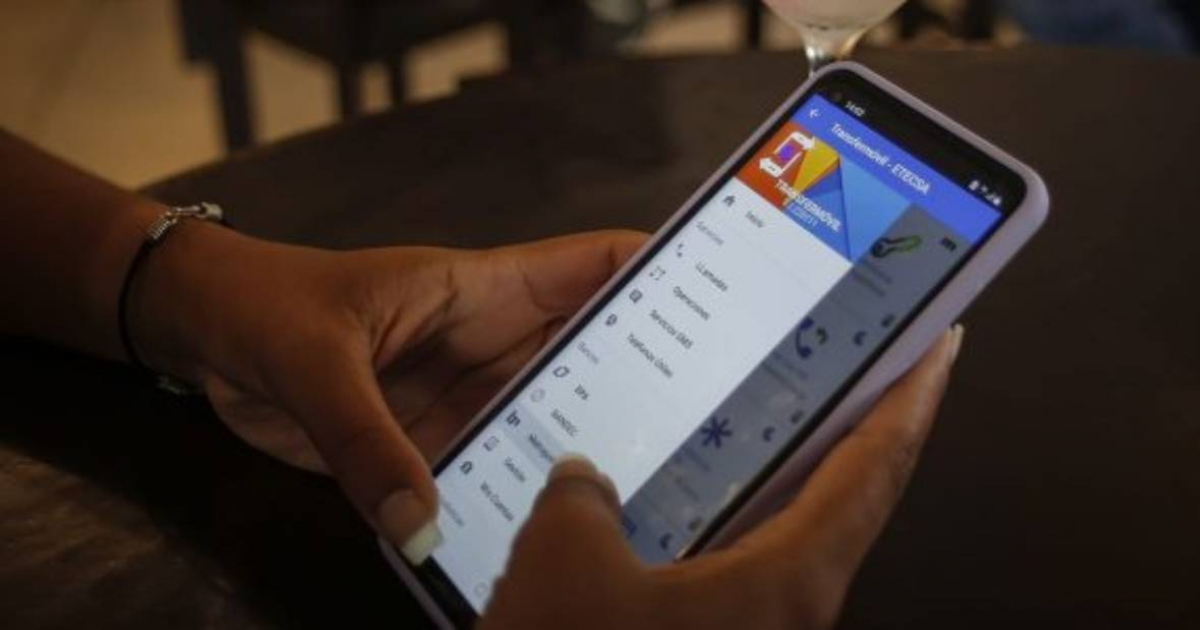
The Central Bank of Cuba (BCC) promised this Friday that businesses accepting digital payments will receive funds immediately, as part of a package of new measures to promote digital payments announced to state media.
According to the official organization, the real-time accreditation of Online Payment operations will begin on August 1st for transactions within the bank itself, and it will gradually be extended.
The BCC acknowledged that the delay in accreditation was "one of the main objections to the digital channel."
The announcement comes three years after the regime enforced mandatory banking through Resolution 111/2023, a policy that is now recognized even by the pro-government press as a resounding failure: only 3.77% of transactions in Cuba are digital, and less than 10% of private businesses regularly accept transfers.
Along with the promise of immediate accreditation, the BCC announced changes to the fees: the fee applied to businesses for Online Payments decreases from 1.5% to 0.8%; the cash deposit fee is eliminated; and a new fee of 0.2% is established for cash withdrawals, arguing that physical money incurs costs for production, transport, and custody.
In terms of bonuses, the consumer will receive a 4% for Online Payment transactions, with a cap of 210 Cuban pesos (CUP) for transactions exceeding 5,250 CUP, while the merchant will receive a 2% for operations received through this method, with a cap of 105 CUP.
The package also modifies the thresholds for transfers between individuals: the limit for individual transactions is removed and a monthly threshold of 2.5 million CUP is set, above which physical presence will be required to declare the destination of the funds.
In parallel, Resolution 74/2026, signed on July 10 by the chairwoman of the BCC, Juana Lilia Delgado Portal, and published this Friday in the Official Gazette, indefinitely suspends the limit of 5,000 CUP for cash collections and payments among economic actors, delegating the negotiation on a case-by-case basis to each bank with its clients.
The failure of the coercive policy is hard to conceal: the regime imposed more than 15,240 fines and ordered 269 closures of businesses for not accepting electronic payments, without achieving the goal of digitalization.
Meanwhile, the structural cash shortage created a parallel market for converting transfers into physical cash with fees that escalated from 15% in September 2025 to 40% documented in Santiago de Cuba last Thursday, where transferring 1,000 pesos meant receiving only 600 in bills.
The reaction of Cubans to the new measures was one of widespread skepticism: "Now there are no limits on cash payments, the problem is that there is no cash in the banks.", they summarized on social media.
The official newspaper Venceremos itself acknowledged on July 3 that the banking crisis "has ceased to be a banking difficulty and has become a social problem," an admission that contrasts with the optimistic tone with which the BCC presented its new promises this Friday.
Related videos:
Filed under: