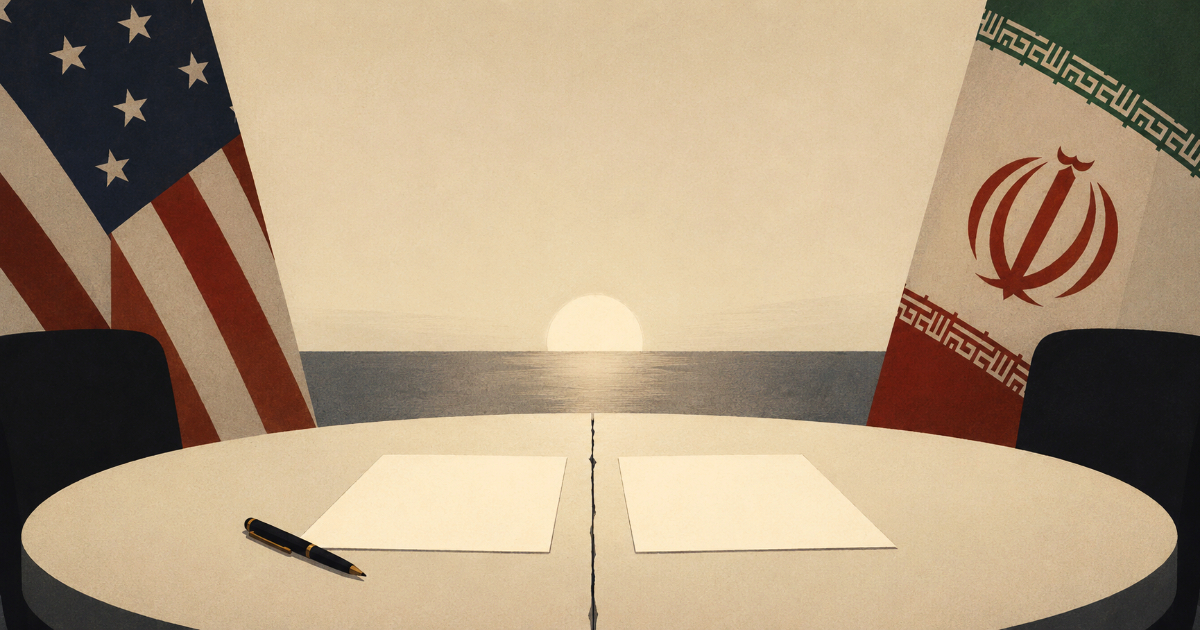
The president Donald Trump announced this Saturday that he canceled an imminent military attack against Iran after reaching what he described as "the foundations of an agreement" with Tehran, which would include the complete opening of the Strait of Hormuz and the end of the Iranian nuclear threat.
In a post on his Truth Social account, Trump claimed that the United States was "prepared to attack the Islamic Republic of Iran with a level of military terror, strength, and power not seen since World War II," but that Iran and other Middle Eastern countries urged him to halt any offensive as the terms of an understanding had been agreed upon.
"In response to this request, I have agreed, for the good of the world and, likewise, for the survival of a prosperous Iran, to cancel the attack, as long as an agreement can be reached quickly. Israel joins this commitment," wrote the leader.
The announcement did not specify whether it is a new roadmap or the continuation of the negotiations that began in June.
The context in which the announcement occurs is one of extreme tension: on that same day, the U.S. embassies in nine countries in the region — including Jordan, Iraq, Saudi Arabia, and the United Arab Emirates — urged their citizens to consider leaving the Middle East due to the escalation of the conflict.
This is not the first cycle of agreement and collapse in this conflict, which began on February 28, 2026 with coordinated air strikes by the U.S. and Israel against Iran.
On June 17, both parties signed a Memorandum of Understanding in Switzerland negotiated by Vice President JD Vance and Iranian Chancellor Abbas Araghchi, which established a ceasefire, the reopening of Ormuz, and a 60-day deadline to negotiate a final nuclear agreement.
However, on July 8 Trump declared that truce over before NATO, following new cross attacks, and Iran once again blocked the maritime route through which 20% of the world's oil trade passed before the war.
On July 27, Trump ordered a temporary halt to bombings to create room for negotiations, but just days later, the situation worsened again.
The Secretary of State Marco Rubio clarified that Washington's goal is the denuclearization of Iran, not regime change, although he warned that Tehran's behavior must transform: “The Iranian regime wants to export its revolution. That needs to change, and the only way to achieve that is by making the cost too high for them to bear.”
The volatility of the process became evident when, just hours after the announcement of the agreement, Trump declared that he had "lost faith" in the negotiations following a new Iranian attack, marking this as the third cycle of announcement and collapse in less than three months.
Related videos:
Filed under: