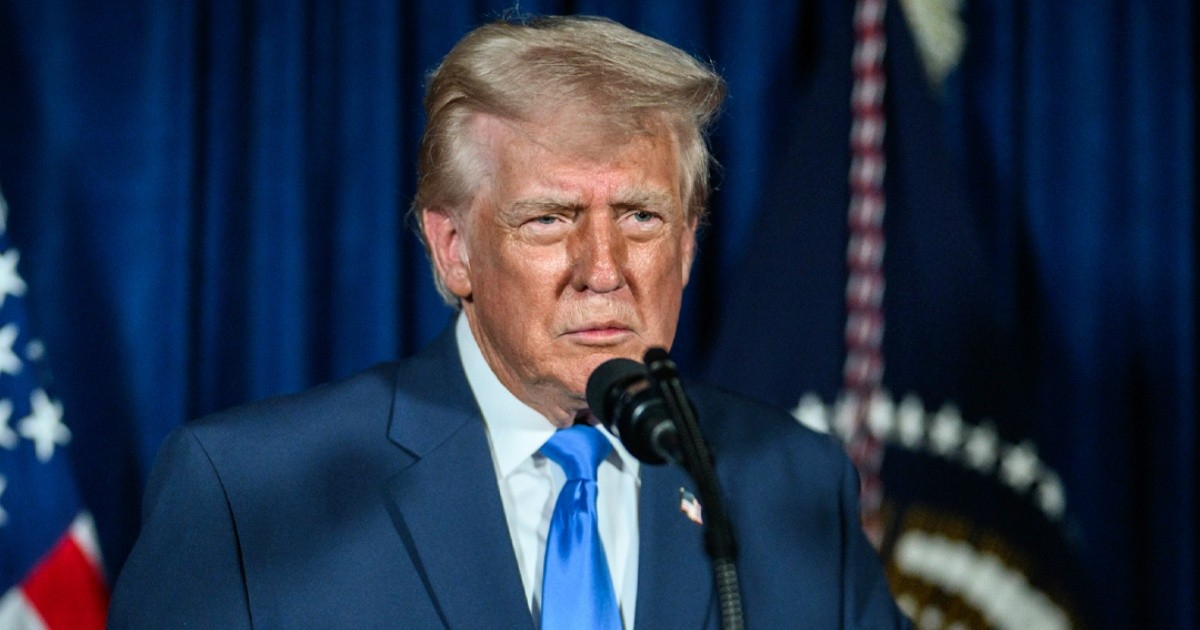
A coalition of 25 states governed by Democrats filed a joint lawsuit with the U.S. International Trade Court in Manhattan against the latest round of tariffs from the Trump administration.
States accuse Trump of illegally using Section 301 of the Trade Act of 1974 to replace previous tariffs that had been annulled by the Supreme Court or had already expired, according to a report by the agency Reuters.
This is the largest coordinated legal challenge to the U.S. president's trade policy to date.
The states that join the lawsuit
The action was driven by Oregon, Arizona, and California, and signed by 22 other states.
They are: New York, Colorado, Connecticut, Delaware, Hawaii, Illinois, Kentucky, Massachusetts, Maryland, Maine, Michigan, Minnesota, Nevada, New Jersey, New Mexico, North Carolina, Pennsylvania, Rhode Island, Virginia, Vermont, Washington, and Wisconsin.
Obviously, the state of Florida, governed by Republicans, does not appear on the list of plaintiffs.
The states argue that there is no “rational relationship between the alleged issue of forced labor in international supply chains and the generalized global tariffs” imposed by the Office of the United States Trade Representative (USTR).
The document also states that the investigations of Section 301 were "rushed and biased" from the outset, and that the tariffs lack the legal mechanism that would allow the sanctioned countries to see how the charges could be lifted if they rectify the reported practices.
“The complaining states oppose forced labor in all its forms and support the protection of workers worldwide. However, the Administration cannot use forced labor as an excuse to continue its illegal tariff scheme”, states the document.
The Attorney General of New York, Letitia James, was more straightforward:
"Following their defeat in the Supreme Court, the Administration is once again trying to illegally raise taxes on families and businesses with a new round of tariffs."
He added that "the law and our Constitution are clear: the president does not have the authority to impose generalized tariffs on any country he pleases."
The Attorney General of Delaware, Kathy Jennings, reported that "the USTR has reached an inevitable conclusion in order to impose tariffs similar to those that the courts have annulled on two occasions," according to statements collected by the agency AFP.
The history of setbacks that explains the lawsuit
This is the third time that Trump's tariff policy has reached the courts.
In February 2026, the Supreme Court declared the global tariffs imposed under the International Emergency Economic Powers Act (IEEPA) illegal, forcing the government to refund approximately $166 billion to thousands of importers.
Following that ruling, Trump resorted to a temporary 10% tariff under Section 122, which required Congressional approval to be extended—approval that he did not receive—and it expired on July 24.
To avoid the tariff void, the administration announced on July 23 new tariffs ranging from 10% to 12.5% on 60 trading partners - including the European Union, India, Japan, and South Korea - under Section 301 - justifying that these countries had not taken sufficient measures against forced labor.
The affected goods represent 99% of the total imports of the United States.
The response from the White House and the legal analysis
The White House spokesperson, Kush Desai, defended the measure.
"The tariffs under Section 301 have proven to be a legally strong tool since the president's first term, and they remain so now," he said, according to Telemundo 49.
The lawsuit from the 25 states adds to two others filed in July by small businesses that also challenge the Section 301 tariffs for not reflecting the specific country research required by Congress.
Legal expert Barry Appleton, a professor at New York Law School, warned that the outcome is uncertain.
"The government's defense will not be: 'I had no power to do this.' It will be: 'I stayed within the lines drawn by Congress.' That is a real battle, not a formality, and it is what will decide this case," he stated.
Related videos:
Filed under: