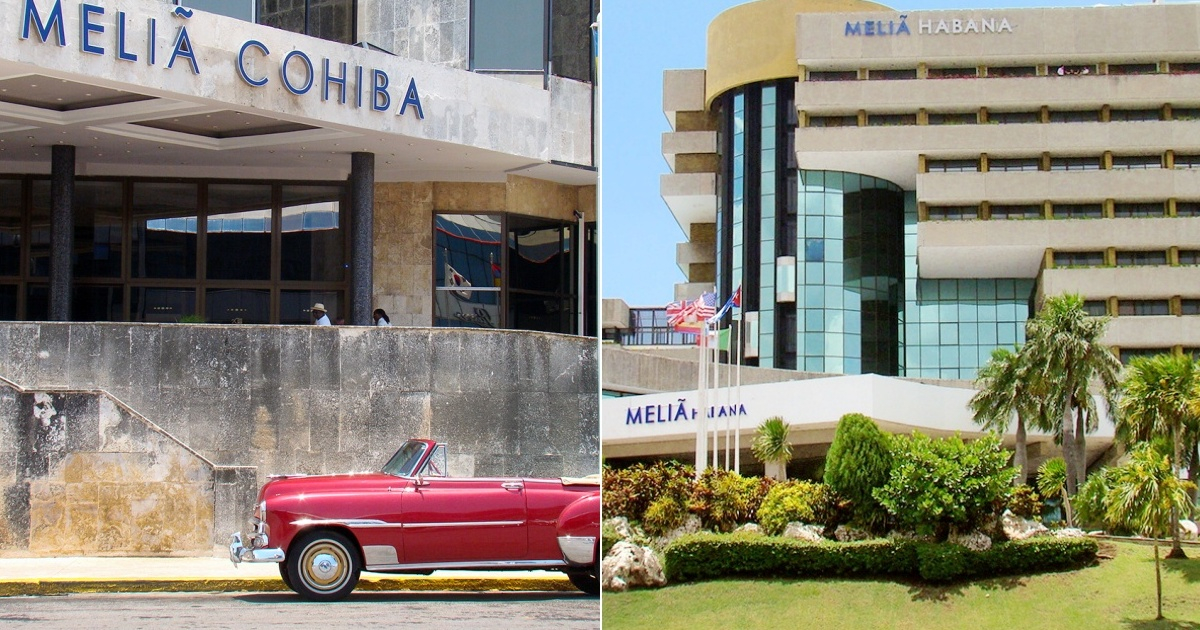
The president and CEO of Meliá Hotels International, Gabriel Escarrer, downplayed the financial impact of the definitive withdrawal from Cuba while presenting the results for the first half of 2026, according to the tourism portal Reportur.
Escarrer emphasized that “the positive evolution of the underlying business reinforces our conviction that this is a one-time impact and does not affect cash flow”, and defended a commercial strategy focused “on value rather than volume”, supported by a greater emphasis on the premium and luxury segments.
An accounting hit that does not reflect the health of the business
The semester figures present an apparently contradictory picture: the consolidated net profit plummeted to 4.1 million euros, as a result of an extraordinary provision of 79.4 million recorded to cover balances and assets linked to the island whose recovery the company considers uncertain.
Without that exceptional adjustment, the net result from continuing activities would have reached 83.4 million euros, consistent with previous years.
The group's management framed it as a decision of prudence: "The option to conservatively provision the entire balances and assets of Cuba, whose recovery is currently difficult to predict, has a significant impact on the financial results of the period, but it helps to strengthen the solidity, transparency, and credibility of the group's balance sheet."
The operating business, in form
Beyond the Cuban impact, the operational indicators show an expanding chain: consolidated revenues grew by 7.1%, reaching 1,047.4 million euros, and EBITDA increased by 2.5%, reaching 244.7 million.
The average revenue per available room (RevPAR) surged by 11.7% in the first half of the year and by 14.2% in the second quarter alone, while direct channel sales increased by 12%.
Reservations for the second half of the year exceed the previous year's figures by double digits, prompting the company to maintain its forecast of a minimum EBITDA of 565 million euros in 2026, with at least 40 new hotel agreements and around 30 openings planned.
The end of 36 years in Cuba
The exit from Cuba was a phased process that culminated on July 24 with the closure of the 34 hotels managed by the chain on the island through its Portuguese subsidiary Ilha Bela Gestão e Turismo, marking the end of 36 years of uninterrupted presence.
The process began when Executive Order 14404, signed by U.S. President Donald Trump on May 1, 2026, designated the Cuban military conglomerate GAESA as a sanctioned entity.
On July 13, the Trump administration expanded sanctions against the Cuban Ministry of Tourism and nine additional state entities, removing any legal margin to continue operations.
Meliá was not the only one to leave: Iberostar, Barceló, and Blue Diamond Resorts also exited Cuba during that period. The chains that departed managed more than 30,000 of the 86,559 rooms available on the island, representing 35% of the total, and the losses for Spanish companies are estimated between 80 and 100 million euros.
The markets, relieved
Financial markets welcomed the exit with relief. Banco Sabadell had described its presence in Cuba as "a source of uncertainty that had penalized the group for years," and Deutsche Bank continues to list Meliá as its only buy recommendation among European hotel companies, with a target price of 13 euros per share.
Escarrer did not rule out a potential return. When asked if Cuba has a tourism future, he responded emphatically: "I believe it does, without a doubt."
Related videos:
Filed under: