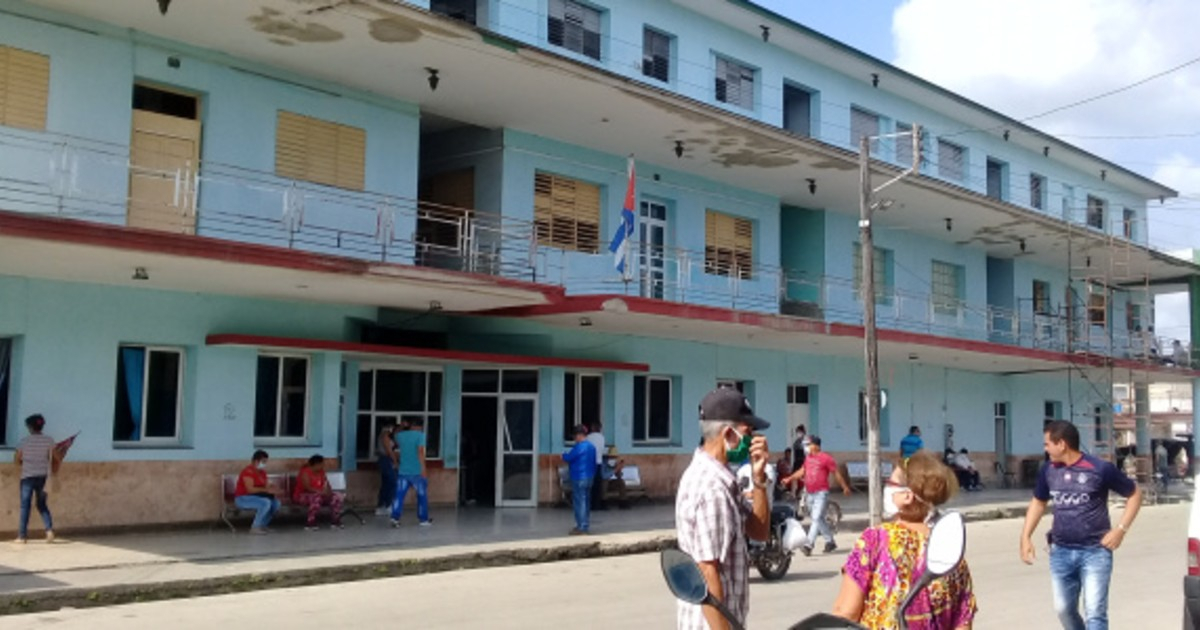
A man identified as Juan Luis Ávila has died, and his brother, Lázaro Luis Ávila, remains hospitalized in critical condition following a violent incident that occurred in Guaracabulla, in the municipality of Placetas, Villa Clara, which is believed to be related to illegal gold mining.
The case was initially reported by content creator Niover Licea through his platform Nio reporting a crime, although CubaNet later stated that it was able to corroborate the incident through local sources consulted via WhatsApp.
However, the exact number of affected individuals remains unclear. By Monday afternoon, the Revolutionary National Police (PNR), the Ministry of the Interior (MININT), and provincial authorities had not publicly reported on the incident.
The initial reports, circulated since Saturday, spoke of one person dead and two others seriously injured with bladed weapons. A later version mentioned a third person injured, but no authority has confirmed that count.
Juan Luis and Lázaro Luis were natives of Cajimaya, a locality in the Holguin municipality of Mayarí. According to available information, both were in the area participating in activities related to the search and extraction of gold.
Testimonies gathered after the incident point to an alleged economic dispute related to that activity. They also claim that the supposed assailant fled, although their identity has not been disclosed and there is no verifiable information regarding their possible capture.
Illegal mining activity in Guaracabulla is not recent. A study published in 2022 by researchers from the Institute of Geology and Paleontology documented the opening of wells by individuals and the extraction of minerals from outcrops of the Descanso-Meloneras system and nearby structures such as Oropesa.
Researchers warned that there were no reliable records regarding the volumes extracted. For this reason, public sources do not allow for the determination of how many wells remain active, who controls them, or how much gold they produce.
The same study warned about the dangers this practice poses to people and the environment. Among the main risks, it highlighted the uncontrolled use of mercury to extract gold, as well as the removal and crushing of rocks without adequate safety conditions.
The interest in the gold of Guaracabulla persists due to the mineral potential of the area. A study published in 2025 confirmed the continuity of mineralization and described the presence of rich veins of that metal. The research indicated that the Descanso mine had already been exploited, while the nearby Meloneras had only been partially exploited.
Descanso was for years the main underground operation in the area. It reached just over 100 meters in depth and was presented as the only operating underground mine in Cuba.
Exploitation had ceased months before February 2019. In a report published at that time by the state portal Cubadebate, the halt was attributed to “risk, operational costs, and the slow pace of extraction.”
In December of that year, the Council of Ministers declared the concession granted to the Geominera del Centro Company to be expired. The decision called for sealing off the accesses, removing the equipment, rehabilitating the affected surface, and presenting a closure schedule, although the land remained available for future mining applications.
Despite the closure of state-run operations, illegal gold extraction has continued in Guaracabulla and other areas of the country. In 2025, the Police dismantled a clandestine mining camp in Santa Clara and arrested two individuals.
Between 2020 and the first quarter of 2021, another 115 people were prosecuted for illegal mining in provinces such as Guantánamo, Holguín, and Las Tunas.
In May 2024, more than 30 people were also prosecuted in Camagüey for engaging in illegal gold extraction. The penalties imposed reached up to two years of deprivation of liberty.
Related videos:
Filed under: