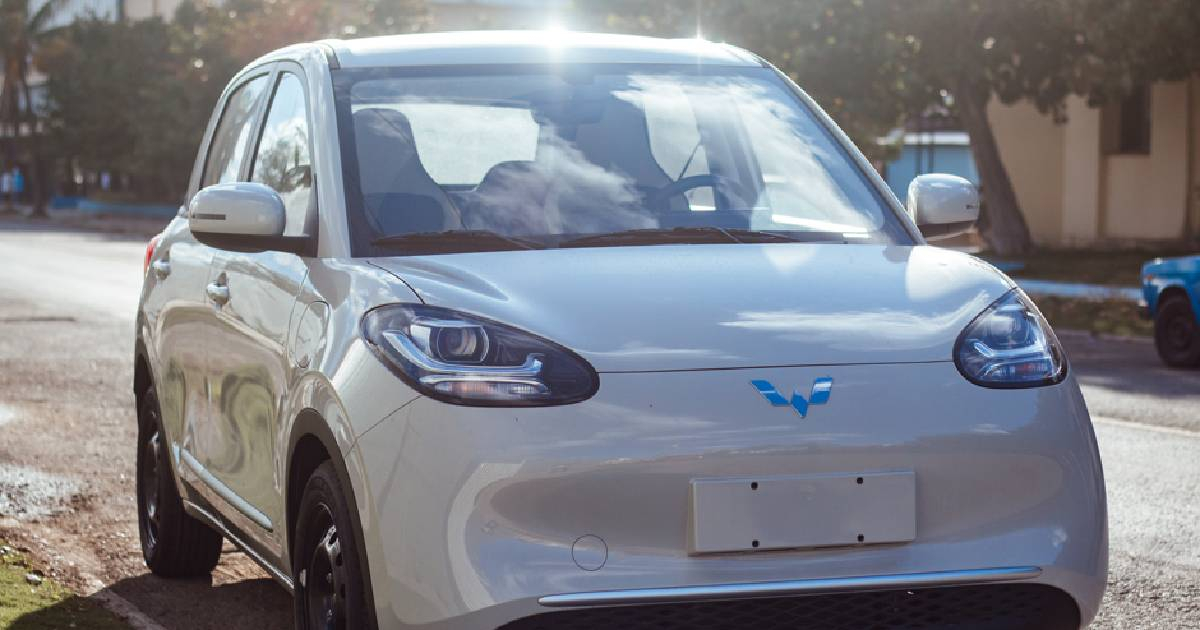
Cubans will be able to import a fully electric car without paying taxes or tariffs for one time only, as long as the vehicle comes with a charging station powered by renewable sources that ensures full coverage of its energy needs.
The measure is included in the Official Gazette published this Tuesday, which compiles Decree 163/2026 and several supplementary resolutions regarding the purchase, marketing, and importation of vehicles, and will come into effect seven days after its publication.
The provision is part of the new set of regulations on vehicles approved by the Cuban Government, but it sets specific conditions for those who intend to import an electric car.
This modality will be available to Cuban individuals and foreigners with permanent, temporary, real estate, provisional, or humanitarian residency in Cuba.
The authorization covers a fully electric car or electric SUV and can be used only once. The import will be carried out on a non-commercial basis through unaccompanied baggage or shipment.
The Customs allows the vehicle with or without the renewable charging station. However, the customs duty exemption will only apply when the station accompanies the vehicle and has sufficient capacity to fully charge it.
The regulation does not limit the station to solar energy; rather, it generally refers to a renewable energy source that ensures complete coverage.
When the electric car arrives without that charging station, its owner will need to pay a fixed customs fee based on the value of the vehicle:
- Up to 10,000 dollars: 500 dollars.
- More than $10,000 and up to $20,000: $1,000.
- More than 20,000 and up to 30,000 dollars: 1,500 dollars.
- More than $30,000: $2,000.
The Resolution 175/2026 also establishes a maximum fee of 22 dollars for the technical and productive services provided by Customs for each non-commercial import operation of an electric car.
The tax and customs services will be paid in US dollars or their equivalent in other convertible currencies, using international cards or national prepaid cards.
The importation of the vehicle was exceptionally authorized above the general value established for personal imports and will not be counted towards the allowable value for passenger luggage.
The owner will be responsible for ensuring that the vehicle is shipped assembled or at a level of disassembly that allows it to be identified as a complete car without additional parts. The invoice or international transport document must describe it as such.
If the level of disarmament prevents determining that it is a complete vehicle, the forwarding company may request an inspection from Servicios Automotores S.A. or another authorized entity. The costs of that certification will be borne by the beneficiary or the shipper.
When it cannot be certified that the shipment corresponds to a complete automobile, the freight forwarder may return it to the place of origin, and the costs of re-exportation must be borne by the party responsible for the shipment.
Failure to comply with the specified quantities and conditions will result in the confiscation of the vehicle by the General Customs of the Republic.
The possibility of directly importing electric cars had been announced by the Government in June, but at that time, the tariffs, customs fees, and technical requirements had not been published.
The Gaceta establishes a different regime for certain Cubans working abroad, including members of diplomatic missions, consular and state business, cooperating individuals, professionals, and other workers who have stayed for at least two consecutive years in the mission.
These individuals will be able to import, just once, through an authorized importing entity, an electric vehicle with an original capacity of up to eight seats. In that case, the customs duty will be 100 dollars and the fee for customs services will be eight dollars.
The crews of ships and aircraft will also be able to take advantage of this option, although their deadlines and procedures will be governed by specific regulations.
For commercial imports, authorized companies must acquire electric vehicles from suppliers and brands approved by the Evaluative Committee of Motor Vehicles.
New cars must have a warranty of more than one year, while used cars must have a warranty of over six months, as well as after-sales service in Cuba, spare parts, trained personnel, and roadside assistance.
Used electric cars imported by these entities must not be older than ten years and must not show damage from accidents or missing components in their main systems.
Commercial imports of electric vehicles must also include charging stations based on renewable sources, with capacity equivalent to the number of cars purchased.
Related videos:
Filed under: