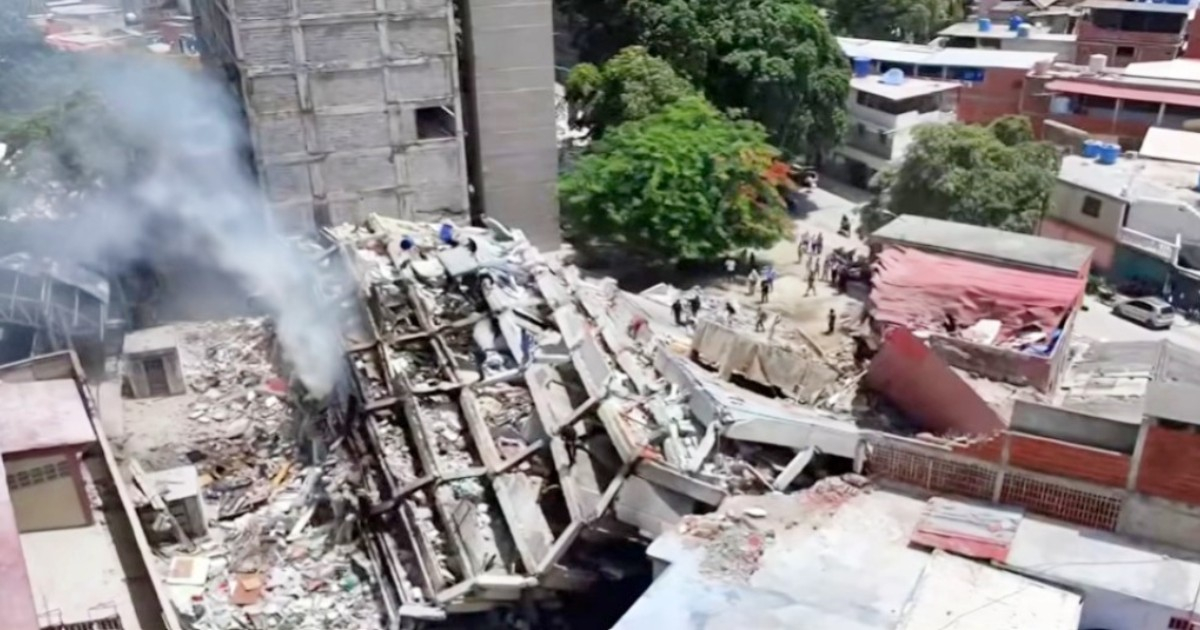
The number of deaths from the double earthquake that shook Venezuela on June 24, 2026, has surged to 6,125, according to the new official report published this Monday by Jorge Rodríguez, president of the Venezuelan National Assembly, on his social media.
The figure represents an increase of 579 deceased compared to the previous count, which had remained frozen at 5,398 victims since July 24, exactly one month after the two earthquakes measuring 7.2 and 7.5 that struck the northern region of the country, with just 39 seconds between them.
A new newsletter with a different format
The document published by Rodríguez, titled “Weekly Informative Bulletin - Reconstruction Stage”, modifies its structure compared to previous reports.
For the first time, it removes data such as the number of injured, affected individuals, and collapsed buildings, and for the first time, it includes the number of homes delivered to those affected.
Jorge Rodríguez -brother of the acting president Delcy Rodríguez- noted that 60,992 people have been treated in hospitals since the earthquakes occurred.
The report also records 6,462 people rescued and a total of 43,679 homes evaluated.
Of the 41,624 affected homes, the government classifies 25,325 as habitable, 9,866 as restricted, and 6,433 as high risk.
Regarding debris cleanup, authorities report having removed 346,755 tons, equivalent to 16.51% of the total generated by the disaster.
Only 287 homes have been delivered to affected families.
The controversial figure of the missing persons
One of the most controversial points remains the number of people who are missing.
The Venezuelan government has kept the official number of missing persons frozen since June 25 at just 157 people, a figure that civil organizations and human rights groups believe is far from reality.
The governor of La Guaira state, José Alejandro Terán, acknowledged nearly 1,400 missing persons just in his jurisdiction.
The citizens' platform “Desaparecidos Terremoto Venezuela” has reported the existence of thousands of people missing.
, while the site Venezuela Reporta raises that estimate to 41,300.
The Venezuelan NGO Provea demanded on Monday that the government update both the number of deceased and the missing persons, warning that there is "no public record to support" the official data.
The global director of ONG Ayuda en Acción, Jorge Cattaneo, reported on July 24 figures of "40,000, 50,000, 70,000" missing persons, although he clarified that difficulties in the databases - with duplicated reports - complicate the actual count.
"Cuando se trata de personas desaparecidas y en una magnitud tan grande y tan grave, no es sencillo," he stated, in comments reported by France 24.
A disaster with long-term economic consequences
The impact of the double earthquake occurs in a country that was already grappling with a serious economic and social crisis before the disaster, compounded by deteriorating infrastructure and widespread poverty that amplified the consequences of the quakes.
Tens of thousands of people remain in makeshift shelters in stadiums, plazas, and green spaces, struggling to access drinking water and basic services.
The World Bank estimated direct physical damages at 19.6 billion dollars -47% in residential housing, 27% in infrastructure, and 26% in non-residential buildings- and warned that a slow reconstruction could hinder the country's economic recovery over the next decade.
In the political sphere, the Venezuelan government and a segment of the opposition began a dialogue process, initiated by the U.S., on August 1 for a transition. They committed to addressing the needs of earthquake victims this week in Caracas, as well as issues related to democracy and political guarantees.
Related videos:
Filed under: