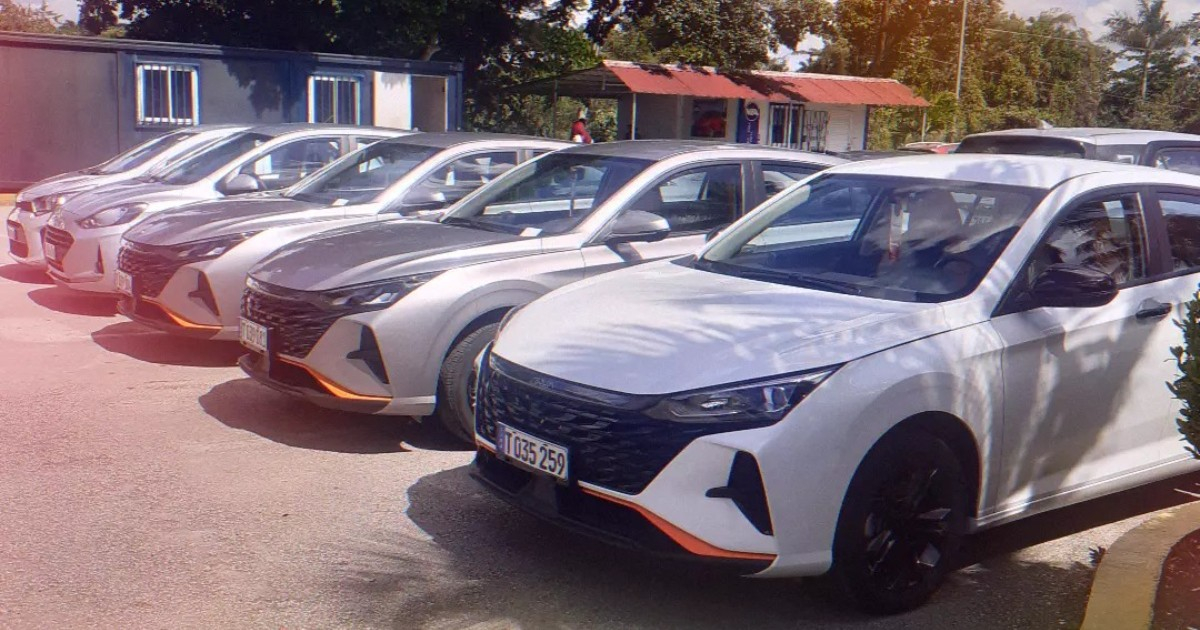
The Cuban regime published a legislative package this Tuesday in the Official Gazette No. 64 that updates the rules regarding the maximum period for the use of vehicles in the tourism sector before they can be sold in the domestic market, among other provisions concerning the manufacturing, marketing, and importation of motor vehicles.
The Resolution 52/2026 from the Ministry of Transportation (MITRANS) establishes the "Supplementary Regulations on the marketing, import, manufacture or assembly, and disassembly of motor vehicles, trailers, and semitrailers," and updates the deadlines set by the previous regulations.
Resolution 34/2023, effective from March 1, 2023, established the following maximum operating times in tourism: up to two years for economy or mid-range cars and motorcycles; up to three years for luxury cars, rural vehicles, and minibuses; up to five years for buses with 17 to 30 seats; and up to seven years for buses with more than 30 seats or double-decker buses.
The new resolution updates this framework as part of the transformation of the energy matrix, which the Cuban government declares as one of its objectives.
The package also includes the Decree 163/2026 of the Council of Ministers, signed by Prime Minister Manuel Marrero Cruz, which replaces Decree 119 of December 30, 2024, and will take effect seven days after its publication.
That decree authorizes the sale in Cuban pesos (CUP) of vehicles that are technically declared unfit in tourism rental and can be recovered by interested parties, which in theory would open a pathway for these means of transportation to enter the domestic market.
The text of the decree itself acknowledges that the update responds to "the need to adapt them to the current economic context" and to the intention of "contributing to the transformation of the energy matrix."
Another significant development is the Decree-Law 122/2026 from the Council of State, signed on July 22, 2026, by Juan Esteban Lazo Hernández, president of the National Assembly of People's Power, which modifies the Road Safety Code of 2010 to allow the assembly of vehicles not only by state entities but also by mixed companies and authorized non-state actors.
The new Article 229 of the Road Safety Code is drafted as follows: "The manufacturing and assembly of motor vehicles, trailers, and semi-trailers is authorized, provided that the parts and components are lawfully acquired, as determined by the Council of Ministers, in order to ensure the quality and safety of their operation."
Within this framework, non-state legal entities in Cuba will be able to import components to assemble mopeds, motorcycles, electric tricycles, and new electric cars, provided they have the approval of the Council of Ministers through MITRANS and that this activity is included in their corporate purpose.
Only entities authorized by the Ministry of Foreign Trade and Foreign Investment (MINCEX) will be allowed to import kits, components, and accessories for those activities, and projects for assembling electric vehicles must include charging stations powered by renewable sources.
In fiscal matters, the special tax on vehicle sales can reach 35% of the total value in foreign currency for high-end vehicles, while electric vehicles assembled in Cuba could be exempt with a rate of 0%.
This legislative package is part of the 176 measures for economic reform announced by the Cuban government in 2026, aimed at expanding non-state participation in the economy and revitalizing the domestic vehicle market amid a structural crisis that the regime attributes to external factors, but which has its roots in over six decades of centralized management.
Related videos:
Filed under: