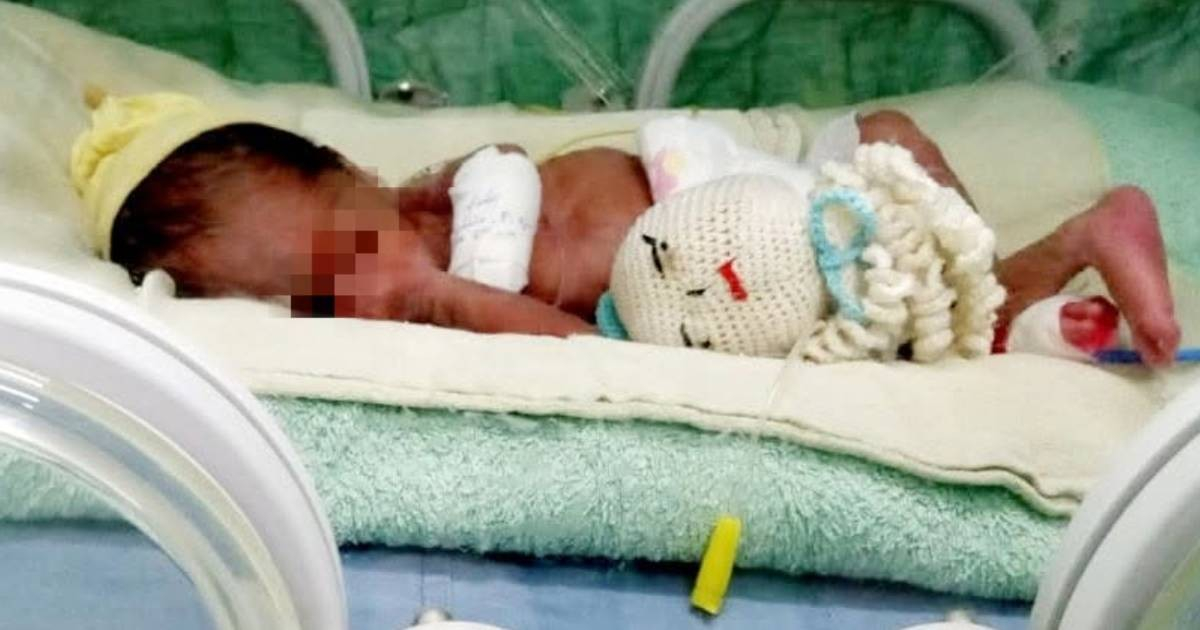
A premature baby weighing just 950 grams became the first newborn in Santiago de Cuba to receive a "comfort octopus" this Wednesday, an initiative aimed at providing greater emotional comfort to hospitalized neonates.
The little one, Derek Mateo, was born at 34 weeks of gestation and remains in the Neonatal Intensive Care Unit of the Tamara Bunke Bider Maternal Hospital, where the medical team has decided to incorporate this resource for the first time to humanize neonatal care.
The news was shared by Dr. Dagner Vargas González in a post on Facebook.
"This little crocheted octopus is not just any toy. With its tentacles, which resemble an umbilical cord, it provides Derek Mateo with security, comfort, and that feeling of protection he experienced in his mother's womb," wrote the specialist while sharing several images of the baby.
The so-called attachment octopus is a crocheted doll with tentacles that resemble an umbilical cord. Advocates of its use claim that it helps to calm some premature babies and reduces the tendency to grab or pull on tubes, catheters, and other medical devices during their stay in intensive care.
The initiative originated in Denmark between 2012 and 2013, when the knitter Josefine Hagen Solgaard created the first octopus for a premature newborn at the request of their father. From that experience, the Danish Octo Project was born, a proposal that later expanded to hospitals in various countries.
In Cuba, this practice began to be implemented in 2026 in several neonatology units. As Vargas González explained, Matanzas was the first province to adopt it, followed by Pinar del Río, Artemisa, Ciego de Ávila, Holguín, and now Santiago de Cuba.
In Holguín, the head of the Neonatology department at the Vladimir Ilich Lenin Hospital, Ana Nastia Tamayo Ortiz, noted that these dolls can also help keep newborns calmer and reduce the risk of them manipulating the tubes or probes used during their treatment, according to a report from Radio Angulo.
However, although the use of attachment octopuses has become popular in numerous hospitals as part of strategies to humanize neonatal care, scientific evidence regarding their direct clinical benefits remains limited. Therefore, specialists agree that it serves as a complement to medical care and should never replace the treatments prescribed for premature babies.
The post generated dozens of messages of support for little Derek Mateo and the healthcare personnel.
"Despite these difficult times, there is encouraging news and events. Congratulations to that brave team of professionals," wrote a user in the comments.
At the conclusion of his message, Vargas González dedicated a few words to the newborn that encapsulated the spirit of the initiative.
"Derek Mateo, you are a warrior. Your pulpit, woven with threads of hope, is a reminder that even in the most difficult moments, love and human warmth can make a difference. May this be the first of many hugs you will receive in your life. Welcome, little one!"
Related videos:
Filed under: