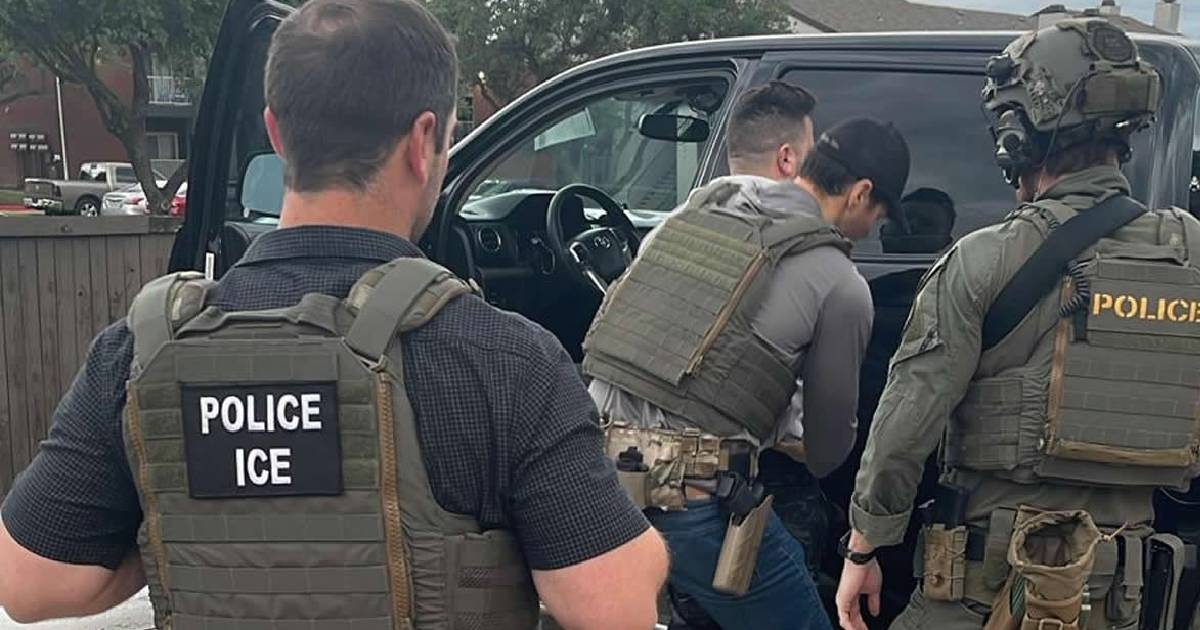
The Immigration and Customs Enforcement (ICE) will begin equipping its agents with body cameras in the next two months, but the new policy regulating these recordings includes a condition that has sparked debate: videos of serious incidents will only be released to the public when it is deemed to be in the "best interest of the agency."
The internal directive ICE 19010.3, issued in February 2025, already required agents to wear cameras during arrests, searches, and other immigration control operations.
However, its implementation was slow: in March 2026, the then-interim head of the agency, Todd Lyons, acknowledged before Congress that only 3,000 of the 13,000 agents —less than a quarter of the total— met that requirement.
The pressure to expedite the rollout came after two deadly shootings in less than a week.
On July 7, an ICE agent killed Lorenzo Salgado Araujo, a 52-year-old Mexican who had lived in the United States for nearly 35 years and was the father of three U.S. citizen children, during an operation in Houston, Texas, in which he was not the target. The Harris County coroner classified his death as a homicide.
Six days later, agent David Brouillette shot and killed Joan Sebastián Durán Guerrero, a 26-year-old Colombian with a valid work permit and father of a three-year-old girl, in Biddeford, Maine.
It was not the objective of the operation either. Brouillette was suspended and the case is under federal investigation.
In neither of the two cases did the agents carry cameras, despite the fact that the directive already required it.
On July 19, the so-called "border czar" Tom Homan announced on the program Fox & Friends Weekend that ICE will require its agents to wear body cameras during all vehicle stops.
"They exonerate law enforcement officers more than they condemn them, and I want the officers to use body cameras because I want the American people to see what the officers saw when they took that action," Homan stated.
But the outreach policy that accompanies this deployment is what generates the most controversy.
According to the directive, a committee of senior officials and lawyers from ICE must review footage from incidents involving serious injuries or fatalities and recommend whether it should be released, with an approximate timeframe of 72 hours for disclosure approval.
In addition, the director of ICE can block or indefinitely delay that publication if there are "specific and compelling circumstances," a term that the policy itself does not define.
Before any disclosure, the videos must be edited to remove identifying features of the agents: faces, names, and badge numbers. Recordings that are not used as evidence can be deleted after just 60 days.
The academic Christopher Schneider, who specializes in body cameras, warned that this policy turns the devices into image tools, giving ICE the discretion to release only the recordings that work in their favor while keeping others confidential.
An analyst noted that taxpayers funded more than 30 million dollars to acquire the cameras, yet they may still lack access to footage of high-profile confrontations.
The institutional context was also turbulent: Secretary of Homeland Security Markwayne Mullin suspended almost all vehicle checkpoints on July 14 to review protocols, but Trump canceled that pause the next day, expressing his displeasure with the measure.
The Department of Homeland Security reported that more than half of the regional offices already had the equipment by mid-July, and the rest will receive it within 60 days.
Republican Senator Susan Collins from Maine called for an independent investigation and the full release of footage before the end of August.
Related videos:
Filed under: