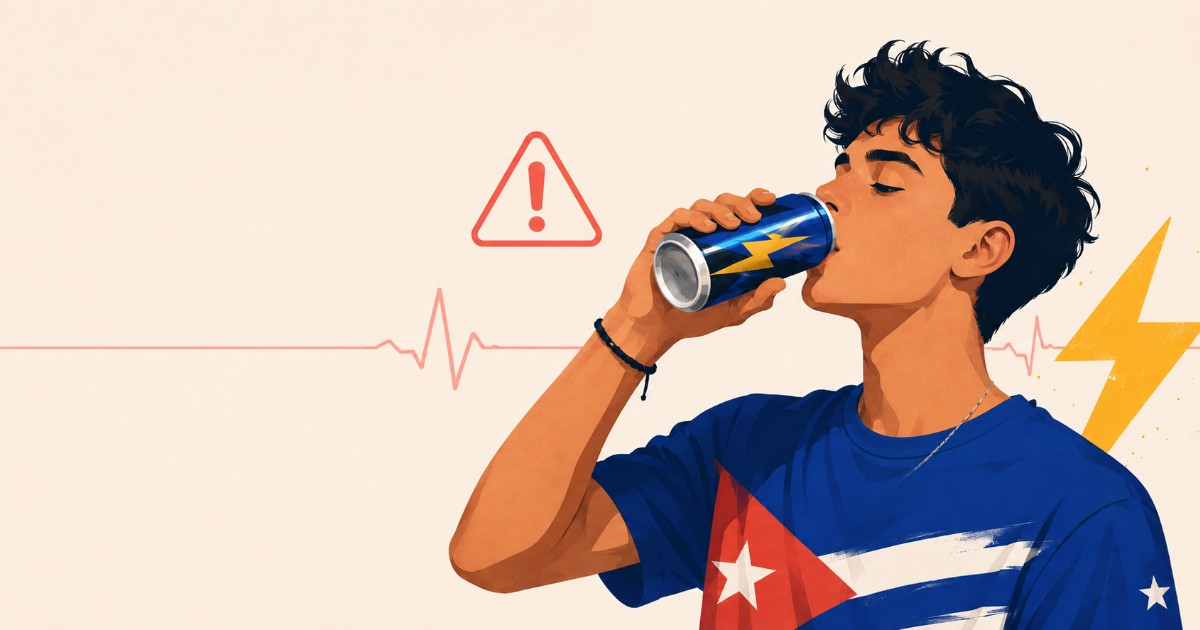
The health authorities in Holguín have raised concerns about the risks associated with the consumption of Shaka, a beverage that has become popular among Cuban teenagers and young adults, especially due to the belief that it helps to stay awake, study longer, or have more energy.
The Provincial Health Directorate of Holguín warned that Shaka belongs to the group of energy drinks and that its formula combines caffeine, sugar, and other stimulating ingredients, including taurine and B vitamins.
The institution stated that this type of product is not recommended for adolescents, as their nervous and cardiovascular systems are still developing, and warned about the effects that high caffeine consumption can cause.
Among the possible effects mentioned were palpitations, increased heart rate, elevated blood pressure, nervousness, anxiety, tremors, irritability, insomnia, and headaches.
It was also noted that frequent consumption can lead to caffeine dependence and affect rest, concentration, and academic performance.
Public Health also expressed concern that some adolescents are turning to these drinks before engaging in sports, during long study sessions, or simply to combat fatigue.
According to the warning, the energizing effect is temporary and may mask fatigue without replacing basic needs such as resting, staying hydrated, and eating properly.
The Provincial Health Directorate of Holguín also highlighted variants of Shaka with flavors associated with alcoholic beverages, such as vodka or mojito, considering that this type of presentation may help normalize products related to alcohol from an early age.
"The true energy is not found in a can. Taking care of our adolescents also involves teaching them to distinguish between what is trendy and what truly benefits their well-being," concluded the Provincial Health Directorate of Holguín in its statement.
On another note, the page of the Municipal Health Department in Yara, Granma province, specifically referred to Shaka Mixer and stated that this product combines energy drink with vodka in a single can.
The publication warned that the combination of alcohol and caffeine can make a person feel more awake than they actually are, which could lead to increased alcohol consumption without clearly perceiving its effects.
It also mentioned among the possible risks palpitations, anxiety, insomnia, dehydration, and increased blood pressure.
Health authorities emphasized the importance of families discussing this type of product with adolescents, monitoring their consumption, and promoting habits related to rest, hydration, and proper nutrition, in light of a trend they consider potentially harmful to health.
The issue is set against a backdrop of growing concern over youth alcoholism in Cuba.
The National Health Survey, with data collected between 2018 and 2020, revealed that 68% of respondents started consuming alcohol between the ages of 10 and 19, while 73% reported having drunk alcohol in the 30 days prior to the survey.
The data reflected an increase compared to 2010, when that last indicator was at 67%. The results were presented in 2022 by the Ministry of Public Health.
In 2024, a specialist from the Cuban health system also warned that initial experiences with psychoactive substances were occurring among those aged 13 to 14, amid a rise in consumption among teenagers and young people.
Concern for these behaviors was once again highlighted this Saturday in La Sierrita, a community in Cumanayagua, Cienfuegos, where health professionals warned about a growing problem of alcoholism among adolescents and young people, which is also linked to the consumption of psychotropic drugs and episodes of violence.
Related videos:
Filed under: