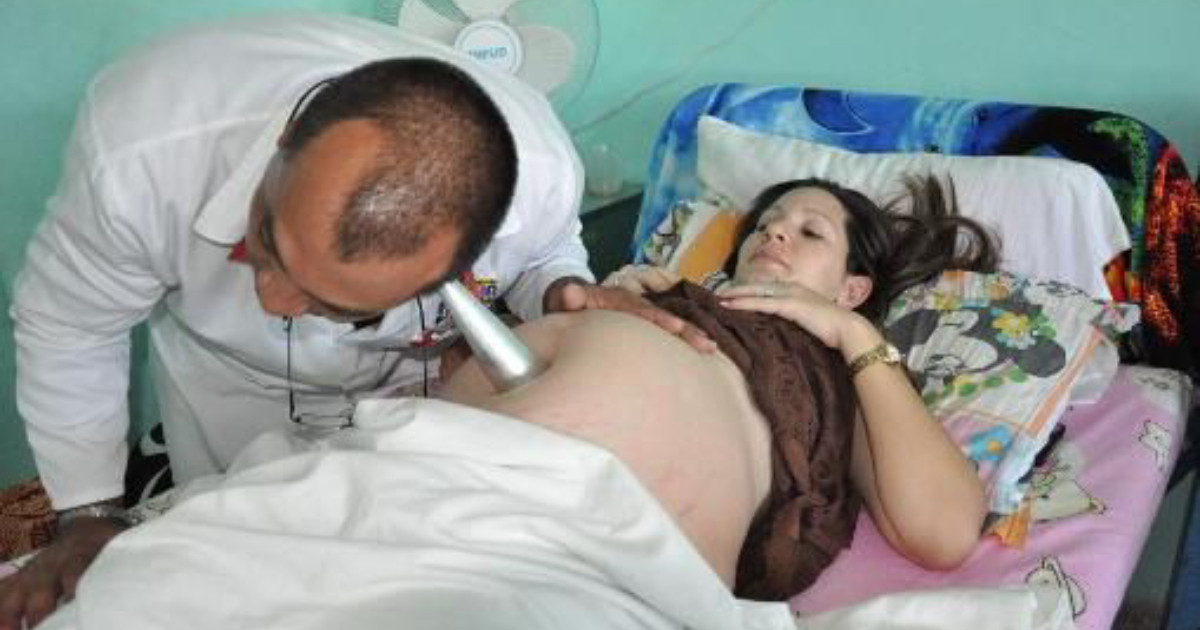
The teenage pregnancy rate in the municipality of Las Tunas increased by three percentage points during the first half of 2026, reaching 19%, as reported during the regular session of the Municipal Administration Council held on Thursday, where the Economic and Social Government Program was evaluated.
The data is particularly concerning because the increase occurred despite local authorities intensifying preventive measures, as nearly 5,000 family planning consultations for adolescents were conducted in the semester—an 11.6% increase compared to the previous period—and 71 educational activities were carried out in schools aimed at curbing early pregnancies, reported this Saturday by the official newspaper 26.
During the same period, 688 births were recorded in the capital municipality, a figure that exceeds the first half of 2025 by 156, reflecting a general increase in birth rates in a region that has long struggled with the worst maternal and child health indicators in the country.
Las Tunas is not an isolated case within the crisis, but it is one of the most acute. At the beginning of 2023, the province topped the national ranking for adolescent pregnancy with a rate of 22.7%, well above the national average of 17.8%.
For the first quarter of this year, the provincial director of Health, Ariel Guevara Bringas, had warned that the provincial rate had climbed to 21%, driven by 70 new pregnancies recorded in just April.
The reported 19% now corresponds to the capital municipality and not to the province as a whole, suggesting that the situation in other municipalities within Tunas could be even more serious.
At the national level, the Deputy Minister of Public Health, Julio Guerra Izquierdo, acknowledged in May that adolescent fertility in Cuba is around 19%, and that the reduction between 2024 and 2025 was only one percentage point.
"There has been a 1% decrease between the year 2024 and the year 2025; we are still not happy with what has been happening," admitted the official.
The problem has structural roots that prevention campaigns fail to reverse, where a chronic shortage of contraceptives, insufficient sexual education, and a legal framework that set the age of sexual consent at 12 years in 2022 converge.
An analysis from the Gender Observatory of Alas Tensas (OGAT), based on official data from the 2024 Demographic Yearbook of Cuba from the National Office of Statistics and Information (ONEI), revealed in August 2025 that a majority of 64.5% of pregnancies in Cuban girls and adolescents involve adult men, a reality that national and international organizations consider a serious violation of human rights.
The Municipal Board in Las Tunas also highlighted the urgent need for attention to the school mortality indicators among the 5 to 14-year-old group and the rate of congenital malformations, two additional signals of the deterioration of maternal and child health in the area.
In April, the United Nations Children's Fund (Unicef), the United Nations Population Fund (Unfpa), and the European Union launched a joint 36-month program with a budget of one million euros, focusing on municipalities in Las Tunas, Camagüey, Holguín, and Granma. This initiative serves as an implicit acknowledgment that these eastern provinces have the worst indicators in the country regarding adolescent pregnancy, and that national policies have not been sufficient to reverse the trend.
Related videos:
Filed under: