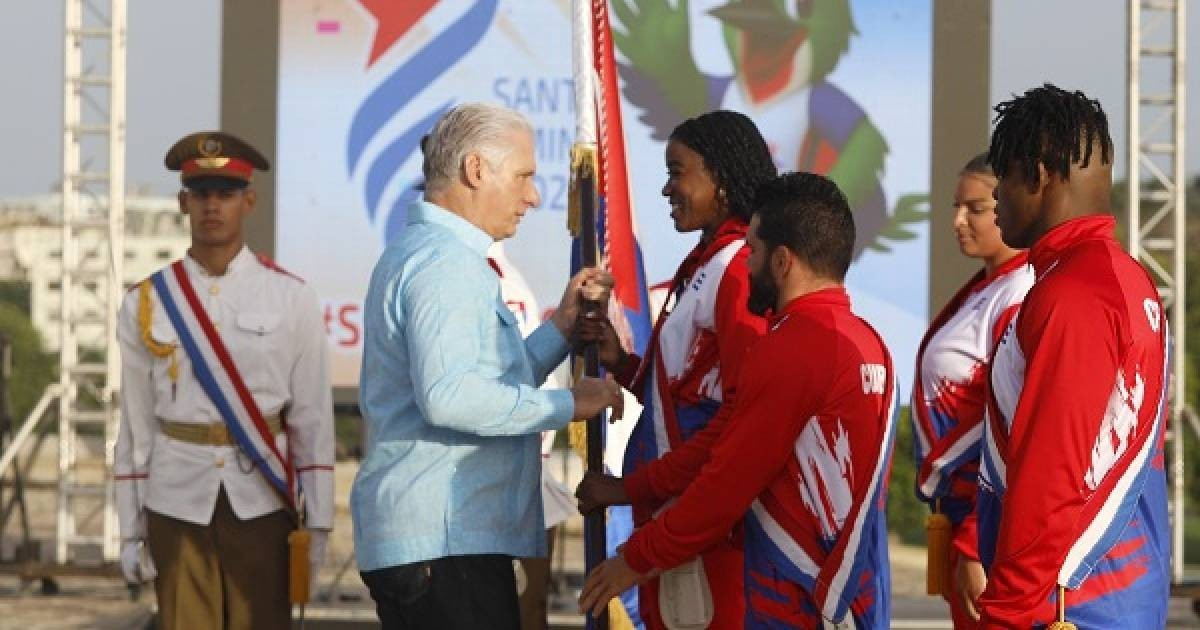
Cuba concluded the XXV Central American and Caribbean Games with 51 golds, 48 silvers, and 55 bronzes, securing a third place in the medal table that barely conceals the most significant decline in Cuban sports in decades: baseball off the podium, men's boxing without a single title, and volleyball far from its glory days.
According to an analysis by the independent media 14ymedio, the image that best summarizes Santo Domingo 2026 is that of Julio César La Cruz leaving the ring without what would have been his fourth Central American title, defeated by the Dominican Cristian Pinales in the final of the 90 kg by split decision (4-1). The leading figure of Cuban boxing could not prevent the men's division from finishing the tournament without a single title, something difficult to imagine for a school that for generations turned these Games into almost exclusive territory.
The only gold for the team in this discipline came from Dayira Mesa, champion in the women's 70 kilograms after defeating Puerto Rican Stephanie Piñeiro by split decision (3-2). The other three male finalists all fell to Dominican rivals: Alejandro Claro (55 kg) lost to Yunior Alcántara by unanimous decision (4-0), and Yusnier Sorsano (70 kg) succumbed to Ricardo Cuello (4-1). The state media outlet Cubadebate itself acknowledged that "no boxer left the ring victorious" during the finals. The contrast with San Salvador 2023, when Cuba claimed five boxing titles, is striking.
Baseball delivered another historic blow. The team led by Germán Mesa finished off the podium for the first time in approximately 60 years in this tournament, after losing to Nicaragua in the elimination round and subsequently falling 1-9 to Puerto Rico in the bronze medal match. The women's volleyball team, inheriting a tradition that included three consecutive Olympic titles between 1992 and 2000, also ended up off the podium. The men's team barely salvaged the bronze by defeating Mexico, unable to defend the title from the previous edition.
In the overall medal table, the gap between the leaders is significant. Mexico was crowned champion with 167 titles and 407 medals; Colombia came in second with 91 golds and 266 medals. Cuba, with its 51 crowns, finished 11 titles short of the 62 that the delegation had projected prior to the event. Even more revealing: Venezuela ended up in fourth place with 49 golds, just two crowns away from pushing Cuba to fourth place.
The gold medal harvest was concentrated in a small group of disciplines. Athletics and wrestling each contributed 10 titles; judo added six; canoeing five; rowing four; and taekwondo three. Only 15 out of the 40 scheduled disciplines brought home any gold for the Island, highlighting the fragility of the model when historically productive sports underperform.
This setback is not a one-time accident. Cuban sports are facing a structural crisis that has been documented for years: the National Sports Institute admitted that 109 athletes left the system in 2022 and 78 in 2023; more than 50% of the sports calendar was canceled in 2025 due to the energy crisis and food shortages; and the national youth baseball championships were suspended in 2026 for the same reasons. The constant departure of coaches, the exodus of athletes toward professional opportunities, and the decay of facilities paint a grim picture that the results in Santo Domingo starkly reflect.
In San Salvador 2023, Cuba had already finished third, but with 74 gold medals and 196 total medals. In Santo Domingo 2026, that position is maintained with 23 fewer titles and 155 medals, confirming that the gap between the glorious past and the present of Cuban sports continues to grow.
Related videos:
Filed under: