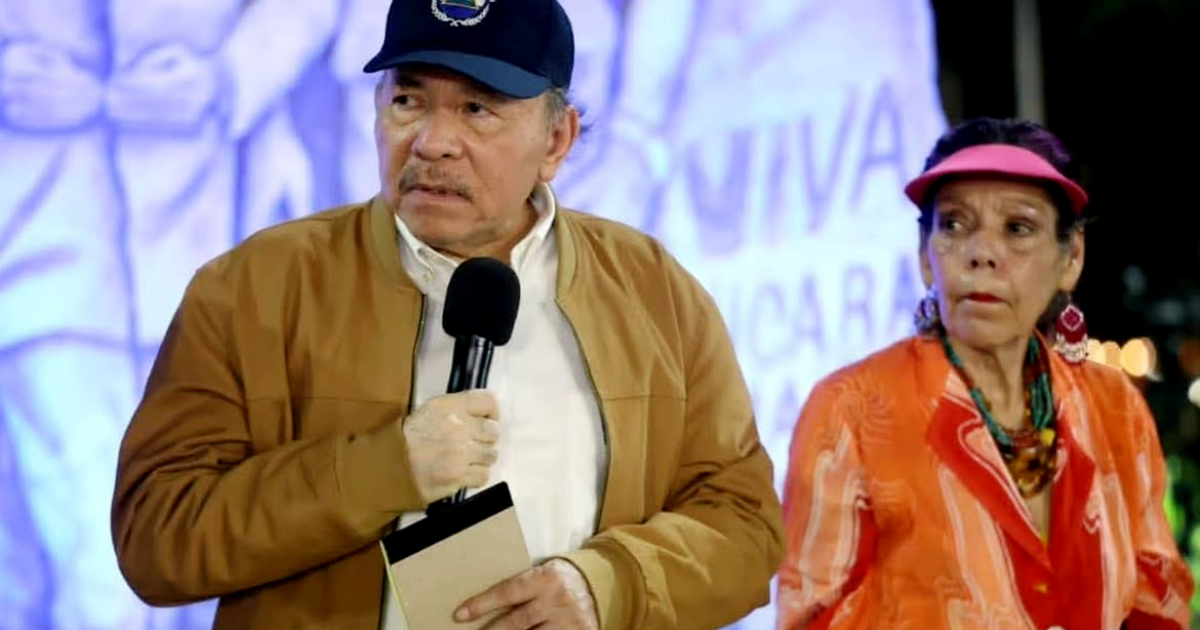
The United States Embassy in Nicaragua denounced that Daniel Ortega and Rosario Murillo are promoting new changes to the country's Constitution with the aim of prolonging their hold on power and restricting political participation from broad sectors of the population.
“Murillo and Ortega are rewriting the Constitution of Nicaragua once again to extend their mandate and exclude large segments of the Nicaraguan population from political life,” stated the U.S. diplomatic mission in a message posted on the social media platform X.
Washington went further and described the process as a new step in the consolidation of the authoritarian system led by Ortega and Murillo.
This is not a reform. It is the strengthening of authoritarianism, stated the Embassy, which also called for an international response to the actions of the Nicaraguan regime.
"The nations of our hemisphere must take significant measures to address this situation," he added.
A new escalation following Ortega's warnings
The U.S. denunciation comes after a series of political maneuvers and statements by Ortega that have raised concerns about the future of electoral processes in Nicaragua.
In July, Ortega stated that he would not allow elections to facilitate the return to power of opposition sectors to his government.
Subsequently, Nicaraguan authorities announced that electoral processes would continue, but they proposed to exclude from them individuals and sectors identified by the government as "coup plotters" or "traitors to the homeland."
The National Assembly, controlled by the ruling party, also confirmed that it was working on constitutional transformations related to the electoral system.
The United States reacted at that time with strong criticism. The Secretary of State, Marco Rubio, publicly questioned Ortega and defended the right of Nicaraguans to choose their leaders freely.
Ortega and Murillo amass power
The new movements arrive after the profound constitutional reform initiated by the Nicaraguan government between late 2024 and early 2025, which transformed the institutional structure of the country and consolidated Rosario Murillo's position as co-president alongside Ortega.
Those changes expanded the powers of the Presidency over state institutions and extended the presidential term, amid international accusations of an increasing concentration of power.
The new warning from Washington now indicates that constitutional and electoral modifications could further restrict political competition and facilitate the continuity of Ortega and Murillo.
The U.S. pressure against the Nicaraguan regime has also intensified during 2026. In June, Rubio described the Ortega-Murillo regime as an “enemy of humanity,” while Washington has also resorted to sanctions against officials and individuals connected to the power circle in Managua.
With its latest statement, the United States seeks to once again bring the Nicaraguan case to the regional arena and demands that other governments in the hemisphere take concrete measures in response to the deterioration of political guarantees in the Central American country.
Related videos:
Filed under: