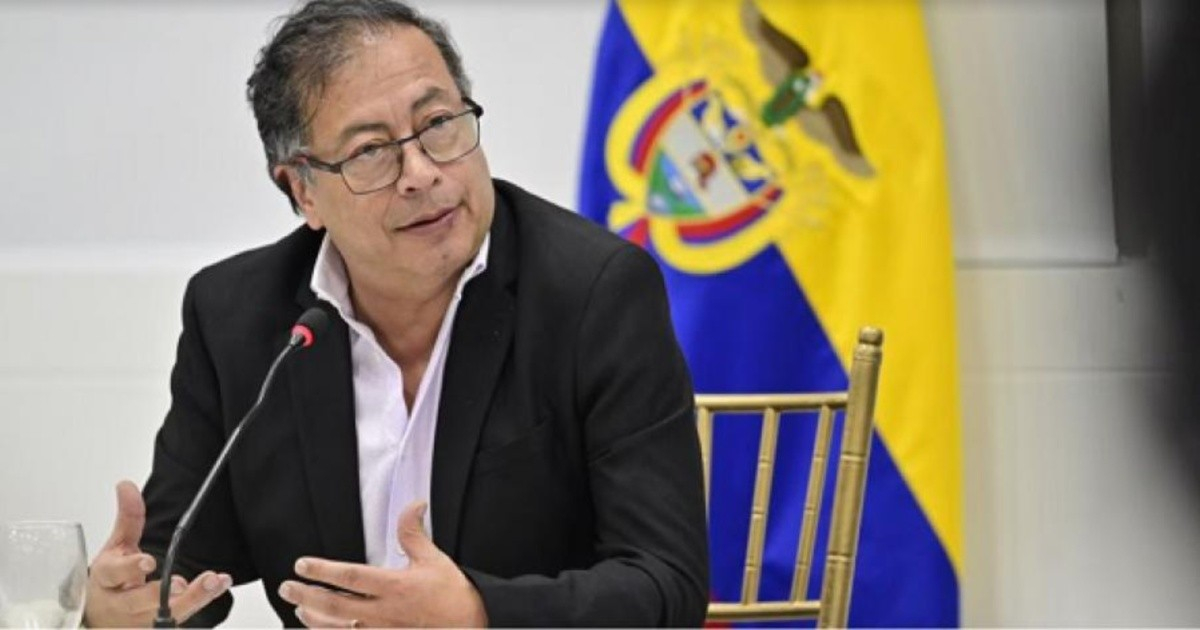
Gustavo Petro arrived in Cuba this Friday for what is his final official trip abroad before concluding his presidential term on August 7, a visit that his foreign minister, Rosa Yolanda Villavicencio Mapy, justified as an act of political solidarity with the regime in Havana during a time of increasing international isolation.
In an interview with the Russian state media RT, Villavicencio described the purpose of the trip with these words: “An official visit to show our solidarity with the Cuban people, our gratitude, and also to express that within the framework of the United Nations and the Security Council we will continue to defend the sovereignty of nations and their autonomy.”
The chancellor described the trip as "necessary," especially due to the economic difficulties facing the island, and stated that with it, the Colombian government is sending a message to the world of "consistency" with the principles of international law and the peaceful resolution of conflicts.
The visit, which will last until August 1 as confirmed by the Ministry of Foreign Affairs of Cuba, was called by Miguel Díaz-Canel through a formal invitation to the Colombian president.
The trip arose from a last-minute change in schedule: Petro was scheduled to travel to Washington and New York to participate in a UN conference on natural resource governance, but he canceled that itinerary upon learning that the president of the Democratic Republic of the Congo would not attend the event.
On his X account, Petro explained the decision: "I replaced him with a position that I consider vital for national sovereignty and the struggle for life in the Caribbean: the attacked Cuba."
The political backdrop of the visit is inseparable from the radical shift that Colombia will undertake in foreign policy starting August 7, when the elected president Abelardo de la Espriella assumes power in Cali.
On Monday, July 28, De la Espriella announced the complete severance of diplomatic relations with Cuba and Nicaragua—characterizing them as "tyrannies"—and the closure of 14 Colombian embassies in the first phase, including the one in Havana.
This would be the third diplomatic break between Colombia and Cuba in history, and it comes at a time when the incoming government has openly aligned itself with Washington: the elected vice president José Manuel Restrepo met on July 15 with Secretary of State Marco Rubio on a mission called "The Miracle Homeland."
Villavicencio rejected that decision and described the potential closure of the embassy in Havana as "definitely a negative message," reminding that Cuba hosted the dialogues that led to the 2016 Peace Agreement with the FARC and that the island is involved in training Colombian doctors.
The Cuban regime, for its part, accused De la Espriella of acting in "subordination" to Washington's policy following the announcement of diplomatic rupture.
Petro's visit thus concludes four years of explicit political affinity with the Cuban government and contrasts with the shift that De la Espriella will implement starting August 7th, when Colombia will sever relations with the dictatorship for the third time in its history.
"As always, we have proposed it in all the conflicts that have occurred during President Petro's term; we have consistently offered to help form countries that could mediate, to invite dialogue, and to prevent the pain and destruction that war causes," Villavicencio concluded.
Related videos:
Filed under: