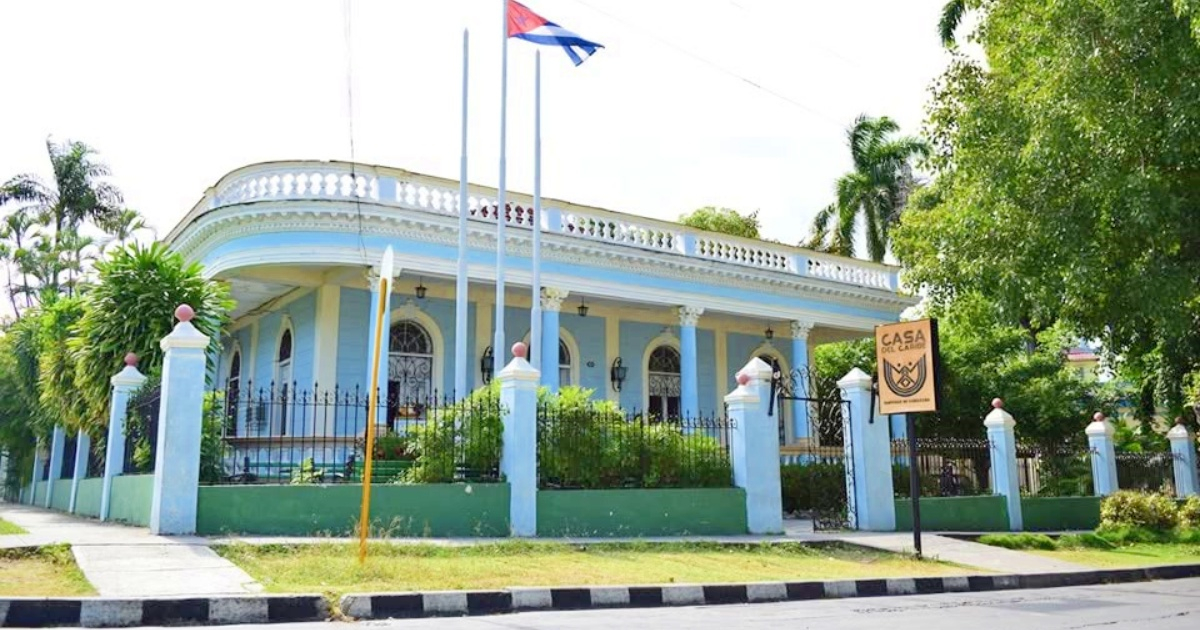
The Casa del Caribe, a cultural institution of reference in Santiago de Cuba, published a statement on its Facebook profile warning the public about an individual posing as a babalawo and employee of the institution to appropriate valuable items, under the pretext of preparing them as a ritual "safeguard."
According to the official text, the scammer asks their victims for rings, chains, and other valuable items with the promise of turning them into objects of spiritual protection, instructing them to pick them up directly at the headquarters of the Casa del Caribe.
The institution denied any relationship with the individual: “Our institution has absolutely no connection with such an individual nor is it responsible for actions of that nature.”
The babalawo, the priest of Ifá in the Yoruba religion, in Cuba holds a position of utmost spiritual authority within Santería and Afro-Caribbean religiosity.
By presenting himself as an employee of a prestigious institution, the scammer seeks to gain the trust of his victims before disappearing with their belongings.
The reaction of the Cubans
The statement generated a wide response on social media, with reactions ranging from outright rejection of the scam to criticism of those who hand over valuable items to strangers.
“It’s not belief, it’s the scam and the vulnerability of people,” wrote a user, summarizing the sentiments of many.
Others pointed directly at the geography of deception: "There on Avenue of the Americas, they're pretending to be babalaos, hunting for prey."
Skepticism also had its place: "But could it be possible for people to hand over a piece of clothing to a stranger? Goodness."
Several internet users called for government intervention: "They should arrest him or post the photo to see who he is," and "The full weight of Cuban law," were two of the most frequently heard demands.
The Casa del Caribe did not specify whether a formal complaint was filed with the authorities, nor whether the individual has been identified.
A repeated pattern
This is not the first notice of this kind issued by the Casa del Caribe in less than a year.
In November 2025, the institution already issued a warning about a fraudulent religious consultation offered in the entity's name, when a different individual was providing spiritual services in public claiming to act under the auspices of the Casa del Caribe.
On that occasion, the entity described that behavior as "false" and "unauthorized"; and emphasized its rejection of any attempt to manipulate religiosity for personal or economic gain.
The pattern is the same: someone uses the name and recognition of the institution to lend credibility to their deception and attract victims among those who trust their cultural and religious authority.
The Yoruba Association of Cuba has called since 2020 to denounce santeros who act as "desecrators and fraudsters," creating ceremonies or non-existent deities to profit from people's faith.
In that same context, a babalawo consulted pointed out that victims of religious scams can approach the authorities for the crime of fraud if they have documented evidence.
Related videos:
Filed under: