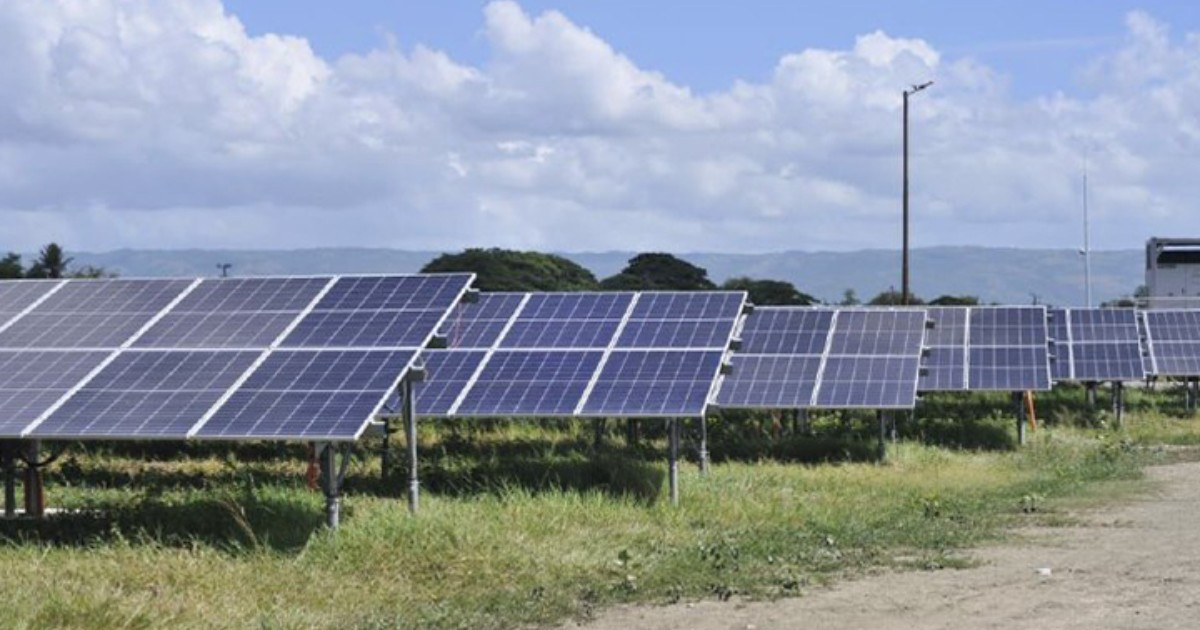
The Cuban official media presented the synchronization of the El Algarrobo photovoltaic park in Guantánamo as a national achievement, following the “unexpected withdrawal of foreign investors” who were supporting the project; however, the installation still does not operate fully.
The Cuban News Agency (ACN) stated that it is the first time a solar park has been synchronized solely with Cuban assistance.
The work involved specialists from the Guantánamo Electric Company and the Information Technology and Automation department of the Electric Union in Santiago de Cuba.
The team required nearly a month of intensive work to synchronize the first inverter.
Currently, it adjusts three of the seven that the park has, which represents about 50% of the automated area, according to the official publication itself.
The technicians turned to programming and software to work with the installed Chinese technology, although they claim that the process was complex and involved several failed attempts before achieving the initial connection.
Engineer Rusel Ramos Leliebre, the chief specialist of the park, explained that the team works about ten hours a day to complete the coupling of the remaining inverters.
The group consists of around ten workers, mostly young, accompanied by more experienced professionals.
"We never gave up; we built the process little by little until everything came together," said Ramos, 26, who has been leading the project since its inception in 2025.
The work carried out by the Cuban specialists prevented the departure of foreign advisors from halting investment.
However, the official announcement mentions the synchronization of the park when there are still investors to connect and parameters to adjust for the installation to operate efficiently.
Furthermore, the official publication does not reveal the details behind the "unexpected departure" of the investors.
El Algarrobo is located about ten kilometers east of the city of Guantánamo, on the road to Baracoa. It is the second park of its kind in the province and will have a capacity of 21.8 megawatts peak.
The authorities estimate that the installation will be able to cover the equivalent of 25% of the daily demand in Guantánamo and reduce power outages during daylight hours. This outcome will depend on all the investors being synchronized and operating within the correct parameters.
Guantánamo currently generates just over 15% of its electricity from renewable sources and aims to increase that proportion to at least 37% by 2030.
The promotion of the park contrasts with the seriousness of the energy crisis in the region.
Authorities are building more than 15 community stations for cooking and charging devices, an emergency response for residents who experience long periods without electricity.
Moreover, the supposed technological autonomy coexists with dependence on foreign resources. China recently delivered another 5,000 photovoltaic systems to Cuba intended for rural homes and essential services.
In this emergency context, the Cuban government extended the tariff exemption for importing solar panels, parts, and other equipment related to renewable energy until December 31, 2027. This highlights the severity of the current energy crisis, which is far from resolution.
Related videos:
Filed under: