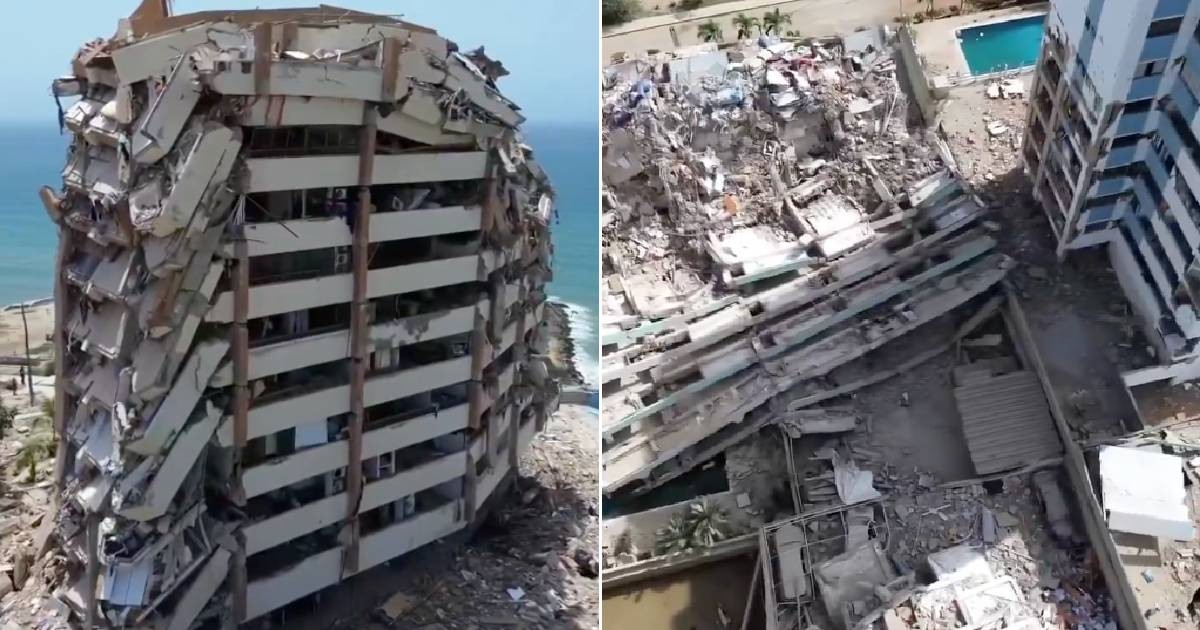
The official toll of deceased due to the double earthquake that shook Venezuela on June 24 continues to rise week by week: this Tuesday, 6,301 deaths were confirmed, with 176 more victims added compared to the previous count, according to figures released by Jorge Rodríguez, president of the Venezuelan Parliament and brother of acting president Delcy Rodríguez.
The two consecutive earthquakes, with magnitudes of 7.2 and 7.5, hit hardest in the state of La Guaira and the metropolitan area of Caracas, marking the worst seismic disaster in the country's recent history.
Jorge Rodríguez also specified that 73,356 people have received hospital care since the catastrophe and that the authorities have assessed 53,314 homes: 31,336 deemed livable, 12,411 with usage restrictions, and 9,567 at high risk.
Despite the magnitude of the disaster, the Venezuelan government has only delivered 287 homes to those affected so far, while cleanup crews have removed more than 483,000 tons of debris.
The World Bank estimated the direct physical damages caused by the earthquakes at $19.6 billion, with almost half concentrated in residential buildings and about 47% of the total economic impact falling on La Guaira and the Capital District.
The agency warned that a slow reconstruction could hinder the country's economic recovery over the next decade.
The humanitarian crisis is further compounded by the worsening of the electrical collapse. Diosdado Cabello, Secretary General of the ruling United Socialist Party of Venezuela (PSUV) and Minister of the Interior, attributed the blackouts affecting much of the national territory on Monday to the earthquakes of June and the El Niño phenomenon.
These blackouts have sparked protests in several states across the country.
The Venezuelan opposition and independent experts, however, point out that the electricity crisis predates the earthquakes and is a result of decades of corruption and lack of maintenance, not external causes.
The Chavista regime had already been experiencing chronic deficits in electricity generation ranging from 2,000 to 2,400 megawatts daily in August, with blackouts affecting 90% of Venezuelan families according to the ENCOVI 2025 survey.
In early August, Delcy Rodríguez urged the public to save electricity and water in light of what she referred to as the "Super Niño," and announced a plan to add 4,800 megawatts to the electrical system before the end of the year. On Saturday, she appointed Juan Crisóstomo Fernández as the new president of the state-owned Electric Corporation (Corpoelec).
At the same time, the Colegio de Ingenieros de Venezuela called on Tuesday to update the country's seismic-resistant regulations, the last revision of which was in 2019, and proposed the establishment of a National Seismic Resistance Commission to evaluate collapses and formulate public policy recommendations regarding reconstruction and urban planning.
The death toll has steadily increased since the first reports: 32 fatalities on June 24, nearly 2,000 by the end of that month, over 5,000 by mid-July, and 6,125 at the beginning of August, before the new report raised the total to 6,301.
Related videos:
Filed under: