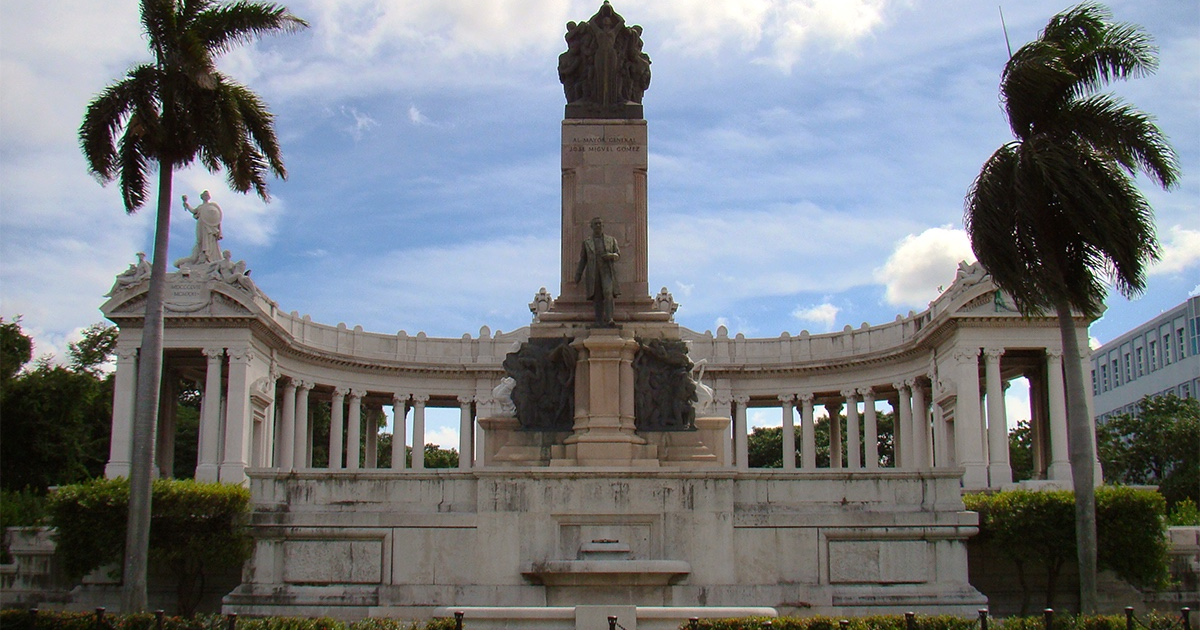
The history of republican Cuba cannot be understood from extremes. For decades, a portion of the official historiography following 1959 presented the period between 1902 and 1958 as a time of absolute backwardness, perpetual corruption, and a lack of social progress. This perspective, in addition to oversimplifying a much more complex reality, overlooked an essential element: the Cuban Republic, with its errors and limitations, developed an important educational and cultural system that allowed for the formation of generations of professionals, intellectuals, artists, and scientists.
Education was one of the central aspirations of the republican project. The founders of the nation understood that political independence had to be accompanied by the formation of citizens capable of exercising freedom. The Marti phrase “to be educated is the only way to be free” became a moral reference for many Cuban educators.
The construction of the republican educational system
At the dawn of the Republic in 1902, Cuba inherited significant problems from the colonial period: illiteracy, a lack of rural schools, and an educational infrastructure that had been limited by years of war. However, the new government began a process of expanding public education.
One of the fundamental pillars was the training of teachers. The creation and strengthening of Normal Schools allowed for the preparation of professionals dedicated to primary and secondary education. The Cuban teacher gained social prestige and became a fundamental figure within the communities.
Public primary education gradually spread throughout the country. Schools emerged in towns and cities where thousands of children were able to access basic education. Although there were disparities between urban and rural areas, and while the system was far from perfect, it is historically inaccurate to claim that the Republic ignored popular education.
Alongside public education, there was also significant development of private institutions, both religious and secular, many of which had high academic standards. Schools run by religious orders, as well as well-regarded private institutions, contributed to the education of numerous generations.
The University of Havana, founded in 1728, remained a fundamental center of national thought during the Republic. It trained lawyers, doctors, engineers, teachers, and scientists who played a decisive role in Cuban public life.
Libraries, culture, and intellectual development
Republican culture was not limited to the school environment. Cuba developed an extensive network of libraries, cultural associations, magazines, newspapers, and spaces for intellectual debate.
Public and private libraries provided access to both national and foreign works. Reading, although it did not reach all social sectors equally, was an important part of urban life and of those sectors interested in personal development.
Cuban press gained significant importance within the continent. Newspapers and magazines reflected political, literary, and social debates. Through them, ideas from Europe, Latin America, and the United States circulated, allowing Cuban society to stay connected with the major currents of universal thought.
The Republic was also the stage for the development of great cultural figures. Cuban writers, musicians, painters, and scientists gained national and international recognition. Cuban music, from son to trova, became one of the most influential cultural expressions in Latin America.
Artistic creation coexisted with political and social debates. In a society with freedom of expression, there were criticisms of the government, ideological conflicts, and confrontations between different schools of thought. This diversity was part of a cultural life where ideas competed in the public sphere.
Education as a tool for social mobility
One of the most important aspects of republican education was its ability to enable social mobility. Thousands of Cubans from humble backgrounds were able to become teachers, doctors, university professionals, and technicians thanks to access to education. School represented a chance for personal and family progress.
The country's economic development also fostered the creation of specialized institutions. Cuba had technical schools, vocational training centers, and an increasing scientific education system.
The existence of economic difficulties, social differences, and political problems should not be mistaken for a lack of progress. Societies are neither perfect nor absolute realities. The Cuban Republic faced profound contradictions, but it also built institutions that enabled the development of a modern society.
The culture before 1959
During the first half of the 20th century, Cuba experienced a remarkable cultural movement. Literature, music, theater, and the visual arts underwent significant transformations.
Intellectuals such as Fernando Ortiz, regarded as one of the great scholars of Cuban identity; Jorge Mañach, an essayist and thinker; Alejo Carpentier, a renovator of Latin American narrative; Nicolás Guillén, an internationally recognized poet; and numerous other artists were part of a period of intense intellectual creation.
Cuban culture was not a mere reproduction of foreign models. There was a constant effort to understand national identity, with its African, Spanish, and Caribbean roots.
The Republic also allowed for exchanges with foreign universities and international cultural centers. Many Cubans studied abroad and returned bringing new knowledge in medicine, engineering, social sciences, and humanities.
The historical break after 1959
The revolutionary triumph of 1959 brought about profound transformations in Cuban education and culture. The new government initiated a literacy campaign and expanded educational access in sectors where challenges still existed.
However, alongside those advances, a fundamental change also took place: the progressive subordination of education and culture to the ideological project of the State.
Education ceased to be merely a space for academic training and became a tool for political construction. The educational system began to focus on the training of the so-called socialist "new man," as defined by the official ideology.
Numerous professors, intellectuals, and artists left the country for political reasons or due to disagreements with the new cultural direction. University autonomy, the diversity of thought, and intellectual plurality have progressively been restricted.
Culture, which had previously been a space for debate among different ideas, became subject to the boundaries set by political power. Fidel Castro's famous phrase in 1961, "within the Revolution, everything; against the Revolution, nothing," established a new relationship between the State and intellectual creation.
A balanced historical perspective
Analyzing Cuban education and culture before 1959 requires moving beyond absolute perspectives. The Republic faced real issues: inequality, budget shortfalls, administrative corruption, and challenges in ensuring equal opportunities across all sectors. However, it is also true that there was a strong educational and cultural tradition. Cuba had well-trained teachers, educational institutions, universities, and renowned writers, scientists, and artists.
History cannot be built on selective silences. Acknowledging the achievements of the Republic does not mean denying its mistakes, just as recognizing the transformations that occurred after 1959 does not require ignoring their political and cultural consequences.
True historical research must regard the past with rigor, separating facts from ideological interpretations. Education and culture in the Republic of Cuba (1902-1958) were part of a long national construction. Before 1959, there was an imperfect but vibrant society, with institutions and intellectual traditions that had been built over decades.
Understanding this reality allows for a better comprehension of Cuba's history: a nation that, prior to the revolution, had already established important foundations in education, culture, and thought, and whose subsequent destiny would be marked by a profound political and institutional rupture.
Related videos:
Filed under:
Opinion article: Las declaraciones y opiniones expresadas en este artículo son de exclusiva responsabilidad de su autor y no representan necesariamente el punto de vista de CiberCuba.