Education is one of the most powerful tools a society possesses. Through it, knowledge, values, culture, and the ability to think are transmitted. A nation that educates properly not only prepares professionals; it shapes citizens who are capable of analyzing, questioning, and participating in public life.
But when education stops seeking the comprehensive development of the individual and becomes a tool serving an ideology, it loses its deepest essence.
Then the school ceases to be a space for learning and begins to transform into a space for persuasion.
History shows that many authoritarian systems have understood the immense power of education. Controlling what children and young people learn means influencing how they interpret the past, understand the present, and shape their vision of the future.
It's not just about teaching a specific historical interpretation; the real danger arises when the opportunity to compare, question, and think differently is eliminated.
A healthy education teaches how to seek the truth. A manipulated education teaches what truth should be accepted.
When the state completely controls educational programs, textbooks, historical content, and even the ideological training of students, the school can become a tool for reproducing power.
The student stops being trained to think and begins to be trained to repeat.
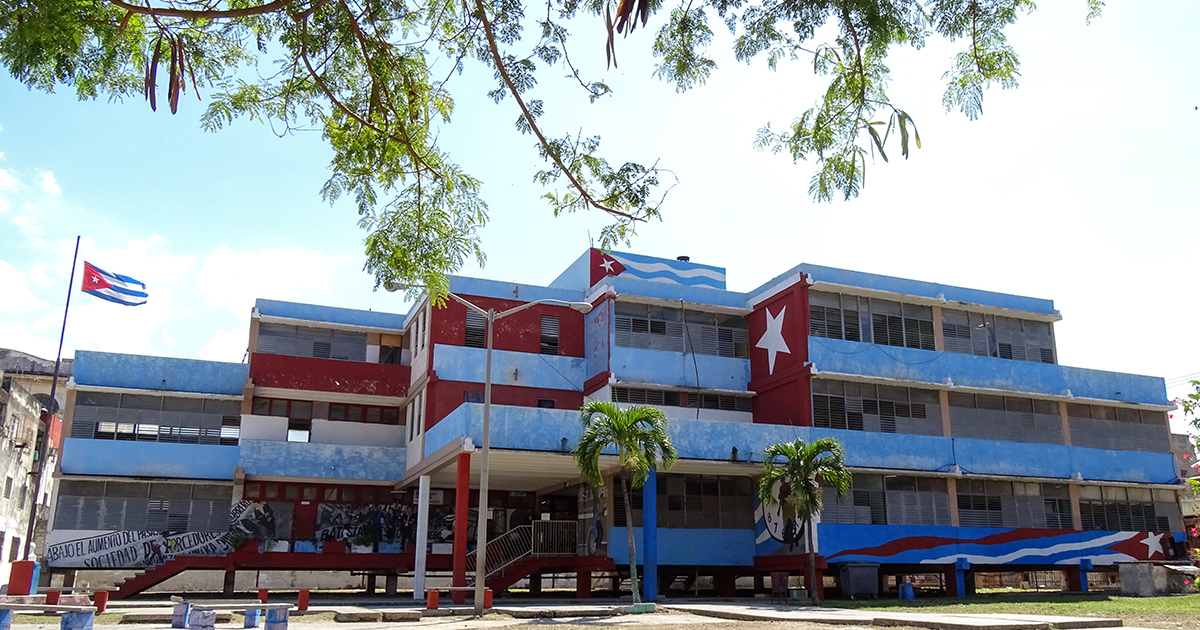
The Cuban experience offers a lesson that Latin America must study closely. From the early school years, entire generations were educated within a political vision where national history began to be interpreted from a single official perspective. Heroes were chosen based on their ideological utility, while other events or figures were downplayed, reinterpreted, or excluded.
Education ceased to be just teaching; it took on a political role.
The problem is not that a society transmits values. Every education contains values. The issue arises when those values do not allow for debate, when criticism becomes a threat, and when authority replaces reasoning.
A true education should not create followers; it should produce citizens.
Critical thinking is precisely the ability to analyze even that which we admire, to examine even that with which we disagree, and to accept that no person, government, or ideology holds the absolute monopoly on truth.
When a generation grows up learning that there is only one correct interpretation of history, its ability to build new solutions is limited. A society without critical thinking becomes more vulnerable to manipulation.
Countries do not progress because everyone thinks alike. They advance because their citizens have the freedom to think. Education can also become a silent form of social control. Through it, untouchable symbols can be created, permanent enemies constructed, and political decisions justified under the guise of teaching.
But history has an inevitable characteristic: over time, the questions return. What one generation could not investigate, another will attempt to understand. This is why no system can forever uphold a single version of reality. Historical truth may be delayed, but it can hardly be eradicated.
Latin America must learn this lesson: the school does not belong to a party, a leader, or a specific ideology. The school belongs to the children, to the youth, and to the future of the nation.
Education is not indoctrination. Teaching is not imposing. Shaping citizens means providing tools to think, not instructions to obey.
A free society needs free teachers, open books, and students capable of asking questions without fear. Because a nation that educates for the truth builds citizens. But a nation that educates for propaganda builds generations dependent on a single version of the world.
And history shows that no wall built against questions can stand forever. Men come and go. Ideas endure.
Related videos:
Filed under:
Opinion piece: Las declaraciones y opiniones expresadas en este artículo son de exclusiva responsabilidad de su autor y no representan necesariamente el punto de vista de CiberCuba.