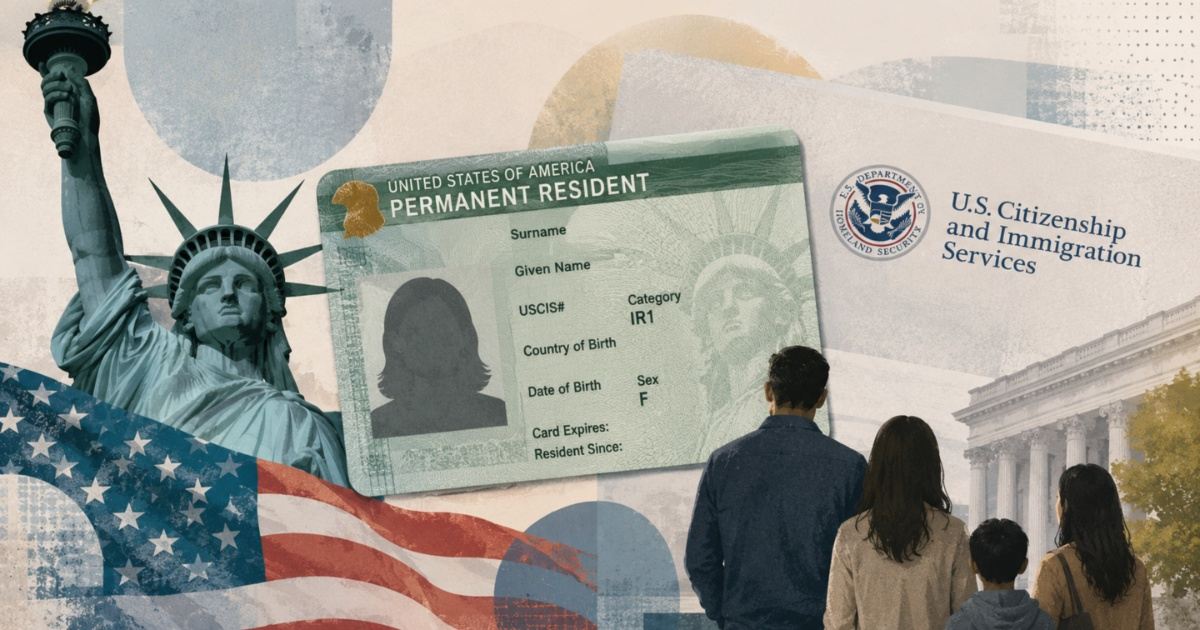
The U.S. Citizenship and Immigration Services (USCIS) implemented a new rule this week that will gradually require the mandatory electronic submission of certain immigration forms.
El Nuevo Herald reported that the measure may impact applications for permanent residency (green card), citizenship, asylum, and work authorization, among other benefits.
The changes are based on a "provisional final rule" effective August 11 in the Federal Register by the Department of Homeland Security (DHS), which grants USCIS the authority to require online processing as part of a strategy aimed at "enhancing national security."
The rule does not immediately impose mandatory requirements for all forms. It operates in a phased manner: USCIS can only require the electronic submission of a specific form if it has been available for that method for at least 180 days, and it must notify the public at least 60 days in advance.
"USCIS will notify the public through its website at least 60 days in advance before requiring the electronic submission of a form. Applicants will need to use an online account to submit an immigration form to USCIS, either by completing it directly online or by uploading a PDF of the form along with supporting documentation," the agency specified.
Those who are unable to meet the electronic requirement will have the option to request a hardship exemption using Form I-936, although its approval will be at the discretion of USCIS.
The DHS estimates that the measure will generate approximately $518 million annually in net savings for applicants and petitioners by eliminating the need to submit paper documents, reducing rejected forms, and shortening processing times.
The regulation also aims to reduce reliance on the Department of the Treasury's lockbox system, which processes requests sent by mail, and to expedite the transition to electronic payment of fees.
USCIS asserts that the online system "enhances fraud detection, optimizes identity management, and strengthens national security investigations through faster access to data and greater analytical capabilities."
The public comment period on the new rule will remain open until October 13, 2026.
Adam Klein, former DHS official, told Newsweek that the advantages of the electronic process have been evident for some time, as it provides the government with more structured data for decision-making.
Stricter immigration processes in 2026
The new rule comes amid a widespread tightening of the U.S. immigration system. Since August 5, USCIS can deny applications without issuing a Request for Evidence or a Notice of Intent to Deny if the applicant does not provide complete documentation from the outset.
This is complemented by memorandum PM-602-0199, effective since May, which tightened the adjustment of status and clarified that meeting the technical requirements does not guarantee the approval of an application.
In July, aregulation regarding electronic signatures in immigration documents also came into effect.
Additionally, USCIS confirmed the resumption of processing benefits for Cubans and Venezuelans following a previous suspension.
Related videos:
Filed under: