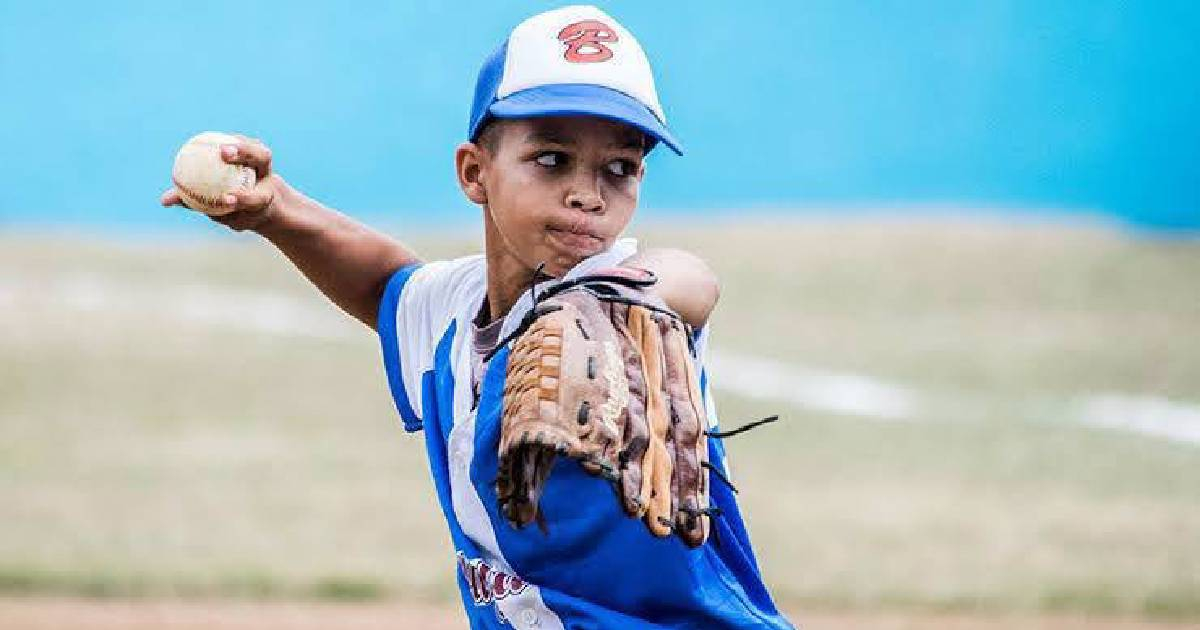
The sports commentator Pavel Otero issued an urgent public appeal on Facebook this month regarding the situation faced by child and young baseball players in Cuba: months without competition, feeling demotivated and depressed, while their families endure economic sacrifices that go unrewarded on the field.
"It makes me very sad every time I receive a message from the mom or dad of a young player, telling me that their child is at home without playing, and moreover, feeling depressed and unmotivated," wrote Otero, who demanded that the INDER executives, commissioners, and coaches seek concrete solutions.
The background of the problem has a date and name: the National Baseball Commission suspended the national championships for the Sub-12, Sub-15, and Sub-18 categories in May, citing the energy crisis that paralyzes interprovincial transportation on the island.
In place of those tournaments, the Commission announced a system of physical and technical tests to evaluate talents and determine pre-selections, a measure that Otero considers insufficient for the real development of young baseball players.
"Children cannot train, and train, and keep training all year round just for fun, without any goal, without any motivation," the commentator warned.
The fuel shortage has directly and documentatively impacted Cuban sports. In June, the INDER of Matanzas admitted that the Cocodrilos were unable to travel to Havana for a game in the IV Elite League because the assigned bus did not receive fuel.
In light of the paralysis of the official system, some provinces have opted for local tournaments between sports teams and nearby municipalities that do not require significant travel.
However, Otero points out that in most of those cases, it is the parents themselves who bear the expenses: "It is the parents who manage, rent, pay for transportation, snacks, and even the work of the referees and scorers."
The commentator also noted the inequality that this situation creates among families: "There are parents for whom this expense is not a burden, but there are others who have to move heaven and earth to ensure their children have their equipment and clothing, so they don't fall behind their teammates."
Her post generated dozens of comments reflecting a widespread discontent regarding the deterioration of youth baseball in Cuba, with many agreeing that the lack of competitions is impacting the motivation and future of many children.
Parents, grandparents, and individuals connected to sports recount experiences of talented young players who ended up leaving baseball, frustrated after years of training.
Several families claim that they cover nearly all the expenses — uniforms, bats, balls, transportation, and even fuel — yet the children still go long periods without playing.
There are also strong criticisms of the INDER and the sports officials, who are urged to pay more attention to the grassroots categories.
Some commentators recall that municipal, school, and intermunicipal tournaments were previously organized with limited resources, and they believe that those initiatives could be revived with the support of parents, coaches, and sponsors.
The prevailing sentiment is one of concern over the loss of talent in Cuban baseball, although some remain hopeful of finding local solutions to prevent new generations from abandoning the sport.
A follower of Otero summarized: "My grandson was a victim of the same thing, he lives two blocks from the Latinoamericano, trained at El Changa Mederos, and one day at El Latino, Alomá hugged him and said 'great baseball player'; but nothing, now at 21 years old, he works in a hotel in Old Havana. A tremendous frustrated baseball player. Greetings and blessings, Pavel," she lamented.
The talent exodus worsens the situation. In the 2024-2025 signing period, 41 players born in Cuba signed with Major League organizations, making the island the fourth country with the most signings after the Dominican Republic, Venezuela, and Mexico.
The outflow now affects children aged 13 and 15 who are heading to the Dominican Republic and Mexico, and in 2025 it was reported that 11 of the 20 players on a youth team had left the country.
"If a solution is not sought for the skills deficit and the number of games our young players need, their parents get worn out and give up, and who bears the blame? The child. In the long run, Cuban baseball pays the price too because its talent pool suffers," concluded Otero.
Related videos:
Filed under: