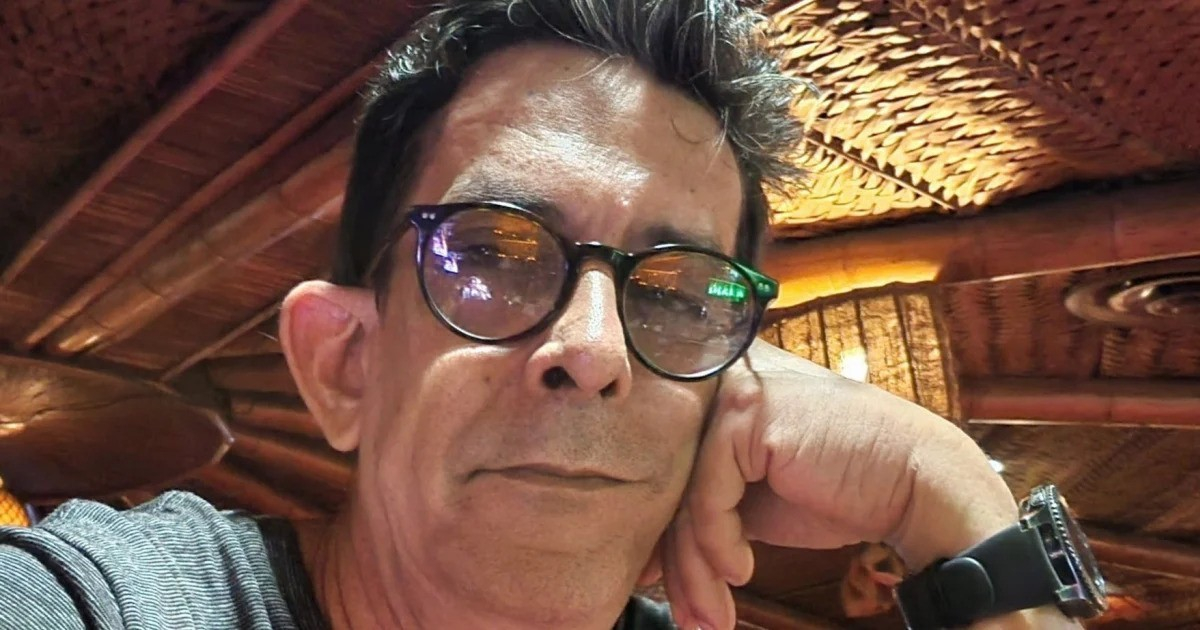
The Cuban humorist and actor Ulises Toirac posted this Friday on his Facebook profile a reflection on the crisis that Cuba is facing that sparked a wide response among his followers, with a statement that focused the debate: “The first freedom is that of thought. And the most difficult.”
Toirac opened his text with an irony that set the tone for the entire message: "Complex and disconnected day—what the hell, I can invent euphemisms too." The deliberately coined neologism served as a parody of the official language that has historically masked the Cuban reality with empty words.
Beyond the humor, the underlying message was somber. "It is... tragic to live and realize the hole that people, the Cubans, are in," he wrote. He pointed out that the very "indiosincrasia" —a term he himself spelled that way— of the Cubans closes off "any possibility of a future, with everyone pulling in their own direction, adopting extremist views—mostly, views foreign to them from outsiders who profit from the trouble, the schemes, and the intransigence."
The publication is not an isolated event. Throughout 2026, Toirac has turned his social media into a platform for sustained denunciation of the situation on the Island. In June, he described Cuba as a labyrinth with no solution and stated that he did not see a way out "within my lifetime," at the age of 62. In July, he went further: it was no longer "the light at the end of the tunnel," but rather "there is no tunnel".
In April, he described the situation in the country as a "catastrophe" and attributed it to the intransigence and the doctrine that sowed division among Cubans. In July, he also demanded the release of all political prisoners, "without kidnappings and without deporting them in disguise," and denounced that caudillismo is one of the "worst legacies" that the Island suffers from.
The reflection for this Friday on the freedom of thought arrives in a context of documented repression. According to a report from Prisoners Defenders published in July, Cuba had 1,306 political prisoners at the end of June 2026, many of whom were imprisoned for exercising their rights to demonstration, association, and freedom of expression. The Cuban Institute for Freedom of Expression and the Press (ICLEP) recorded 179 assaults against freedom of expression and the press just in April of that year.
Toirac's followers responded with comments that amplified his message. "It's hard to feel like we have given up one of the most precious things for a human being, freedom," wrote one internet user. Another was more direct about the consequences of thinking out loud in Cuba: "They say that thinking means staying silent, without expressing what you think. If you say what you think and it doesn't fit their narrative, you end up in prison." A third person noted that "they have control over thoughts, and in a very strict way."
One of the most shared comments presented a metaphor that resonated strongly with readers: “There are countries that die overnight. They are destroyed by a war, an earthquake, or a fire that leaves nothing but ashes. And there are countries that fade slowly. So slowly that one day their inhabitants no longer notice the darkness. And perhaps that is the most profound defeat of all. Because if a people forget what it means to live with dignity, I don’t believe that people will desire to know freedom.”
Another internet user lamented that the country is advancing "more in the trivial and hypocritical without freeing ourselves from what strikes us until we lose our sense," while another summed up the Cuban paradox with bitterness: "It's nicer when we stay quiet."
Toirac, known for decades for television programs like Sabadazo and ¿Jura decir la verdad?, has transitioned in recent years from being an entertainment figure to one of the most consistent public voices highlighting the deterioration of Cuba, without aligning with any extreme in the political debate. His statement this Friday—“The first freedom is that of thought. And the most difficult”—captures in few words what repression data confirms with figures.
Related videos:
Filed under: