
Related videos:
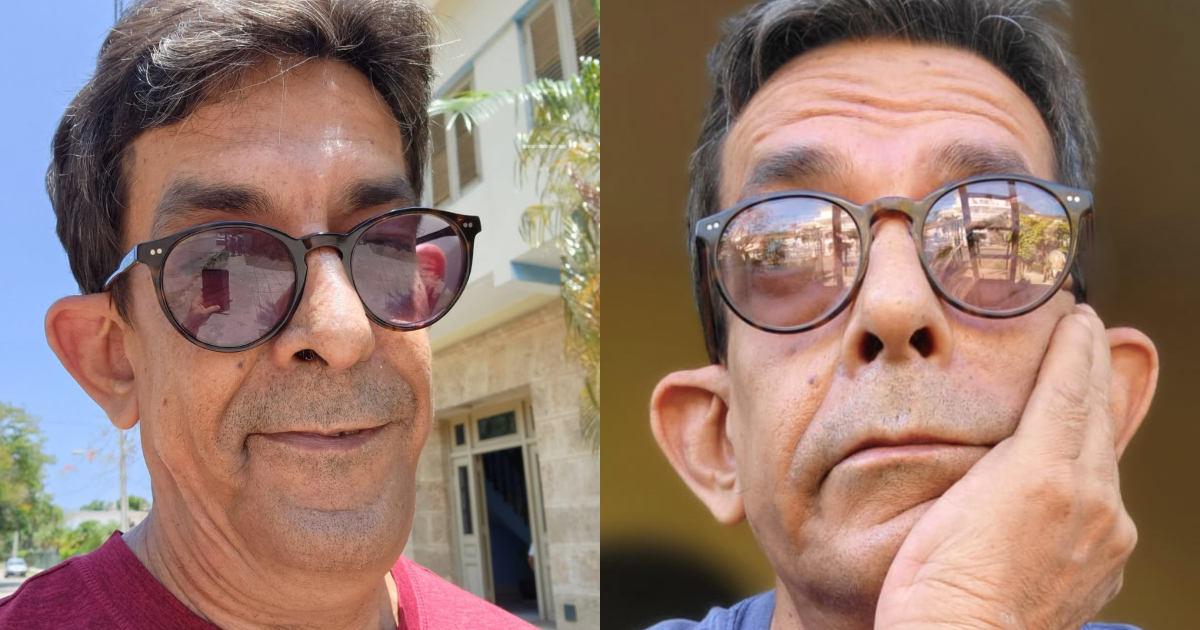
The Cuban actor and comedian Ulises Toirac published this Saturday on his Facebook profile a comprehensive political-economic analysis in which he argues that caudillismo is "one of the worst historical legacies" of Cuba and the main obstacle to generating the institutional trust that the country needs to attract foreign investment.
The text is based on a specific thesis: Cuba's economic recovery does not depend on the number of measures adopted, but rather on the existence of "a scenario of trust in the laws and institutions" as the central axis of any reform.
"Nothing instills less investor confidence than a leader-like management of the economy, as these leaders often wipe their hands clean of any responsibility when things don’t go their way," wrote Toirac, recalling that numerous foreign entrepreneurs left Cuba without collecting their debts.
Toirac outlines a genealogy of the phenomenon that, in his opinion, permeates the entire history of Cuba: "We do not long for a president, but a timbalú. We are gangsters par excellence. More than being guided by reason, we are driven by the crooked tooth and that angel that good manipulators display, which ultimately proves to be exterminating angels."
In that historical journey, it highlights Fidel Castro as the great leader who, in addition to playing that role for decades, systematically eliminated any alternative leadership: "From Camilo to Ochoa and Lage. The result is a group of close associates without CCC (brains, judgment, and guts) and unwilling to possess them. Acquiescence and whatever happens, happens."
About Miguel Díaz-Canel, Toirac is emphatic: "He lacks the tools that are necessary for this, and on the other hand, the crisis of leadership left by Fidel Castro's departure from the scene imposes a very tough type, not just a tough one... A super tough one." The resulting void, he concludes, is placed within the family: "The caudillismo transmitted in the absence of a caudillo. It places the legacy and loyalties within the family, in a state of chrysalis, waiting."
The specific trigger for the analysis is the role of Raúl Guillermo Rodríguez Castro, the grandson of Raúl Castro known as "El Cangrejo," as an informal intermediary in the negotiations between Cuba and the United States. The 42-year-old MININT colonel, on July 6, in which he offered to negotiate directly with Trump: "I can negotiate with anyone appointed by the U.S. If given the opportunity, of course with Trump."
Toirac had analyzed the case of "El Cangrejo" on July 9, stating that in Cuba "the surname Castro carries more weight than any formal position." In his new publication, he goes further: he describes the acceptance of Raúl's grandson by the United States as "a negative distortion that contradicts the country's needs," bypassing the entire formal institutional chain — president, prime minister, chancellor, and deputy ministers — that should handle negotiations of such magnitude.
"Raúl Guillermo emerges, and the American side accepts him as an interlocutor, and... this points in the wrong direction... it is nothing more than evolving the genetic Cuban feudal chieftainship," wrote Toirac, who ironically asks whether any businessman would invest twenty million dollars to build a sugar mill in that context and urges the reader to try not to remember "the images of parties and yachts" while considering it.
Toirac, who was banned from state cultural institutions and summoned by State Security in 2024, maintains a constant critical voice on social media. On July 4th, he demanded the release of political prisoners and described Cuba as a "humanitarian disaster."
The Communist Party official Elier Ramírez Cañedo officially confirmed the role of "El Cangrejo" as an intermediary on July 9, amidst a rapprochement process that began in February 2026 with contacts between Rodríguez Castro and Secretary of State Marco Rubio, and included in May the visit of CIA Director John Ratcliffe to Havana.
Filed under: