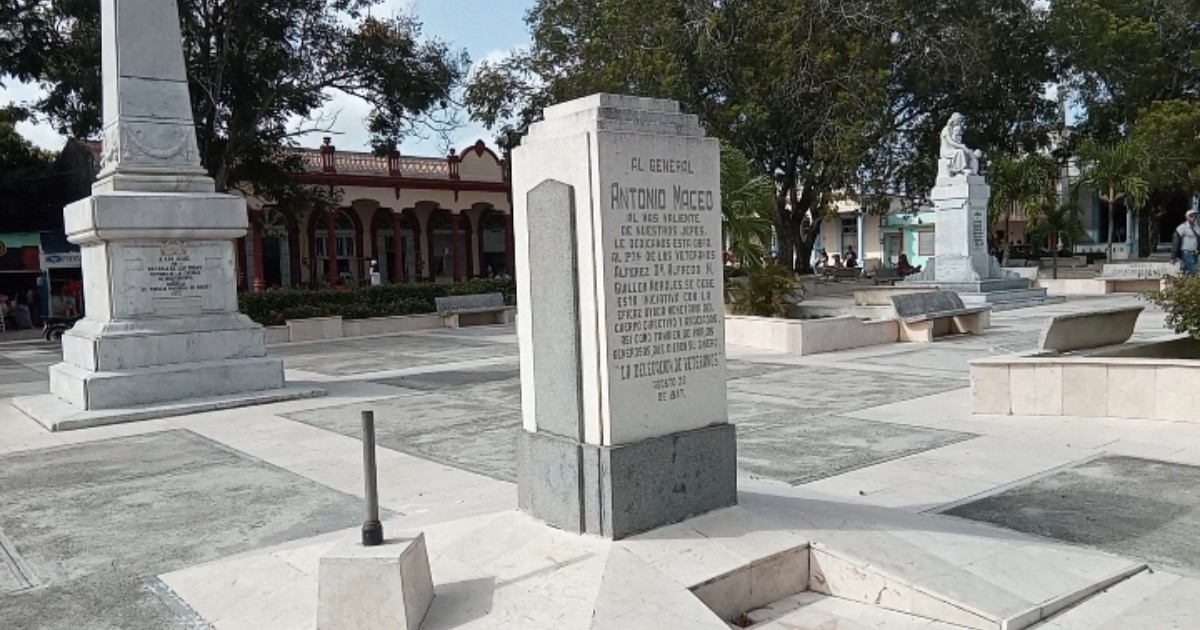
The bust of Antonio Maceo that was toppled and damaged in a park in Las Tunas will return to its pedestal after being restored, but several days after the vandalism, there has still been no public information about who the perpetrators are, a lack of answers that is now prompting a demand even from the official press.
The Periódico 26, a state-run media outlet from Las Tunas, revisited the attack on the monument this Sunday and suggested that, just as the restoration of the piece will be made public, the accountability of those who committed the act should also be publicly recognized.
"Just as the restitution of the marble piece will take place in a public ceremony, the responsibility of those who committed such an act should also be made public," the article stated, adding that the bust will be restored and placed back on its pedestal.
The white marble sculpture was violently knocked off its pedestal and suffered visible damage to its face.
The new statement describes the attack as a damage to the monumental heritage of Las Tunas and dedicates a significant portion of its text to defending the value of monuments as part of historical memory.
"The rock with the face of a hero will be restored. The bust will return to its pedestal," he assures, while warning that repairing the stone alone will not address the underlying issue.
After the incident, the item was placed under police custody while technical and forensic investigations were conducted to search for fingerprints and identify those responsible. So far, the results of these inquiries have not been made public.
The restoration was entrusted to the artist Leonardo Fuentes Caballín, who will reintegrate the damaged parts and apply conservation treatments before returning the monument to the park named after the independence general.
The restitution is planned to take place through a public ceremony, although a date has not been announced.
The demolition had already provoked criticism even from openly opposing sectors of the regime.
The activist Lara Crofs rejected the idea that destroying the monument could be seen as a legitimate form of protest and argued that Maceo "does not belong to the Communist Party" or the Government, but to Cuba.
The activist also recalled that the bust was inaugurated in 1947, before Fidel Castro came to power, and argued that criticism of the political use of Cuban heroes does not justify the destruction of monuments linked to national history.
Related videos:
Filed under: