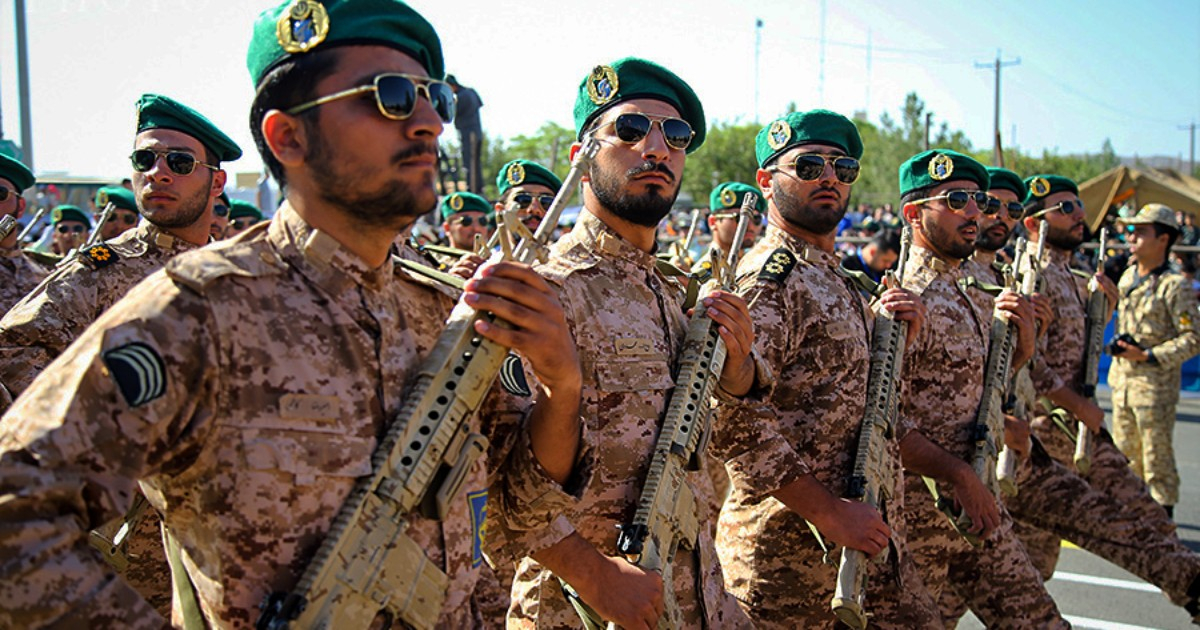
The commander-in-chief of the Iranian Army, Major General Amir Hatami, announced this Sunday that any Iranian citizen who captures or kills an American soldier attacking Iranian territory will receive $30,000 funded by the Iranian people.
The statement was made during a ceremony for Journalist Day in Iran and disseminated by the state agency Mehr.
Hatami specified that the amount would double —up to 60,000 dollars— if the action were carried out by a woman.
The announcement comes less than 24 hours before the deadline of 60 days set in the memorandum of understanding signed between Tehran and Washington, whose future seems practically sealed.
The Iranian General Staff accompanied the statement with a message of defiance: it asserted that its forces have succeeded in "bringing to their knees" the leaders of what it described as "the most equipped army in the world" and reiterated that they will not yield to Washington until achieving their "complete defeat."
The military organization also stated that it will maintain its position in defense of the demands of the Iranian people and their supreme leader, Mojtaba Jamenei, who took office in March of this year following the death of his father, Ali Jamenei, and is considered hardline.
The memorandum of understanding was signed in mid-June in Switzerland by U.S. Vice President JD Vance and Iranian Foreign Minister Abás Araqchí, with the prior electronic signature of President Donald Trump.
The agreement included a ceasefire, the reopening of the Strait of Hormuz, and a two-month deadline to negotiate a final agreement.
However, the pact collapsed weeks later: at the beginning of July, Washington accused the Islamic Republic of attacking commercial vessels in the Strait of Hormuz and responded with bombings against targets in southern Iran.
Tehran formally suspended the memorandum on July 18, while the U.S. launched a new wave of attacks between the 8th and the 24th of that month.
Chancellor Araqchí was unequivocal last Friday in ruling out any extension of the agreement: "There is no 60-day ceasefire that needs to be extended," he stated, arguing that the memorandum represented "the end of the war, not a ceasefire," and that it was Washington that violated it.
On August 9, Araqchí had warned that Iran would not resume negotiations as long as the U.S. continued to violate the agreement.
The conflict between the two powers erupted on February 28, 2026, with joint attacks by the U.S. and Israel against the Iranian nuclear facilities in Fordow, Natanz, and Isfahan, in an operation called "Midnight Hammer."
At the beginning of this month, Trump claimed to have reached a new agreement with Iran, although the situation remained unstable, and on August 10 he emphasized economic strain as a pressure strategy against Tehran.
Related videos:
Filed under: