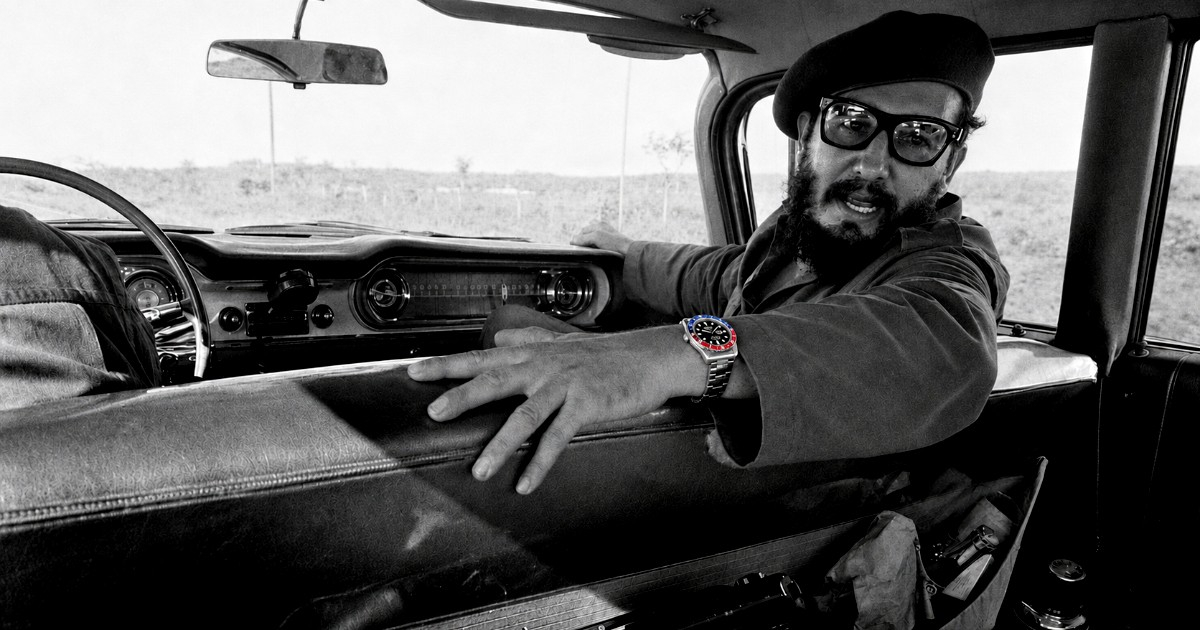
The centenary of the birth of Fidel Castro —celebrated on August 13 with massive events in Havana and over 1,500 delegates from 60 countries— has reignited an uncomfortable debate for his admirers: the dictator who proclaimed equality as his banner died a millionaire, while 89% of Cubans live in extreme poverty.
Two analyses published in recent days by international media document the gap between revolutionary rhetoric and the kleptocratic reality of Castroism.
The first, signed by John Suarez, executive director of the Center for a Free Cuba, appeared in Brussels Signal on August 13. The second, by Monica Showalter, former reporter for Forbes, was published in American Thinker two days later.
In 2006, Forbes magazine estimated Castro's personal fortune at 900 million dollars—780 million euros—based on his control over state-owned companies such as CIMEX and Medicuba, positioning him among the richest heads of state in the world. Castro publicly denied this, claiming that his net worth was zero and that he earned about 900 Cuban pesos a month, equivalent to around 40 dollars.
The official version never convinced those who knew him closely. Juan Reinaldo Sánchez, Castro's personal bodyguard for 17 years who defected in 2008, described in his book 'The Double Life of Fidel Castro' 29 luxury residences, four yachts, and a private island —Cayo Piedra— complete with a floating restaurant and a dolphinarium.
Showalter includes in his article the testimony of historian Humberto Fontova, who said to him: "Castro owns everything in the country, so his billions are immense, far greater than I could estimate when I was covering the Forbes billionaire list."
Beyond Fidel's personal fortune, Suarez points out that the Castro family and the military elites have amassed reserves of 18 billion dollars through the military business conglomerate GAESA, a figure supported by leaked internal financial documents.
"It is the Castro family, the military elites, and their inner circle who accumulate these reserves, living in opulence in Cuba, Europe, and the United States, while millions suffer from hunger and die from treatable diseases," writes Suarez.
The contrast becomes shocking when compared to the average annual salary in Cuba for 2026: barely 105 dollars, based on the current informal exchange rate.
Suarez illustrates inequality with a concrete case: Raúl Guillermo Rodríguez Castro, "El Cangrejo," grandson of Raúl Castro, appeared in June 2026 for an interview with wearing $1,500 Hermès sneakers, a $10,000 Rolex Submariner, a gold chain worth over $8,000, and a $2,000 Salvatore Ferragamo briefcase. The total exceeded $20,000: more than a hundred times the annual salary of an average Cuban.
Meanwhile, the regime allocated scarce fuel and electricity to the celebrations of the centenary, the events of July 26 in Pinar del Río, and the massive mobilizations of May Day, amidst an energy crisis with power outages of up to 24 hours a day.
A report from the Juan de Mariana Institute in Madrid, published in July 2026 under the title 'The Cost of Sustaining Castroism', calculated that Spain has contributed 4.994 billion euros to the Cuban regime since 2016 through debt restructuring and forgiveness, while the European Union has allocated more than 300 million euros to the island since 1988.
"There is an abyss between the revolutionary egalitarian rhetoric and the reality experienced by the Castro family: imported opulence versus massive austerity under a kleptocratic dictatorship," concludes Suarez. "This is Fidel Castro's legacy, and there is nothing to celebrate."
Related videos:
Filed under: