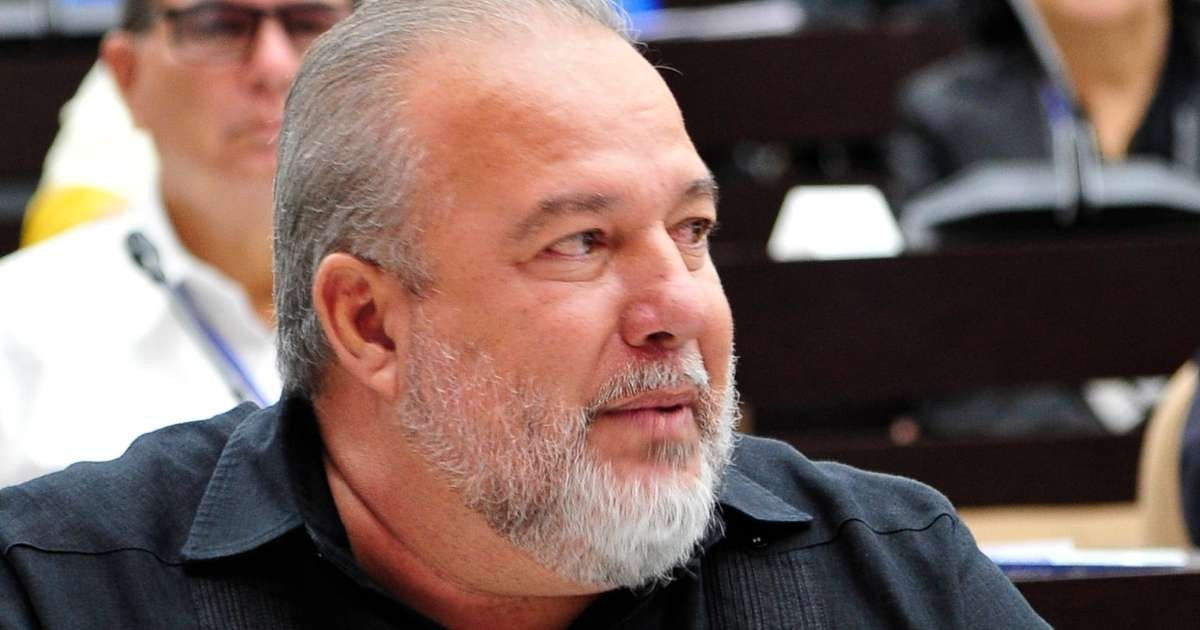
The Cuban Prime Minister Manuel Marrero Cruz turned to a 19th-century anniversary this Monday to deliver a patriotic-revolutionary message: on his X account, he commemorated the 156th anniversary of the execution of Pedro "Perucho" Figueredo, the author of the Cuban National Anthem, quoting the line from his own anthem ("To die for the homeland is to live!") that historical tradition claims he uttered before the firing squad.
"156 years after the execution of Perucho Figueredo, the author of our Hymn of Bayamo, 'the Homeland looks upon you with pride', because as he himself said shortly before his fall, 'to die for the Homeland is to live'," wrote Marrero Cruz under the hashtag #CubaViveEnSuHistoria.
Pedro Felipe Figueredo Cisneros was born in Bayamo on February 18, 1818. A lawyer, musician, and mambi fighter, he composed the march of La Bayamesa in 1867 and wrote its lyrics on October 20, 1868, when the independence forces took the city of Bayamo at the beginning of the Ten Years' War.
According to Cuban historical tradition, Figueredo wrote the verses on the march, from the back of his horse, responding to the popular cry after the mambisa victory.
The most well-known stanza of the anthem reads: "To battle, bayameses, / for the homeland watches you proudly. / Do not fear a glorious death, / for to die for the homeland is to live."
The Ten Years' War —the first major Cuban independence conflict against Spain, which began with the Grito de Yara on October 10, 1868, led by Carlos Manuel de Céspedes— was the setting in which Figueredo actively participated until his capture.
Spanish colonial troops captured him gravely ill in August 1870 and transferred him to Santiago de Cuba, where he was subjected to a military trial and executed on August 17 of that year, at the age of 52. Accounts from that time recount that, when facing the firing squad at the old slaughterhouse in the city, he firmly exclaimed: "To die for the homeland is to live!", sealing with his death the central verse of his work.
The Constituent Assembly adopted La Bayamesa as the Cuban National Anthem on November 5, 1900. In its current official version, only the first two stanzas are sung.
Marrero's message aligns with the Cuban regime's typical pattern of invoking figures and anniversaries to reinforce its narrative of resistance and revolutionary continuity, a strategy that will be particularly intensified in 2026, the year officially declared as the centenary of Fidel Castro.
Two days earlier, the Prime Minister had posted on the same social media platform that "Fidel lives in every place where truth and justice are defended," and on August 13 he concluded his posts with the slogans "Long live Fidel! Homeland or death, we will overcome!"
Related videos:
Filed under: