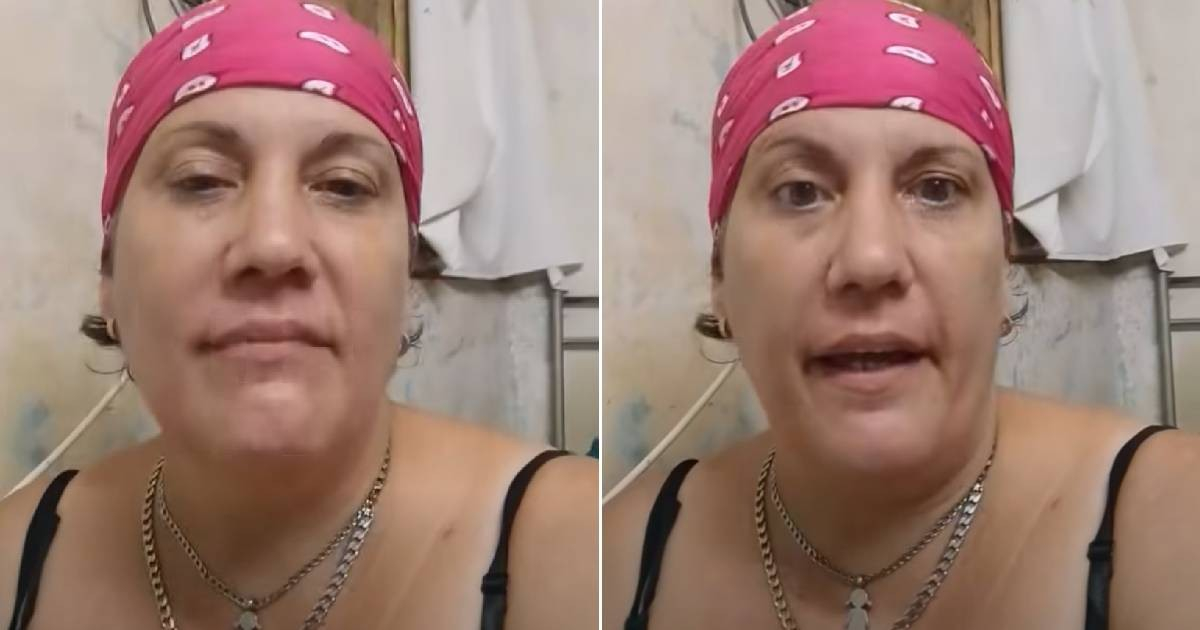
Doraykis Delgado González, known on social media as Koky Pena, has been confined in the Women's Prison of Occidente, in El Guatao, for over a month after the Cuban regime arrested her for participating in a peaceful protest against the blackouts in Alamar, in Havana.
The detention occurred on July 7, the same night that Doraykis went live on Facebook to report the police operation deployed against the residents of zone 14, who had been without electricity for more than a month.
In that broadcast, which gathered over 55,000 views, the woman pointed directly to the inequality between the population and local officials: "Where do the leaders live? The power never goes out. They are protected circuits, the same old story. And why are they protected circuits and we are not?"
He also identified a leader named Jorge Luis, who lived in a 12-story building in the area, and who —as reported— had kiosks and a café in his wife's name, and whose area never experienced blackouts.
The authorities restored electricity in the area at 7:15 PM while the protesters were still in the street, but Doraykis warned that it wouldn't stop her: "You can't buy me off with a little bit of power. When you take it away from me again, I'll be back. And I'll keep going, and I'll keep going, and I'll keep going."
The woman, who is the mother of two children, was arrested that same night.
After spending her first days in the 15th Unit of the Revolutionary National Police in Alamar—where she turned 44 years old on July 19 while in custody—she was transferred to the prison known as "Manto Negro" in El Guatao, where she remains in provisional detention without the right to bail.
The regime accuses her of the crime of "defamation of institutions and organizations, and of heroes and martyrs," as defined in Article 270 of the Penal Code, which provides for penalties of up to five years in prison.
The authorities rejected the request for a change of precautionary measure submitted on his/her behalf.
Her situation is particularly serious because she suffers from hemophilia, a condition that requires specialized medical attention and puts her life at risk while she remains in custody.
Her two children —an eight-year-old boy and a seven-year-old girl— were left in the care of neighbors after the arrest, as their father works and they have no other family members who can look after them.
In her broadcast, Doraykis explained the meaning of her protest with these words: "Because this everyday Cuban mother is tired, gentlemen, of my children living like less than human beings. Of having to live in eternal darkness."
Cubalex, the Legal Information Center based in exile, issued a public alert labeling her a political prisoner and demanding her immediate release: "Her imprisonment seeks to punish her for protesting and, at the same time, intimidate others from taking to the streets to claim their rights. No one should be in prison for peacefully expressing themselves."
The case of Doraykis is not isolated. Alamar has been one of the areas with the highest social unrest in 2026: a prior protest in May ended with repression and at least one detention, and the day after his arrest, residents from other parts of the neighborhood held loud demonstrations and burned garbage in the street against the blackouts.
The repressive pattern extends across the entire island: according to Prisoners Defenders, Cuba ended July 2026 with a historic record of 1,327 political prisoners, of which at least 15 new additions that month were directly linked to protests over power outages.
Related videos:
Filed under: